



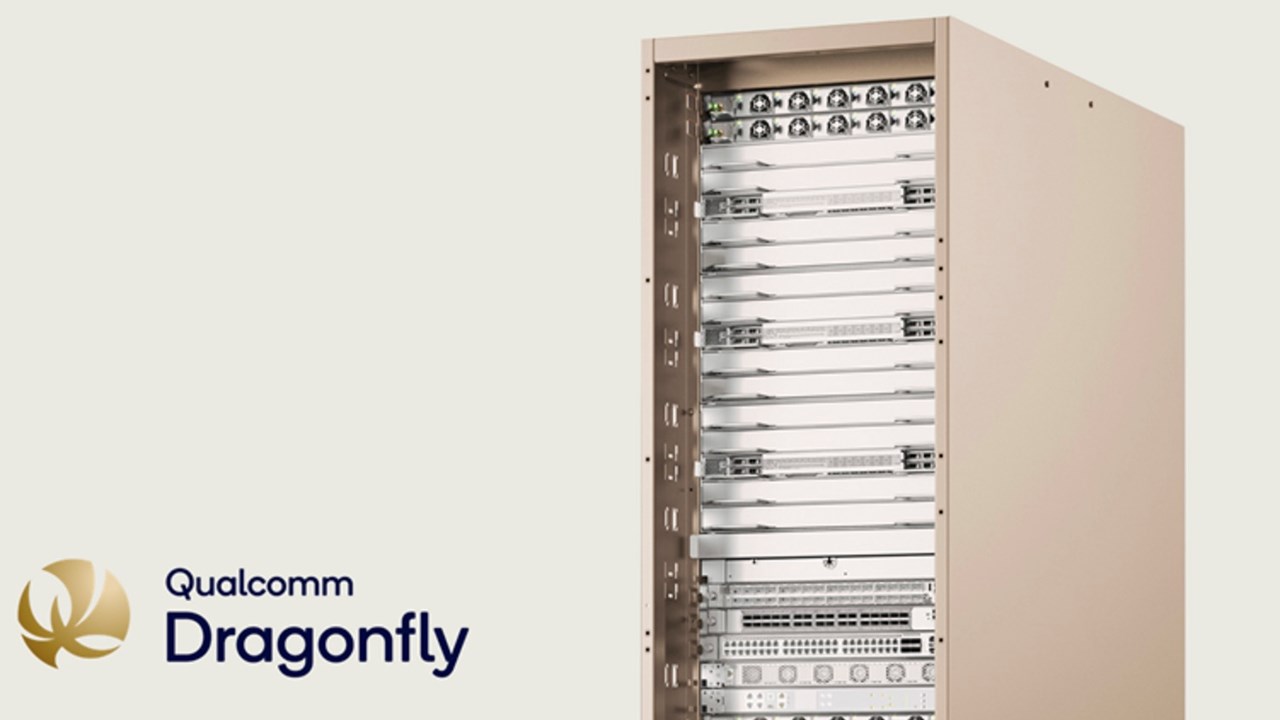
Qualcomm has officially introduced its Dragonfly platform, a broad data center strategy that combines AI accelerators, server CPUs, networking technology, advanced memory, and custom silicon services. The initiative is aimed at the growing demand for AI infrastructure, where companies want faster inference performance, better energy efficiency, and hardware that can scale across large data center deployments.
Dragonfly is designed as a full stack platform rather than a single chip family. Qualcomm plans to offer compute accelerators for AI workloads, CPU products for general purpose processing, high speed connectivity solutions, and custom chip development for companies that want specialized hardware.
The company is positioning Dragonfly for the agentic AI market, where systems need to process large language models, multimodal workloads, and automated tasks with lower latency and lower power use.
Qualcomm’s AI Accelerator Roadmap Extends to 2028
The Dragonfly accelerator lineup includes the existing AI200 and AI250 products, followed by the planned AI300 series. Qualcomm says AI200 is currently sampling, while AI250 is expected in 2027 and AI300 is targeted for commercial sampling in 2028.
AI250 is expected to introduce Qualcomm’s HBC Gen 1 memory technology. The company says it could support up to 43TB of LPDDR capacity in air cooled and direct liquid cooled systems, while improving effective memory bandwidth and bandwidth per watt.
The future AI300 platform is expected to move to HBC Gen 2 memory and add new scale up technologies such as UALink and Ethernet Scale Up Networking.
| Dragonfly Product | Expected Timing | Main Focus |
|---|---|---|
| AI200 | Sampling now | AI inference platform |
| AI250 | 2027 | HBC Gen 1 memory and larger AI deployments |
| AI300 | 2028 | HBC Gen 2, higher bandwidth, scale up architecture |
| Dragonfly C1000 | Planned server CPU platform | General purpose and AI data center computing |
| Dragonfly Connectivity | 2026 through 2028 | Optical, copper, and rack scale interconnects |
Qualcomm claims the AI300 platform could offer four to eight times better performance per watt in memory bandwidth workloads than some existing GPU based designs. Those figures are forward looking claims, and real world performance will depend on final hardware, software support, cooling, and workload type.
Networking Will Be a Major Part of the Dragonfly Strategy
AI data centers need more than powerful processors. Large clusters require extremely fast links between accelerators, servers, storage, and networking equipment. Qualcomm plans to support connections ranging from chip level links inside servers to optical systems that can reach up to 20 kilometers.
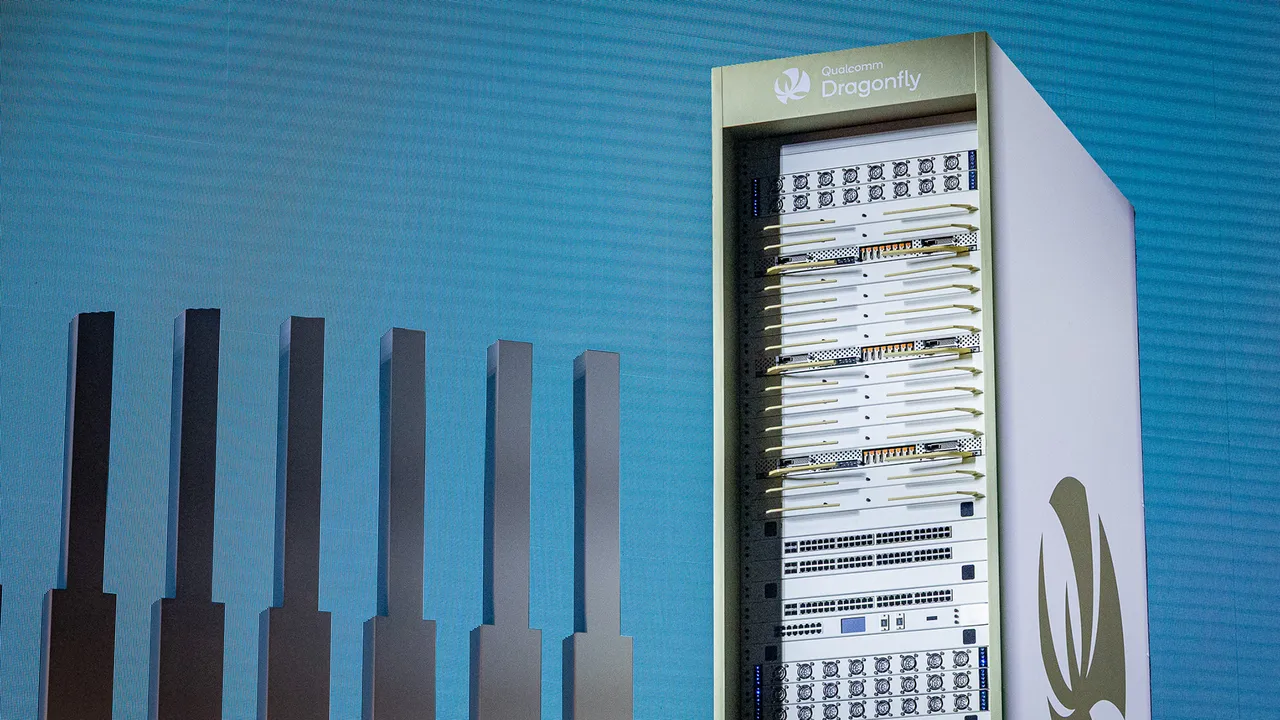
The company’s Dragonfly connectivity roadmap includes 800G and 1.6T products in the near term, followed by 3.2T optical modules and active electrical cables in 2028. Qualcomm is also developing co packaged optics and network packaged optics technologies, which could help reduce power use and improve bandwidth in future AI infrastructure.
This part of the strategy places Qualcomm in a competitive market that already includes major data center networking companies. However, Dragonfly could appeal to customers that want compute, networking, and custom hardware developed under one platform.
Qualcomm Wants to Build Custom Silicon for AI Companies
Custom chips are becoming increasingly important as cloud providers and AI companies look for hardware built around their own workloads. Qualcomm says Dragonfly will provide end to end custom silicon services, including chip design, IP, advanced packaging, system design, and high volume manufacturing support.
The company says it can work with customers at different stages of development, from specification work to final production. This could make Dragonfly attractive to companies that do not want to build a complete semiconductor team internally.
Qualcomm’s Dragonfly launch shows that the company is aiming far beyond mobile chips. Its success will depend on execution, software adoption, customer interest, and whether its accelerator and networking products can compete with established AI data center platforms.



Discussion (0)
Be the first to comment.