



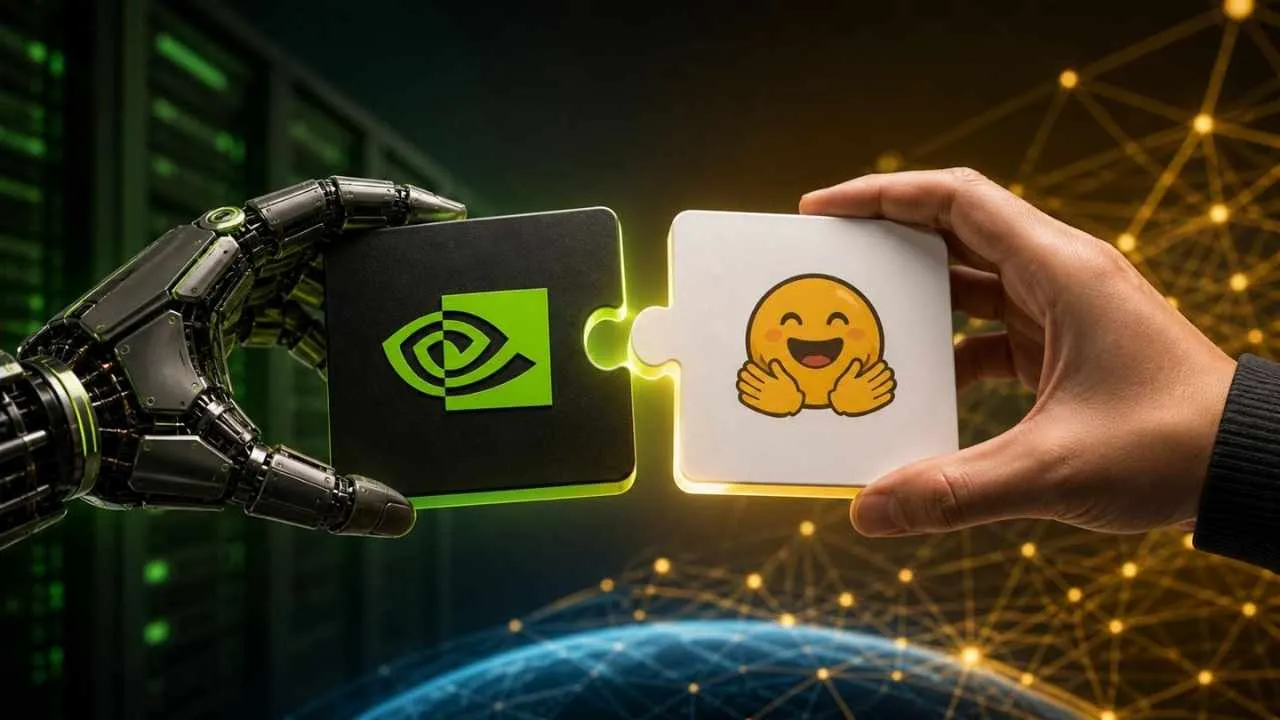
NVIDIA is acquiring Hugging Face in a deal valued at just under $13 billion, adding one of the best known open AI platforms to its growing artificial intelligence business.
Hugging Face has become an important hub for developers working with open source and open weight AI models. Its platform hosts models, datasets, tools, and frameworks used by researchers, companies, and individual developers.
NVIDIA says Hugging Face will continue operating as an open platform after the acquisition rather than being restricted to NVIDIA hardware or software.
| Detail | Information |
|---|---|
| Buyer | NVIDIA |
| Company acquired | Hugging Face |
| Deal value | Just under $13 billion |
| Main business | Open AI models, datasets and developer tools |
| Platform access | Expected to remain open |
| NVIDIA hardware required | No |
| Multi cloud support | Expected to continue |
| Multi accelerator support | Expected to continue |
Hugging Face Will Remain Open to Other Platforms
One of the most important parts of the announcement is NVIDIA's commitment to keep Hugging Face open to the wider AI ecosystem.
Developers will still be able to choose the models, frameworks, cloud services, inference providers, and hardware platforms they prefer.
NVIDIA says its own computing hardware will not be required to build or deploy projects through Hugging Face.
That means developers using competing accelerators or cloud providers should still be able to continue using the platform.
Hugging Face is also expected to maintain support for open source and open weight models from different AI companies.
This is important because much of the platform's value comes from its role as a neutral distribution and development hub rather than a service tied to one hardware company.
NVIDIA Gains a Major AI Developer Platform
Hugging Face is often compared with GitHub because it provides a central place where AI developers can share and distribute models and related resources.
Acquiring the company gives NVIDIA much closer access to a large community of developers already working with local and open AI models.
NVIDIA has built much of its recent growth around AI accelerators, data center hardware, software libraries, and AI development tools.
Hugging Face expands that strategy further into the software and developer platform layer.
Rather than only supplying chips used to train and run models, NVIDIA will now own one of the most widely used platforms for discovering, testing, and distributing them.
Local AI Could Become More Important
Hugging Face is particularly popular among developers who want to run AI models locally instead of relying entirely on large cloud platforms.
That fits increasingly well with NVIDIA's hardware strategy.

Modern NVIDIA GPUs offer large amounts of memory and computing performance that can be used for both gaming and local AI workloads.
For example, high end graphics cards with large amounts of VRAM can run sizeable language, image, and coding models directly on a desktop PC.
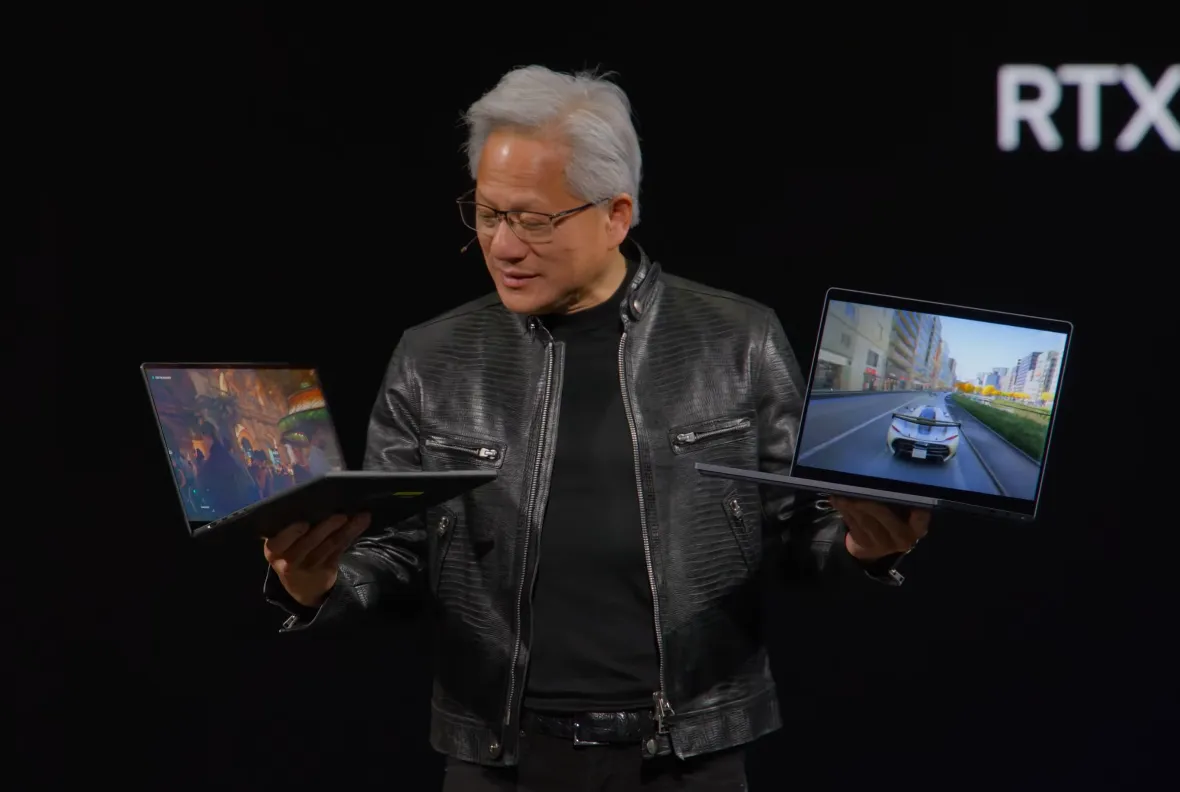
NVIDIA is also expanding this idea into new Windows devices through products such as RTX Spark, which combines Arm based processors, Blackwell graphics, and large pools of unified memory.
Owning Hugging Face could give NVIDIA another way to connect its hardware with developers interested in running AI locally.
The Deal Shows How Much NVIDIA Has Changed
NVIDIA was once primarily associated with graphics cards and gaming.
Gaming remains an important part of its business, but AI now plays a much larger role in the company's strategy.
Its data center products, AI accelerators, networking technology, software libraries, and developer tools have become central to its growth.
The Hugging Face acquisition reinforces that shift.
Instead of competing only at the hardware level, NVIDIA is increasingly building an ecosystem that covers chips, software, development frameworks, model distribution, and deployment.
Gaming Customers May Watch the Shift Closely
The acquisition also raises questions about how NVIDIA balances its AI business with its traditional gaming products.
High end GeForce GPUs are already capable of running local AI workloads because the same hardware used for graphics can also handle machine learning calculations.
That overlap gives NVIDIA an advantage, but it also means future hardware design could increasingly be influenced by AI requirements.
For gamers, the main concern will be whether AI demand affects graphics card pricing, availability, memory capacity, or product priorities.
There is currently no indication that NVIDIA plans to reduce its gaming business because of the Hugging Face acquisition.
Still, a deal worth nearly $13 billion makes the company's direction clear.
NVIDIA is no longer simply a graphics hardware company expanding into AI. It is building a much broader AI ecosystem, and Hugging Face will now become one of the largest developer focused pieces of that strategy.
Discussion (0)
Be the first to comment.