





Just like the internet today, the automotive industry is undergoing radical transformations. Electrification, safety and pollution regulations, as well as autonomous driving technologies, have significantly complicated the process of developing new vehicles. In this context, testing cars virtually in a simulated environment has become essential for the fastest and most efficient automobile development. Nissan, one of the best-known automotive brands, with over 3 million vehicles sold annually, has found AMD EPYC processors to be a very suitable solution for performing impact simulations. Here's how this technological choice can optimize the development process of modern vehicles:
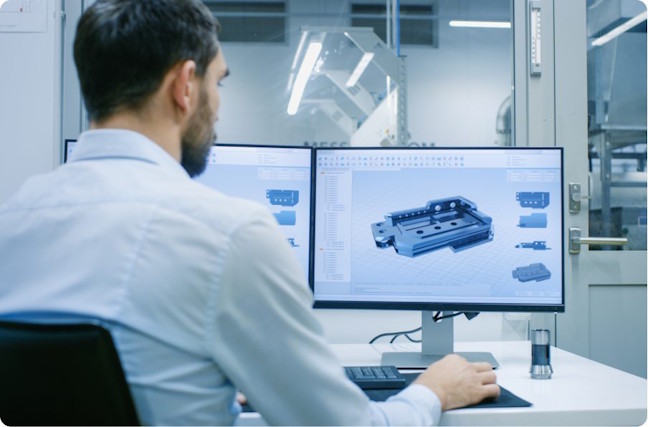
 Computer-aided design (CAD)
Image source: Nissan
Computer-aided design (CAD)
Image source: Nissan

 The AMD EPYC processor
Image source: AMD
Nissan now operates a large fleet of virtual machines powered by AMD EPYC processors for testing vehicles in a simulated environment. The AMD EPYC processors used have a large number of cores, up to 176 per node. This high core density allows Nissan to reduce the number of virtual machines employed, as well as the number of software licenses.
NOTE: The AMD EPYC products mentioned in this article can be purchased in various performance configurations through ASBIS partners. You can find more info about AMD EPYC products here.
The AMD EPYC processor
Image source: AMD
Nissan now operates a large fleet of virtual machines powered by AMD EPYC processors for testing vehicles in a simulated environment. The AMD EPYC processors used have a large number of cores, up to 176 per node. This high core density allows Nissan to reduce the number of virtual machines employed, as well as the number of software licenses.
NOTE: The AMD EPYC products mentioned in this article can be purchased in various performance configurations through ASBIS partners. You can find more info about AMD EPYC products here.
What is Nissan doing and why are simulations important?
In the past, vehicle safety testing was done exclusively through physical impact tests, carried out in controlled environments, which are very expensive and time-consuming. The preparation process alone takes several weeks, and although a single test lasts only a few seconds, it ultimately yields a lot of data that is then analyzed to improve the way a vehicle is built. If you want to know how such a process works, watch the video below: Physical crash tests, although essential, are also inefficient because of the increased complexity of vehicles and the speed needed to develop new models in a super competitive environment. In addition, car manufacturers like Nissan are using computer-assisted simulation as a precursor to physical testing due to numerous development requirements, such as safety and emissions regulations, and autonomous driving. This process involves generating digital data using three-dimensional CAD (computer-aided design) systems and then creating a simulation model (computer-aided engineering system) to evaluate crash safety, vibration and noise, engine performance, and emissions. Basically, most performance evaluations are now based on such simulations.The challenge: Rising software costs
Nissan had a data center dedicated to running simulation models, but as demand for these models grew, infrastructure limitations became increasingly apparent and caused more problems in the car design and construction process. The main problem was the high cost of the software, combined with the limited performance of the existing infrastructure. The simulation software used by Nissan is licensed on usage time, so slower simulations mean higher costs. For these reasons, the company decided to migrate to a Microsoft Azure cloud solution, which uses HPC (High Performance Computing) virtual machines with AMD EPYC processors. The transition took six months and was completed in April 2021.Nissan's solution: Migrating to AMD EPYC
When Microsoft's Azure team suggested using HPC virtual machines with AMD EPYC processors, Nissan saw the opportunity to improve performance, which could reduce software costs by significantly speeding up the completion of simulations. So, even though the virtual machines with AMD EPYC processors cost more, the total cost, including software and the new cloud infrastructure, was way lower thanks to the faster processing speed.The implementation results
According to data provided by Nissan, the company benefited first and foremost from a 30% increase in performance, which allowed the company's engineers to get each simulation's results earlier, speeding up the development process for new vehicles. Another important benefit is the total cost of the infrastructure used in crash test simulations, which has been reduced by 20%. This reduction translates into millions of dollars in savings, which come from the software licensing model based on usage time. A third benefit, which should not be overlooked, is lower energy consumption and CO₂ emissions, thanks to the highly efficient HPC infrastructure created by Microsoft with AMD EPYC processors.


Discussion (0)
Be the first to comment.