



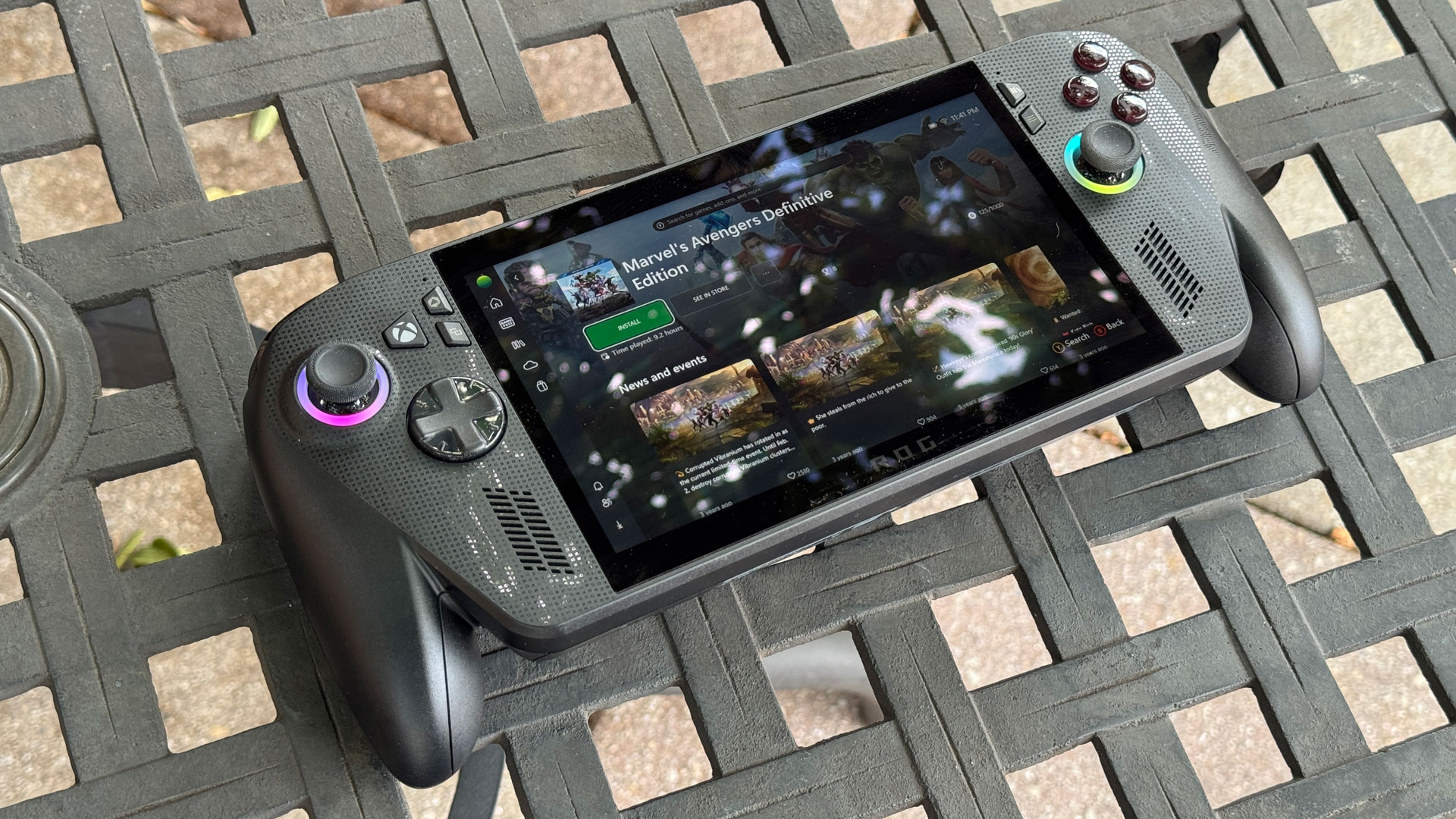
Microsoft is finally bringing its own AI upscaling solution closer to real-world use, and early results suggest it could make a noticeable difference for handheld gaming. The feature, called Auto SR (Automatic Super Resolution), is now being tested on devices like the Xbox Ally X—and it’s showing promising gains.
Auto SR is Microsoft’s answer to DLSS and FSR
Auto SR works similarly to NVIDIA’s DLSS and AMD’s FSR. Instead of rendering games at full resolution, it renders them at a lower resolution and then upscales the image using AI.
The key difference is where it runs:
- DLSS and FSR are game-level features
- Auto SR is built into Windows at the OS level
That means it can potentially work across multiple games without requiring developers to add support individually.
The Xbox Ally X benefits because it has an NPU
The feature is especially relevant for handhelds like the Xbox Ally X. These devices rely on low-power hardware, so getting more performance without increasing power usage is critical.
The Ally X uses a Ryzen Z2 Extreme chip, which includes an NPU (Neural Processing Unit). Auto SR uses that NPU to handle AI upscaling, helping improve performance without heavily loading the CPU or GPU.
The base Xbox Ally model does not have this advantage, which means the feature is more limited there.
Early tests show up to 50% performance improvement
Initial results are encouraging. In early testing:
- Games like Borderlands 3 and Control showed up to 50% higher frame rates
- The test used 720p rendering upscaled to higher resolutions
This kind of improvement is significant for handheld gaming, where performance is often the biggest limitation.
| Feature | What it does |
|---|---|
| Auto SR | AI-based resolution upscaling |
| OS-level integration | Works without per-game implementation |
| NPU acceleration | Uses dedicated AI hardware |
| Performance boost | Up to ~50% in early tests |
| Ideal resolution | Around 720p (up to ~900p) |
Still early—and not widely supported yet
There are some clear limitations right now:
- Only 11 games officially supported at launch
- Requires DirectX 10 or newer
- Best results at lower resolutions like 720p
- Available through Windows Insider builds
It can be manually enabled in other games, but results may vary.
The bigger picture: handheld gaming needs this kind of solution
Handheld PCs like the Xbox Ally X are powerful, but they still struggle with modern games at higher settings. Technologies like Auto SR could become essential for making these devices more practical.
However, the early demo is not perfect:
- The tested games are relatively older
- The feature still feels experimental
- Competing options like SteamOS can also improve performance
The takeaway: promising, but not a finished solution
Auto SR shows real potential, especially for low-power gaming devices. A 50% performance boost is not something to ignore.
But it is still early:
- Limited game support
- Requires testing and refinement
- Competing solutions already exist
If Microsoft can expand support and improve consistency, Auto SR could become a key feature for Windows gaming—especially on handheld devices where every frame matters.
Discussion (0)
Be the first to comment.