



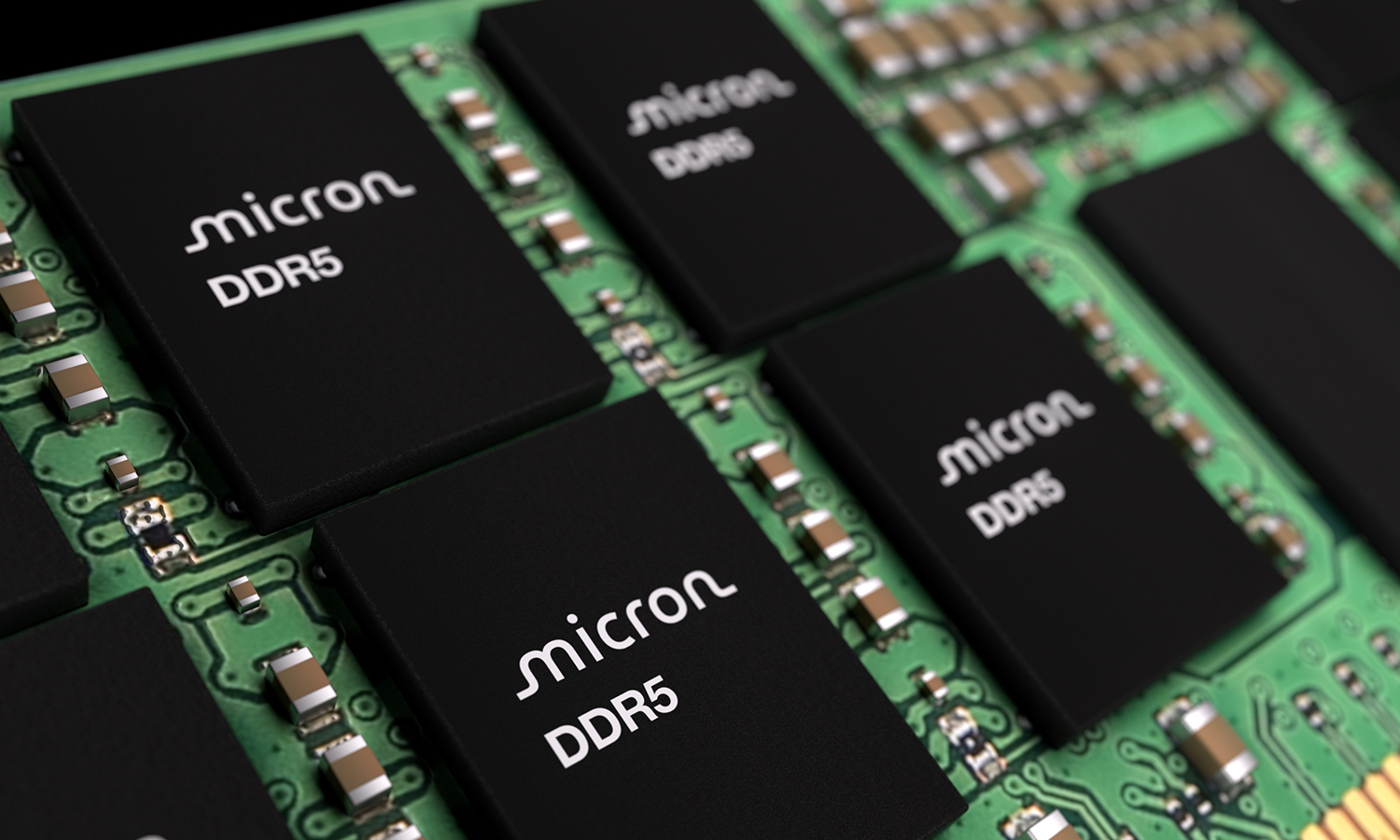
Micron has started sampling a new 256GB DDR5 RDIMM module for server platforms, giving data center builders a much denser memory option for AI, HPC, inference, and high core count CPU workloads. The new module uses Micron’s 1 gamma DRAM process and is rated for speeds up to 9200 MT/s.
This is not a consumer memory product. RDIMM stands for Registered Dual In Line Memory Module, and it is mainly used in servers and workstations where stability, high capacity, and platform validation matter more than standard desktop compatibility. The new 256GB module is aimed at customers building large scale systems for artificial intelligence, large language models, scientific computing, and other memory heavy tasks.
One 256GB module could be faster and more efficient than using two 128GB RDIMMs
Micron says the new 256GB DDR5 RDIMM is more than 40 percent faster than DDR5 server memory currently in volume production. That comparison is based on 9200 MT/s for the new module versus 6400 MT/s for existing production server memory.
The company is also claiming a power efficiency advantage. According to Micron, one 256GB RDIMM operates at 11.1W, while two 128GB modules use 19.4W combined. That means a server can reach the same 256GB capacity with more than 40 percent lower operating power by using a single higher density module instead of two smaller ones.
| Feature | Micron 256GB DDR5 RDIMM |
|---|---|
| Capacity | 256GB per module |
| Speed | Up to 9200 MT/s |
| Memory type | DDR5 RDIMM |
| Process | 1 gamma DRAM |
| Power claim | 11.1W per 256GB module |
| Target systems | Servers and data centers |
| Main workloads | AI, HPC, LLMs, inference, high core count CPU platforms |
The module uses 3D stacking, with multiple DRAM dies connected through TSVs, or through silicon vias. This lets Micron increase memory density while keeping the module in a standard server memory format. That matters because server customers want larger capacity without completely changing platform design.
The higher capacity could be useful for AI systems where memory bandwidth and capacity can become a bottleneck. Large language models, inference servers, and HPC workloads often need huge memory pools close to the CPU. As processors keep adding more cores, memory capacity per socket becomes more important.
Micron is now working with ecosystem partners to validate the 256GB modules on current and next generation server platforms. That step is important because server memory must be tested across processors, motherboards, firmware, and data center configurations before large customers can deploy it widely.
The module also shows where DDR5 server memory is heading. Instead of only increasing speed, vendors are trying to improve density and efficiency at the same time. A 256GB RDIMM running at 9200 MT/s gives server builders more room to scale memory without using as many slots or consuming as much power.
For normal PC buyers, this product does not matter directly. Desktop PCs use UDIMM, CUDIMM, or related formats, not RDIMM server memory. But the technology is still important because advances in high density DRAM often start in data centers before influencing future memory designs elsewhere.
Micron’s new module is still in the sampling stage, so broad availability and pricing are not available yet. But for data center customers preparing for larger AI and HPC deployments, 256GB DDR5 RDIMMs at 9200 MT/s could become a major step forward in memory capacity and efficiency.


Discussion (0)
Be the first to comment.