



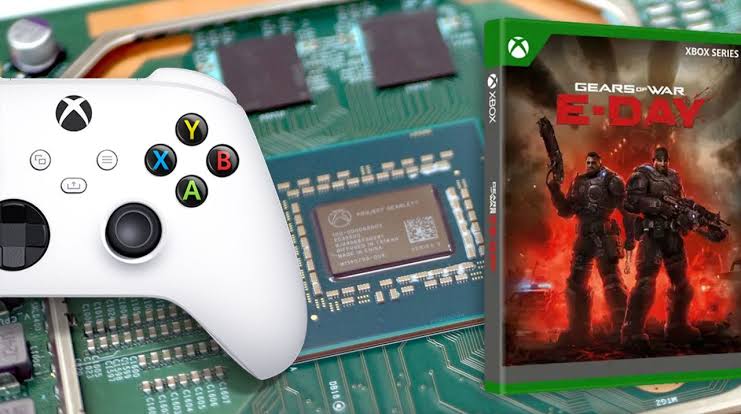
Gears of War E Day is drawing attention for more than its visuals and performance on Xbox Series S. The Coalition developed a custom memory technique that allows the console's SSD to supplement its limited 10 GB of GDDR6 memory, and other development teams are reportedly interested in using a similar approach in future games.
The system was created with help from Xbox's platform team and Advanced Technology Group. Instead of relying only on traditional system memory, the game can move carefully selected data between RAM and the internal NVMe storage when needed.
That extra flexibility reportedly allowed The Coalition to preserve much of the game's visual density on Xbox Series S while still targeting 60 FPS. The main major feature removed from the Series S version was Lumen reflections.
The SSD Acts as an Extra Memory Tier
The technique works somewhat like virtual memory, but it is more selective.
Data that is not being actively used can be stored on the SSD. When the game needs that information again, it is moved back into system memory.
The important part is that developers decide in advance which data is safe to move. That helps prevent the system from sending performance critical information to slower storage at the wrong time.
According to the technical explanation, using a few gigabytes of SSD space can free roughly 1 GB of usable system memory.
| Area | How the technique helps |
|---|---|
| Main limitation | Xbox Series S has 10 GB of GDDR6 memory |
| Extra resource | Internal NVMe SSD |
| Method | Moves selected inactive data from RAM to storage |
| Potential memory gain | Around 1 GB of usable system memory |
| Storage cost | A few gigabytes of SSD space |
| Gears E Day target | 60 FPS |
| Major removed feature | Lumen reflections |
That may not sound like a huge amount of memory, but on a console with a fixed hardware budget, another gigabyte can make a meaningful difference.
Modern open world and highly detailed games often need large amounts of memory for geometry, textures, animation data and world information. Reducing pressure on RAM can help developers retain more complex scenes without reducing visual quality as aggressively.
Other Xbox Teams Are Reportedly Interested
The most important part of the project may be what happens after Gears of War E Day.
Other development teams are already said to be interested in the technique, and it could potentially serve as a blueprint for future Xbox Series S games and other systems with restricted memory capacity.
That could be especially useful for Series S, which has sometimes created additional optimization work because developers need to support both it and the more powerful Xbox Series X.
Fast console SSDs were originally promoted mainly for reducing loading times and enabling faster asset streaming. This approach shows they can also help reduce pressure on system memory.
There are limitations.
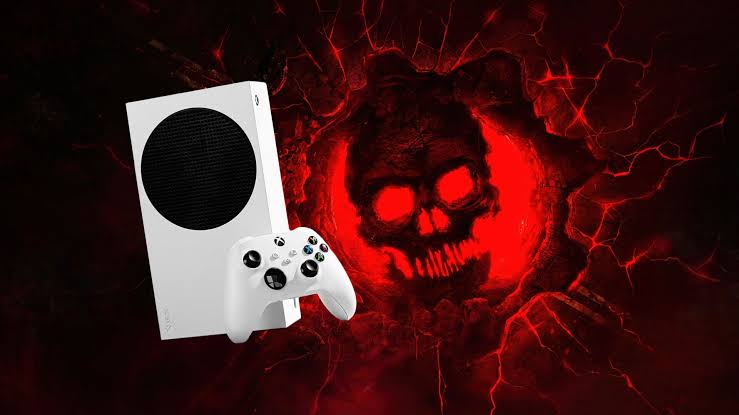
Moving too much data between the SSD and RAM can hurt performance rather than improve it. The Coalition had to carefully decide which memory groups could be moved without causing noticeable slowdowns.
Testing has also shown that poor memory management could potentially result in brief stalls, so the technique is not something developers can apply without careful tuning.
Still, the idea opens another path for getting more from existing hardware.
If other studios can adapt the system successfully, future Xbox Series S games could preserve more complex environments and features without requiring major cuts simply because of memory limits.
Gears of War E Day may therefore end up contributing more than a strong Series S port. The memory system developed for the game could become a useful optimization method for future Xbox projects, particularly as developers continue pushing current generation consoles closer to their hardware limits.


Discussion (0)
Be the first to comment.