



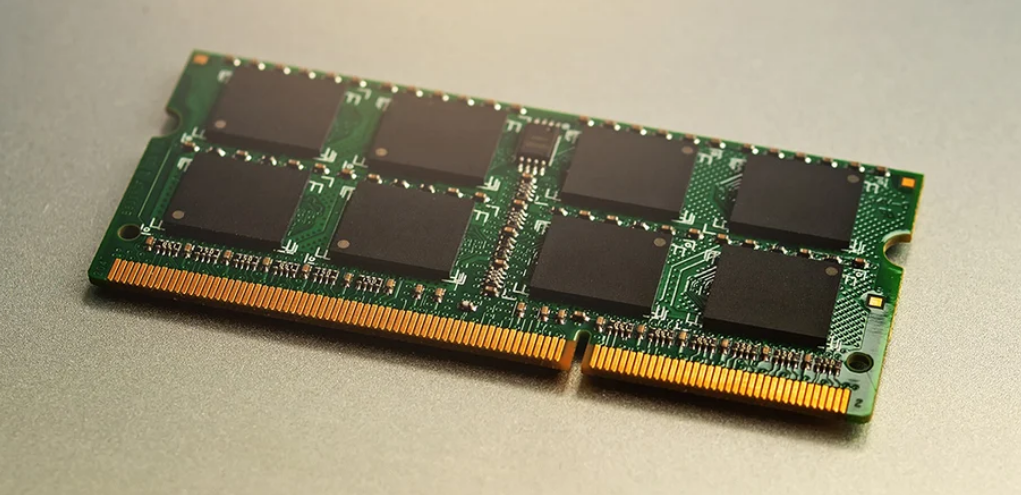
When people talk about RAM performance, the conversation usually circles around one number: speed. Higher MHz, faster memory, better performance. It sounds straightforward.
But memory performance is not defined by speed alone.
Two factors matter just as much, often more in real-world use: latency and bandwidth. Understanding how they differ, and where each one matters, changes how you evaluate and optimize a system.
The Two Sides of Memory Performance
At a high level, memory does two things:
- It delivers data
- It responds to requests
Bandwidth is about how much data can be delivered.
Latency is about how quickly that delivery begins.
Think of bandwidth as the width of a highway, and latency as how quickly a car starts moving once the light turns green.
Both matter, but they affect performance in different ways.
What Is Memory Bandwidth
Memory bandwidth refers to the amount of data that can be transferred between RAM and the CPU (or GPU) per second.
Higher bandwidth means:
- More data can move at once
- Large workloads can be handled efficiently
- Throughput increases
Modern memory standards like DDR4 and DDR5 have steadily increased bandwidth, which is why newer systems can handle heavier multitasking and data-intensive applications more smoothly.
Bandwidth becomes especially important when a workload needs to move large amounts of data continuously.
What Is Memory Latency
Latency is the delay between requesting data and receiving it.
It is often measured in clock cycles, but what matters is the actual time it takes for data to become available.
Lower latency means:
- Faster response to requests
- Less waiting time for the CPU
- Better performance in small, frequent operations
Latency affects how quickly the system reacts, not how much it can process at once.
Why You Can’t Look at One Without the Other
A common mistake is focusing on one metric in isolation.
Higher frequency RAM increases bandwidth, but often comes with higher latency in terms of cycles. However, because the clock speed is higher, the actual delay may not increase as much as it seems.
This is why comparing RAM requires looking at the combination of:
- Frequency
- Timings (like CAS latency)
Together, they determine real-world behavior.
Where Bandwidth Matters Most
Bandwidth becomes critical when the system is dealing with large, continuous streams of data.
Content Creation and Data Workloads
Tasks like:
- Video editing
- Rendering
- Large dataset processing
benefit from higher bandwidth because they move significant amounts of data in parallel.
Integrated Graphics
Systems using integrated GPUs rely heavily on system memory.
Since there is no dedicated VRAM, higher memory bandwidth directly improves graphical performance.
Heavy Multitasking
Running multiple applications that access memory simultaneously increases demand for bandwidth.
A wider “data pipeline” helps prevent bottlenecks.
Where Latency Matters More
Latency has a bigger impact in workloads that involve frequent, smaller data requests.
Gaming
Many games depend on fast, repeated access to small chunks of data.
Lower latency helps:
- Reduce frame time inconsistencies
- Improve responsiveness
- Stabilize performance in CPU-bound scenarios
General System Responsiveness
Opening apps, switching tasks, and interacting with the system all benefit from lower latency.
It contributes to how “snappy” a system feels.
Real-Time Applications
Applications that depend on immediate feedback, such as simulations or certain development workloads, are more sensitive to latency.
The Balance Between the Two
In practice, systems are rarely limited by only one factor.
A system with very high bandwidth but poor latency may handle large workloads well but feel less responsive.
A system with low latency but limited bandwidth may feel quick in light tasks but struggle under heavy data loads.
The goal is not to maximize one at the expense of the other, but to find a balance that suits your workload.
How Modern Memory Tries to Solve This
Memory technology has evolved to improve both aspects, but not always equally.
DDR5, for example:
- Offers significantly higher bandwidth
- Initially comes with higher latency compared to DDR4
This means DDR5 excels in throughput-heavy tasks, while well-tuned DDR4 can still compete in latency-sensitive scenarios.
Over time, as DDR5 matures, latency improves, narrowing that gap.
What This Means for Real-World Performance
In everyday use, the difference between memory configurations is often subtle.
You won’t always notice a dramatic change from slightly better latency or bandwidth. But in specific scenarios, the impact becomes clearer.
- High bandwidth helps when moving large amounts of data
- Low latency helps when quick response is needed
The overall experience depends on how your workload interacts with both.
A Practical Way to Think About It
Instead of asking “which is more important,” it helps to reframe the question.
Ask:
- Does my workload move a lot of data at once?
- Or does it rely on frequent, fast access to smaller data?
The answer determines whether bandwidth or latency plays a bigger role.
Final Thoughts
Memory performance is often reduced to a single number, but real systems are more nuanced.
Bandwidth and latency are not competing metrics. They are complementary.
One determines how much your system can handle. The other determines how quickly it reacts.
Understanding that balance gives you a clearer picture of performance and helps you make better decisions when choosing or optimizing memory.
And in the end, that clarity matters more than any single spec.



Discussion (0)
Be the first to comment.