


Masahiro Sakurai expects AI to raise the number of games released each year. He also expects most of those games to leave nobody able to make a living from them.
His argument is narrower than the English headlines around it. He says AI can only draw on work that already exists, and he says that limit is not unique to AI.
The Super Smash Bros. and Kirby creator made the remarks in a Japanese-language interview published on October 16. He gave it as the outgoing head judge of a Japanese award for originality in game design, which has just ended after 16 years.
All of it was spoken in Japanese, so the English wording now in circulation is a translation. That includes the word unprofitable.
The phrase he used was 食えないタイトル, which literally means titles nobody can eat from. The Japanese term for loss-making never appears in the interview at all.
What Sakurai said about the number of games
The Steam figures attached to his comments were not his own. His interviewer raised them as an aside.
About 275 games were released on Steam in 2010, the year the award began, against about 19,000 a year now. That is roughly 70 times as many.
Sakurai answered that 19,000 is a striking number, and that it will certainly climb further because AI will push it up. Most of those releases, in his view, will not feed the people who make them.
He then added the half of the answer that tends to go missing. There will be so many games, he said, that nobody can keep track of them or make sense of them.
AI output and cheap mass production, grouped together
Sakurai did not treat AI as a problem of its own. He grouped work made with AI alongside 粗製濫造, a Japanese term for shoddy mass production.
Most of both will reproduce systems already seen in other games, he said. He added that plenty of those exist already.
His example was one specific game rather than a genre. He named Librarian, a game about reshelving a magic library's upturned books, and said its simple system produced a wave of imitators.
Those imitators had players restocking an upended supermarket, putting screws back, or finding a needle in a haystack. Imitation of that kind should be very easy for AI, he said.
The Fumito Ueda test
He then set out the limit he thinks actually matters. AI could study the atmosphere of ICO and Shadow of the Colossus and produce something similar, he said.
What it cannot produce is whatever Fumito Ueda decides to make next. Only Ueda can do that, in his view, and that is what human originality amounts to.
The general rule he gave is blunt. AI references what has already been made, and it cannot reference what does not yet exist.
He qualified it in the same breath. That problem is not limited to AI, he said, and much the same can be said of plenty of other creative work.
Why originality ran through the whole interview
The award he chaired judged games on originality and novelty, and he founded it in 2010 with no plan for how long it would run. He also said originality ranks very low in whether a game actually sells.
He used his own series to show the cost of ignoring it anyway. Had Super Smash Bros. followed ordinary fighting game rules, with one-on-one matches, guarding, special moves and a health bar, he does not believe the first game would have shipped.
Had it shipped regardless, he said, it would have been treated as a novelty item and the series would have ended there.
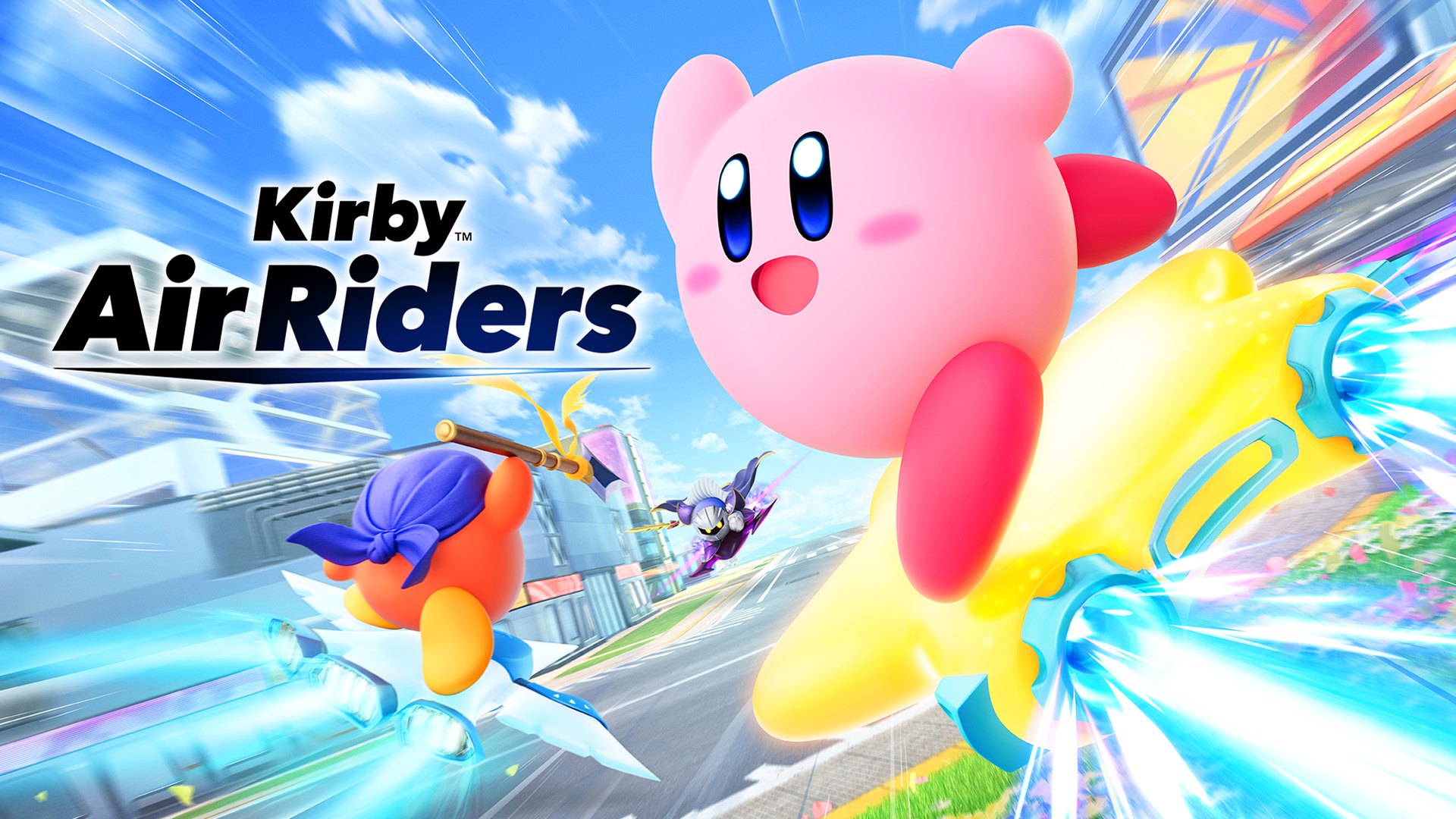
Small changes make players feel something is off before they notice what is different, he said. Some players still dismiss his Kirby Air Riders as a fake Mario Kart.
What he did not say
Nowhere in the interview does he address AI as a production tool. There is no comment on AI-assisted pipelines, training data, store disclosure labels or jobs.
That gap matters, because the two claims he does make are about volume and derivation. He never draws the tool-versus-art line that Hideo Kojima drew over generative AI art.
The tooling argument is being had elsewhere, by staff who say AI is already in use at Xbox and by a former Ubisoft director who calls it inevitable. In Japan, 85.8% of the developers, educators and students CESA surveyed said they use generative AI at work.
Sakurai attaches no date, scale or figure of his own to the prediction. Nintendo publishes its own multi-part development interviews with him, and the April 2026 series does not mention AI either. The wording of everything above remains a translation from Japanese.


Discussion (0)
Be the first to comment.