



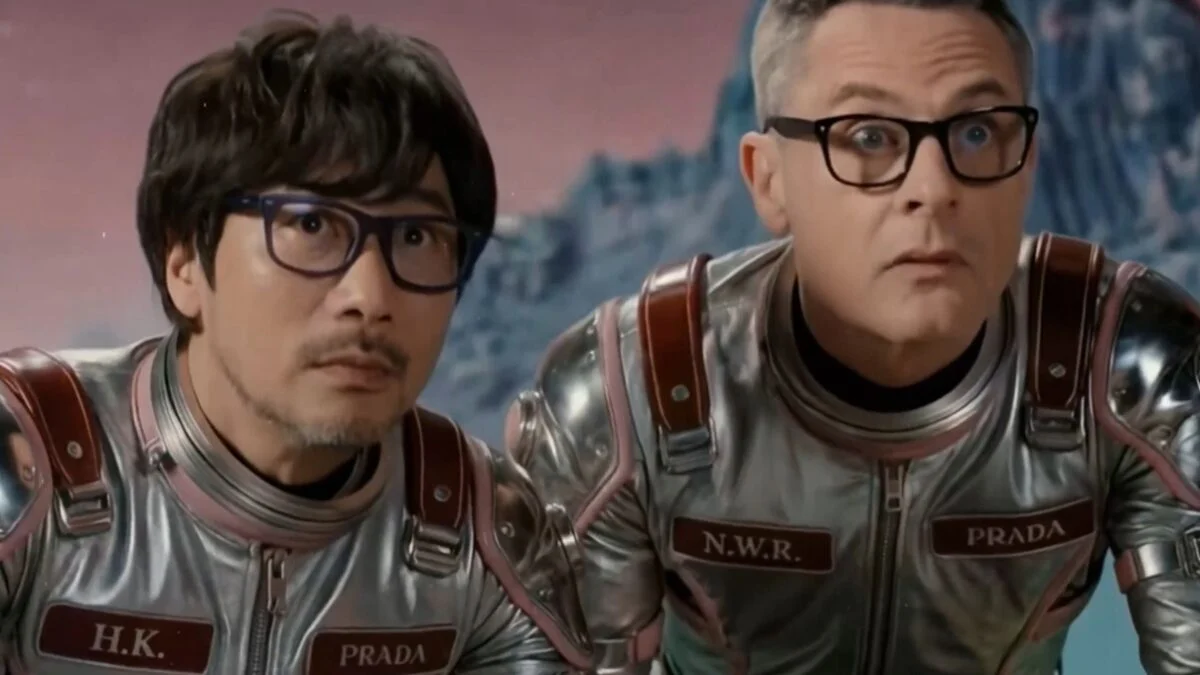
Hideo Kojima has made his stance on generative AI art clear, saying he is not interested in using the technology as part of the artistic process. While he believes AI may one day be capable of creating art, he does not expect to see that happen in a meaningful way during his lifetime.
The Death Stranding and Metal Gear Solid creator addressed the topic in a recent interview, where he said art is tied to life and human experience. Kojima left room for the possibility that AI could create art 50 or 100 years from now, but he does not see it as something that interests him creatively today.
His comments arrive at a time when generative AI has become one of the most divisive subjects in game development, film, music, writing, and visual art. Some studios are already using AI tools in production pipelines, while artists and players continue to raise concerns about originality, labor, consent, and creative value.
Kojima’s position is not a full rejection of AI as a tool. Instead, he seems to draw a line between AI used for systems and AI used to create artistic content.
Kojima is more interested in AI systems than AI visuals
Kojima has previously said he is more interested in using AI for control systems rather than visual or artistic creation. In game development terms, that means AI could help shape how characters, enemies, and systems respond to player behavior.
That kind of use is very different from asking generative AI to create artwork, cutscenes, character designs, or other visual assets. Kojima appears more interested in AI as a way to make games more reactive and dynamic.
| Area | Kojima’s apparent view |
|---|---|
| GenAI art | Not interested |
| AI visuals | Not his focus |
| AI in control systems | More interesting to him |
| NPC behavior | Possible area of use |
| Enemy responses | Could make gameplay deeper |
| Future of AI art | Maybe possible far in the future |
This distinction matters because AI in games is not one single thing. Games have used AI systems for decades, from enemy routines to pathfinding and behavior trees. The current debate is mostly about generative AI, especially tools that produce images, writing, voices, animation, or other creative material based on large training sets.
Kojima seems open to technology that deepens gameplay, but not to replacing or reducing the human role in art.
Dynamic enemy behavior is not a new idea
Kojima’s interest in AI driven behavior also connects to ideas that already exist in games. One of the most famous examples is the Xenomorph in Alien: Isolation, which created tension by responding to player behavior and forcing players to change hiding patterns.
That kind of design can make games feel more alive. If enemies react to how you play, rather than following fixed patterns, each encounter can feel less predictable. Kojima appears interested in that side of AI because it can support gameplay without taking over the creative identity of the work.
For a studio like Kojima Productions, that could mean future games where NPCs adapt more naturally to player choices, enemies learn from repeated actions, or the world responds in more personal ways. That still requires human design, writing, direction, testing, and balancing.
The technology becomes part of the machinery behind the experience, not the artist replacing the experience.
GenAI disclosures could become more common in games
Kojima’s comments also come as more games include AI disclosures on platforms like Steam. These notices often say that AI tools were used in development, but they can be vague. Players may not always know whether AI was used for placeholder assets, final art, writing support, voice work, code assistance, or gameplay systems.
If Kojima Productions ever uses AI for control systems or dynamic behavior, it may still need to explain that use clearly. The challenge for developers is that players increasingly want transparency, especially when AI touches creative work.
Kojima’s position could become a useful middle ground for some studios. Rather than using generative AI to create art, they may use AI to improve systems, simulation, or responsiveness. That approach may face less resistance because it does not directly replace artists or writers in the same way.
Kojima’s view reflects a wider creative divide
The debate around generative AI is not going away. Some executives see it as a way to speed up production and reduce costs. Many creators see it as a threat to the human labor and lived experience behind art.
Kojima’s comments fall closer to the creator side of that debate. He is not saying technology has no place in games. His career has always been tied to new tools, new hardware, and unusual design ideas. But he does not appear convinced that generative AI can replace the human core of art.
That matters because Kojima is one of the most recognized creative voices in games. His position sends a clear message that technological progress does not automatically make every tool artistically valuable.
For now, fans should not expect Kojima Productions to use generative AI for visual or artistic direction. If AI appears in future Kojima games, it is more likely to support behavior, systems, or gameplay response rather than create the art itself.
Kojima’s view is simple enough. AI may become something more in the distant future, but for now, art remains a human act.



Discussion (0)
Be the first to comment.