




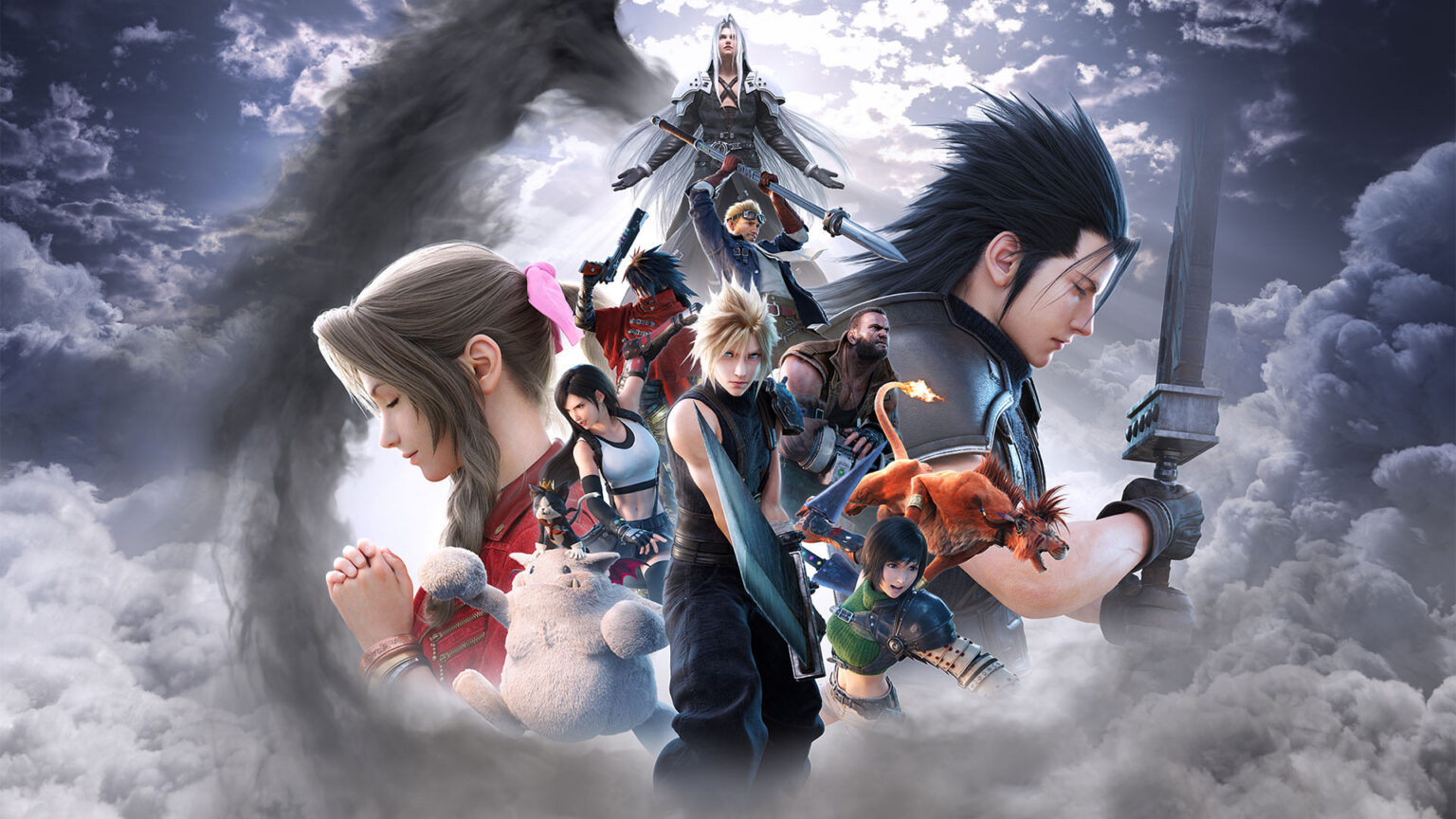
Square Enix says Final Fantasy VII Revelation is on track for a Spring 2027 release, and the game now stands as a rare example of a modern AAA trilogy being completed within a manageable timeframe. While many major games now take six or seven years to make, Square Enix is preparing to deliver three large Final Fantasy VII remake titles in about a decade.
Final Fantasy VII Revelation will launch on PC, PlayStation 5, Xbox Series X and S, and Nintendo Switch 2. It follows Final Fantasy VII Remake and Final Fantasy VII Rebirth, closing out a trilogy that has become one of Square Enix’s most ambitious projects.
The key point is not only that the trilogy is ending. It is that Square Enix has managed to keep the project moving while many other major franchises struggle with longer gaps, staff changes, and heavy production resets between entries.
Square Enix kept the same team moving from one game to the next
Director Naoki Hamaguchi said the development team already had a clear idea of how to approach each next entry before finishing the previous one. Toward the end of Remake, the team had a plan for Rebirth. Toward the end of Rebirth, it already understood how to move into Revelation.
That continuity mattered. Instead of breaking up the team, rebuilding processes, or spending years onboarding new developers, Square Enix kept most of the same staff aligned across the trilogy. That helped preserve knowledge, production rhythm, and creative direction.
| Game | Role in trilogy | Development advantage |
|---|---|---|
| Final Fantasy VII Remake | First entry | Built the foundation |
| Final Fantasy VII Rebirth | Second entry | Expanded the structure and scale |
| Final Fantasy VII Revelation | Final entry | Uses the established pipeline to finish the trilogy |
| Full trilogy | About 10 years | Faster than many modern AAA franchise cycles |
This kind of staff continuity is increasingly important in modern development. AAA projects are now so large that losing experienced team members between games can slow everything down. New staff need time to understand tools, systems, design rules, story goals, and production methods. By keeping the core team together, Square Enix avoided much of that friction.
Revelation benefits from an iterative approach
Another reason the trilogy has moved quickly is that Square Enix did not try to rebuild every system from scratch for each sequel. The remake trilogy is highly iterative. Each new game expands on the last one rather than replacing its foundation.
That does not mean the games are small or simple. Rebirth greatly expanded the scope with larger areas and a more open structure. Revelation is expected to build further on that foundation, including major elements such as the Highwind airship.
The difference is that Creative Studio I appears to be improving and expanding known systems instead of constantly restarting development. That approach is common in some long running series, but less common in modern AAA games, where sequels often try to reinvent presentation, systems, tools, and design direction.
This is one reason the comparison to Like a Dragon makes sense. Ryu Ga Gotoku Studio has long used an efficient, iterative pipeline that allows it to release mainline games and spin offs at a steady pace. Square Enix seems to have found a similar rhythm for Final Fantasy VII, even at a much larger scale.
The trilogy could influence future Square Enix projects
The development model behind Final Fantasy VII Revelation could become important for other Square Enix franchises. If the company can finish a massive remake trilogy in roughly 10 years, it may push other teams to rethink how they handle long gaps between entries.
Kingdom Hearts is the clearest example. Kingdom Hearts 4 has taken years to resurface, and the franchise has often struggled with long waits between major numbered releases. A more stable team structure, clearer sequel planning, and stronger reuse of existing systems could help future entries arrive faster.
Final Fantasy itself may also benefit. The franchise has often shifted teams, engines, combat systems, and creative direction between entries. That variety can be exciting, but it also increases development risk. The Final Fantasy VII remake trilogy shows that a more focused plan can still produce large, polished, modern games without making players wait too long.
A rare win in an era of long AAA development cycles
Modern AAA development has become difficult to sustain. Bigger worlds, high fidelity visuals, voice acting, performance targets, multiplatform launches, and huge QA demands all add time and cost. Many publishers now spend nearly a full console generation building one game.
Final Fantasy VII Revelation shows another path. Square Enix did not avoid the challenges of AAA development, but it reduced waste by keeping its team together and building on what already worked.
That approach also helps players. Long gaps can weaken momentum, especially for story heavy franchises. The Final Fantasy VII remake trilogy kept the journey moving at a pace that allowed fans to stay invested.
Revelation still needs to deliver as the final chapter. Expectations will be high because it has to close one of the most important stories in Square Enix history while satisfying players who have followed the remake project since its first entry.
Still, the production story is already notable. Square Enix has shown that a major AAA trilogy does not have to take multiple decades when the team, tools, and creative direction remain stable. Final Fantasy VII Revelation may become important not only as the final part of Cloud’s remake journey, but also as proof that large scale game development can still move with discipline and momentum.
Discussion (0)
Be the first to comment.