



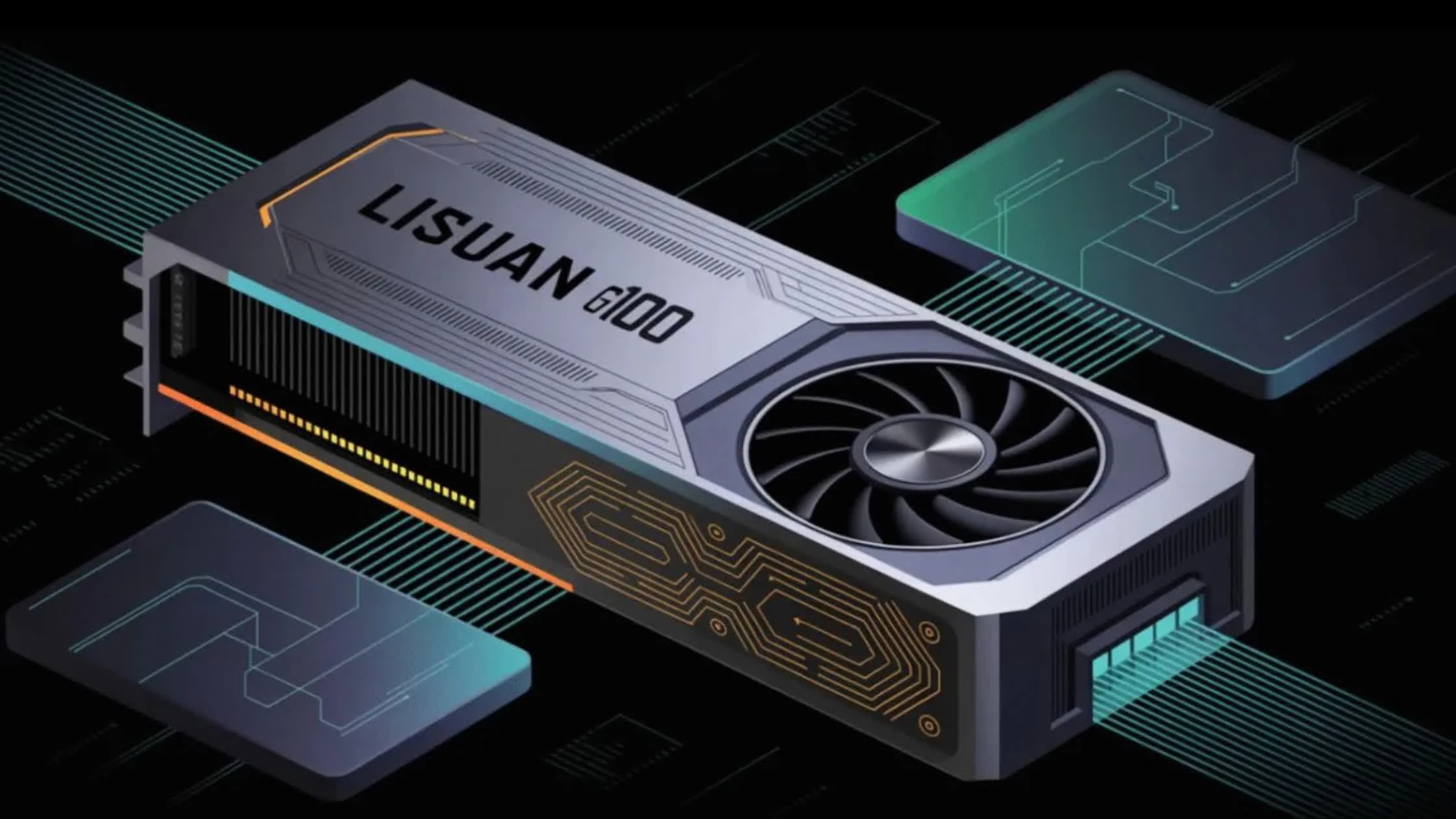
Chinese GPU maker Lisuan is preparing to launch its 7G100 gaming graphics card on May 20, and the card could become an important moment for China’s domestic graphics industry. The 7G100 is described as the country’s first fully domestic 6nm gaming GPU with Microsoft WHQL-certified drivers, which should help it work more reliably with Windows systems.
That driver certification matters because hardware is only one part of the GPU story. A gaming graphics card also needs stable drivers, API support, game compatibility, and regular software updates. NVIDIA, AMD, and Intel have years of experience in this area. For a newer domestic GPU maker, WHQL certification is a major step toward being taken seriously by gamers and PC builders.
Lisuan is trying to prove that China’s domestic GPUs can move beyond demos and support real PC games
The Lisuan 7G100 is based on the company’s 6nm 7G106 GPU. It comes with 12GB of GDDR6 memory on a 192-bit bus, PCIe 4.0 x16 support, 192 TMUs, 96 ROPs, and a 225W TDP. The card uses a single 8-pin power connector and has a triple-slot, triple-fan cooler design.
Lisuan is also giving the card modern display and media features. The 7G100 includes four DisplayPort 1.4a outputs and supports up to 8K 60Hz HDR output with FreeSync. It also supports AV1 4K 30 FPS encode, HEVC 8K 30 FPS encode, and AV1/HEVC 8K 60 FPS decode.
| Lisuan 7G100 detail | Specification |
|---|---|
| GPU | 6nm 7G106 |
| Memory | 12GB GDDR6 |
| Memory bus | 192-bit |
| PCIe support | PCIe 4.0 x16 |
| Power | 225W TDP, single 8-pin connector |
| Display outputs | Four DisplayPort 1.4a ports |
| API support | DirectX 12, Vulkan 1.3, OpenGL 4.6, OpenCL 3.0 |
The more interesting question is how it performs in real games. Lisuan has shown support for major titles such as Baldur’s Gate 3, Cyberpunk 2077, Elden Ring, Black Myth: Wukong, The Witcher 3, Monster Hunter Rise, Resident Evil 4, and Sekiro. That list is important because Chinese domestic GPUs have often struggled with wider game compatibility.
Early benchmark comparisons suggest the 7G100 may land close to the RTX 4060 in some synthetic tests. In the reference data, the card is behind the RTX 4060 in 3DMark Steel Nomad and Fire Strike, but ahead of it in Geekbench OpenCL. However, synthetic tests are not the same as real gaming. Actual performance will depend heavily on drivers, game support, frame pacing, and stability.
Lisuan also says the card will work with a wide range of CPU platforms, including Intel, AMD, Hygon, Loongson, Phytium, and Zhaoxin. Operating system support includes Windows, UOS, Ubuntu, and Kylinsoft. That shows the company is aiming beyond one narrow PC setup.
The 7G100 will be joined by other LX-series cards, including LX Ultra, LX Pro, and LX Max models for professional markets. Pricing has not been announced yet, but there will be a special Founders Edition version.
The 7G100 does not need to beat NVIDIA or AMD immediately to be important. Its real test is whether it can deliver stable drivers, broad game support, and acceptable performance for Chinese gamers. If Lisuan gets those basics right, the 7G100 could become a meaningful step toward a stronger domestic GPU ecosystem in China.

Discussion (0)
Be the first to comment.