



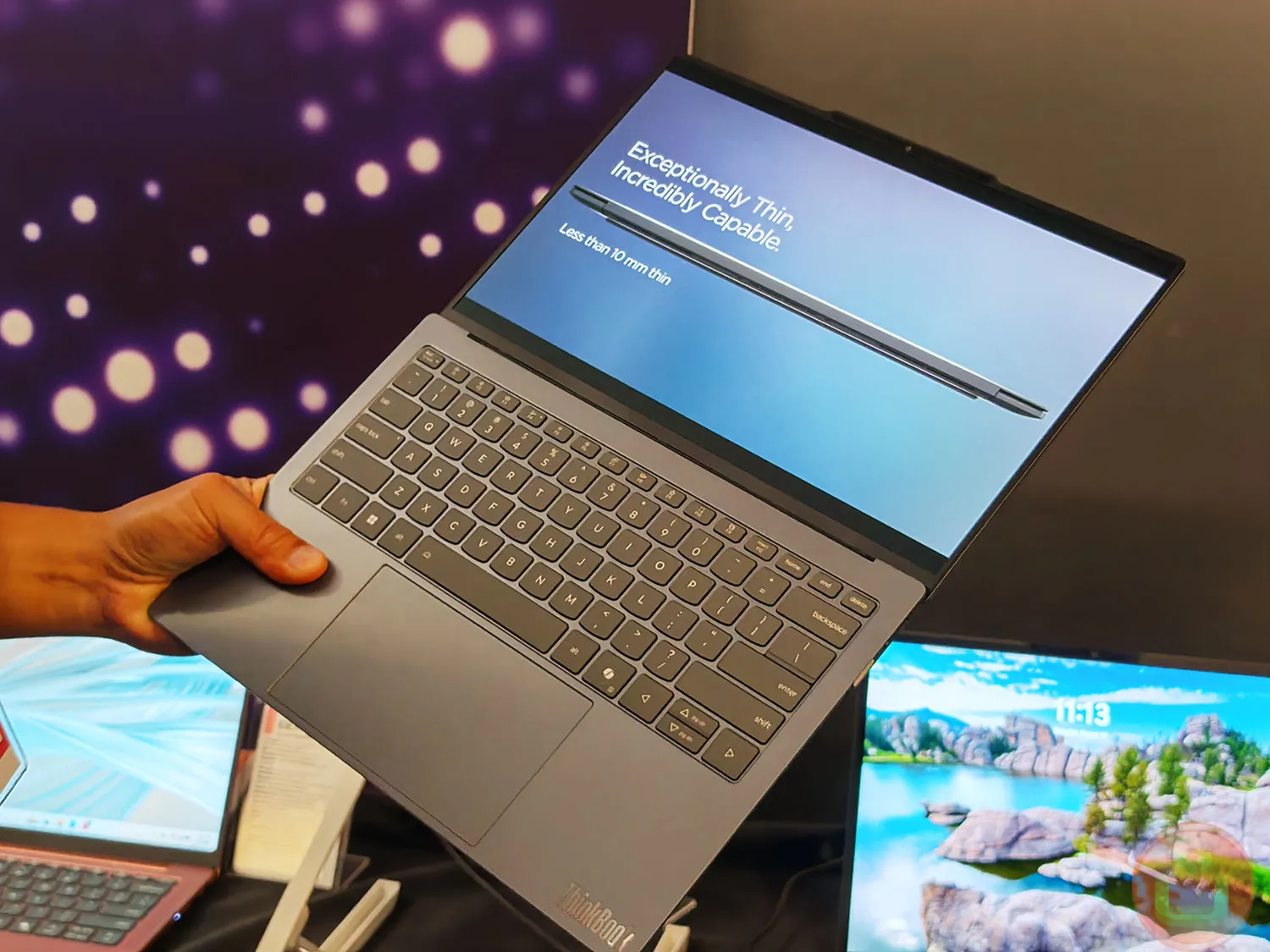
Lenovo has unveiled Project AeroBlade, a 14 inch laptop concept that uses solid state AirJet cooling instead of traditional fans to achieve an unusually thin and light design without giving up sustained performance.
The concept measures under 10mm thick and weighs less than 830 grams. Lenovo says its performance is comparable to current Intel powered premium laptops such as the ThinkPad X1 Carbon class.
The key technology is Lenovo's Active Flow cooling architecture, developed with Frore Systems and based on AirJet solid state cooling modules.
| Detail | Project AeroBlade |
|---|---|
| Display size | 14 inches |
| Thickness | Under 10mm |
| Weight | Under 830 grams |
| Cooling | Frore AirJet solid state cooling |
| Chassis | Magnesium aluminium |
| Display | OLED |
| Connectivity | Thunderbolt 4 |
| Wireless | WiFi 7 |
| Status | Concept device |
AirJet Replaces Traditional Laptop Fans
Most laptops still depend on fans, heat pipes, and heatsinks to move heat away from processors.
Project AeroBlade takes a different approach.
Frore Systems' AirJet modules use vibrating membranes to generate high speed pulses of air. There are no spinning fan blades.
An AirJet Mini Slim module is 2.65mm thick, consumes up to 1 watt of power, and is rated to remove up to 5.25 watts of heat.
Because the modules are much thinner than conventional fans, laptop makers can place them in different parts of the chassis instead of designing the entire internal layout around a large cooling assembly.
That flexibility is a major reason Lenovo can reduce both thickness and weight.
The Cooling System Changes the Internal Design
AirJet is not simply a smaller replacement for a normal fan.
Traditional laptops have spent decades evolving around fixed cooling layouts. Motherboards, batteries, vents, heat pipes, and internal frames are usually positioned around one or two fans.
Using solid state cooling allows Lenovo to rethink that arrangement.
Project AeroBlade uses a compact motherboard and distributes the cooling system differently across the chassis.
Air intake and exhaust are also concentrated more toward the rear, reducing the need for large ventilation openings on the bottom.
This helps create a cleaner exterior while freeing internal space.
Lenovo Claims Strong Sustained Performance
Very thin laptops often face a simple problem: they can perform well for short periods, but heat eventually forces the processor to slow down.
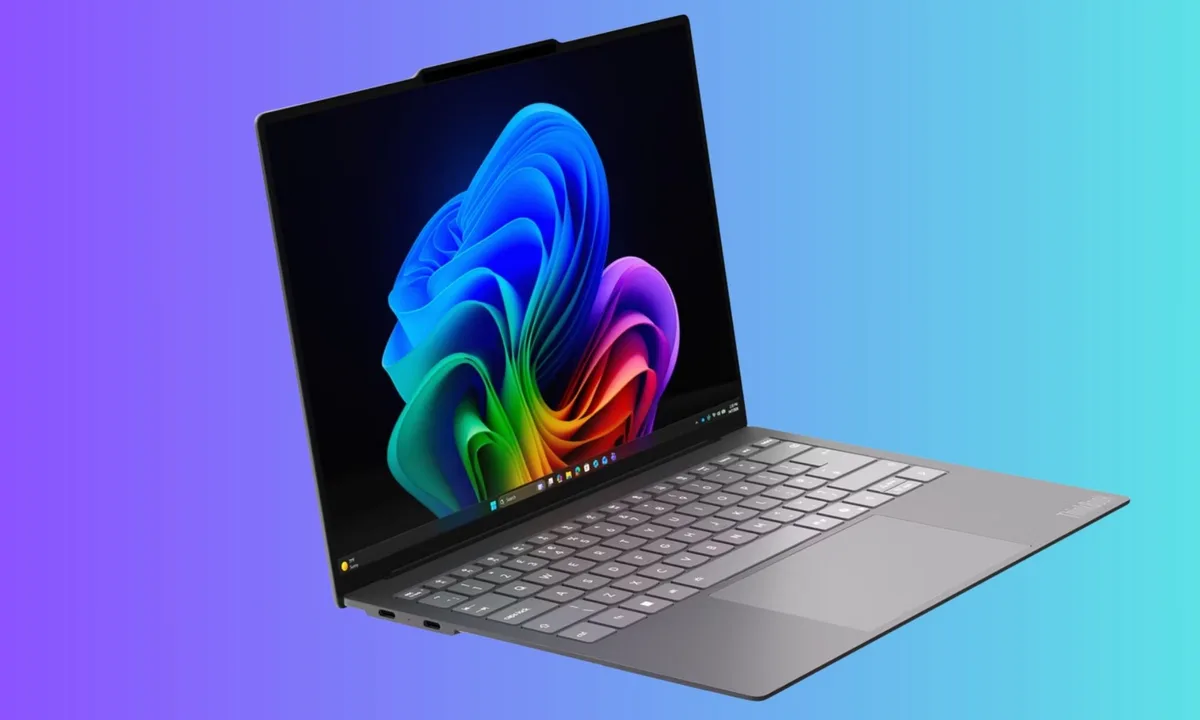
Lenovo says AeroBlade's Active Flow system is intended to avoid that trade off.
The company claims the laptop can maintain AI and productivity performance closer to conventional premium systems despite its much thinner body.
The cooling system is not completely silent. Under heavier loads, AirJet still moves air and can create a faint airflow noise.
However, it avoids the spinning fan sound commonly associated with traditional laptops.
The Chassis Still Includes Premium Features
AeroBlade is built from a magnesium aluminium material and includes a high screen to body OLED display.
Despite measuring under 10mm, Lenovo has also included Thunderbolt 4 ports.
WiFi 7 is part of the design as well.
The specifications make it clear that Lenovo is not presenting AeroBlade as a low power fanless notebook.
The goal is to create a premium productivity laptop with the performance and connectivity expected from a regular flagship machine, but in a significantly thinner and lighter form.
Cooling Could Matter More Than Another Processor Upgrade
Cooling technology directly affects several parts of laptop design.
A smaller cooling system can allow manufacturers to build thinner machines, reduce weight, increase battery capacity, or use the extra internal space for other components.
It can also influence sustained processor performance and noise.
That gives technologies such as AirJet broader implications than a typical yearly CPU upgrade.
If the cooling hardware proves practical at scale, manufacturers could use the saved internal space differently depending on the product.
One laptop could prioritize extreme portability, while another could keep a conventional thickness and use the extra space for a larger battery.
Commercial Availability Is Not Confirmed
Project AeroBlade remains a proof of concept, and Lenovo has not announced a retail version, price, or release date.
Integrating AirJet also requires more engineering work than simply replacing a conventional fan.
Manufacturers have to redesign internal layouts around the new cooling architecture, which can increase development costs.
That helps explain why solid state cooling has appeared in demonstrations for several years without becoming common in mainstream laptops.
Still, AeroBlade appears much closer to a conventional premium laptop than many experimental PC concepts.
Its main advantages are easy to understand: lower weight, reduced thickness, quieter cooling, and the possibility of maintaining strong performance.
Whether Lenovo turns Project AeroBlade into a commercial product will depend on cost, reliability, and manufacturing readiness, but the concept shows how new cooling technology could reshape premium laptops without requiring an entirely new form factor.


Discussion (0)
Be the first to comment.