


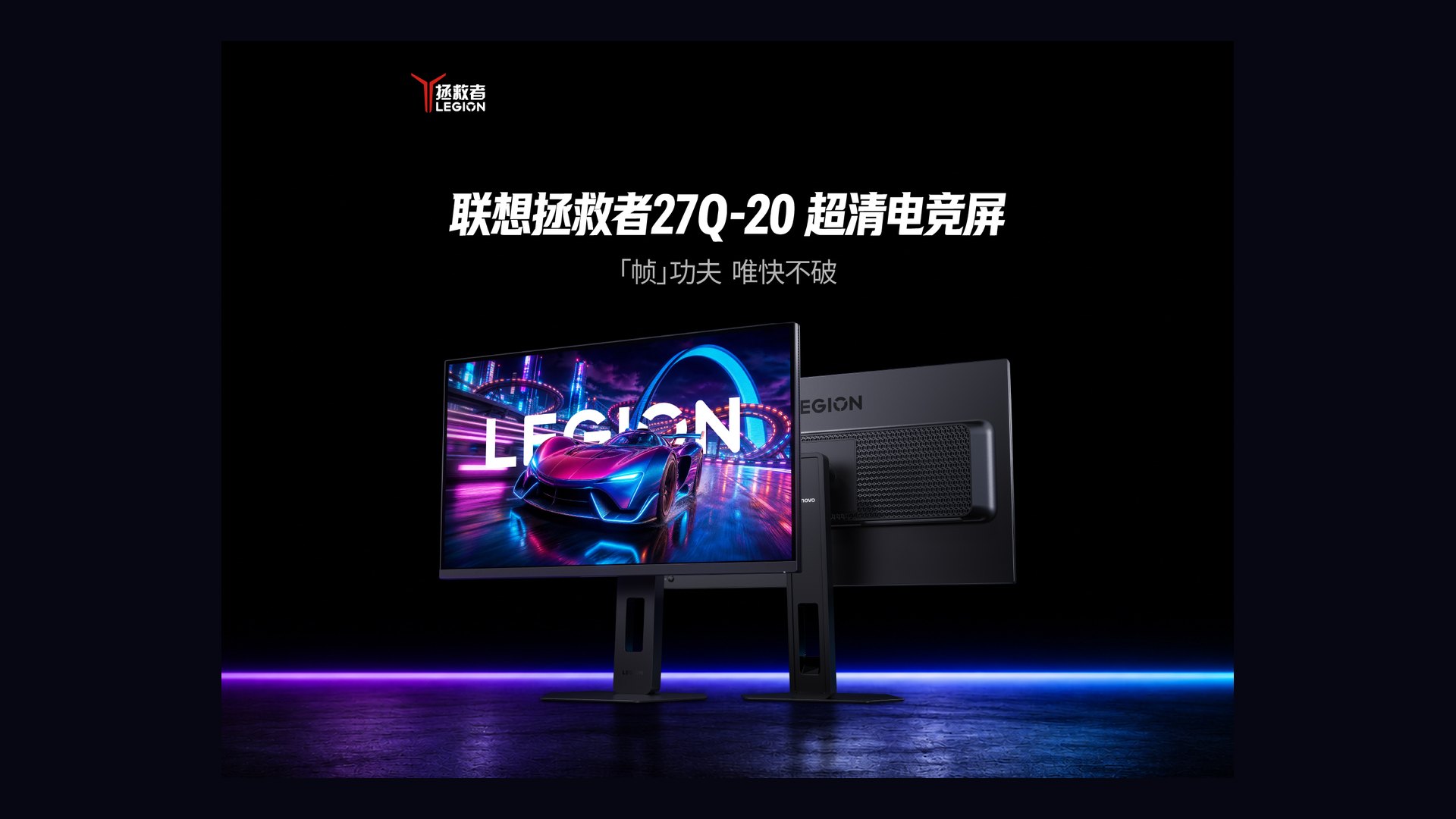
Lenovo has listed a 27-inch QHD gaming monitor with a native 320Hz panel on its China store at 1,149 yuan, and the interesting number is what sits above it. At that price the new Legion 27Q-20 undercuts two slower 27-inch monitors Lenovo still sells on the same storefront.
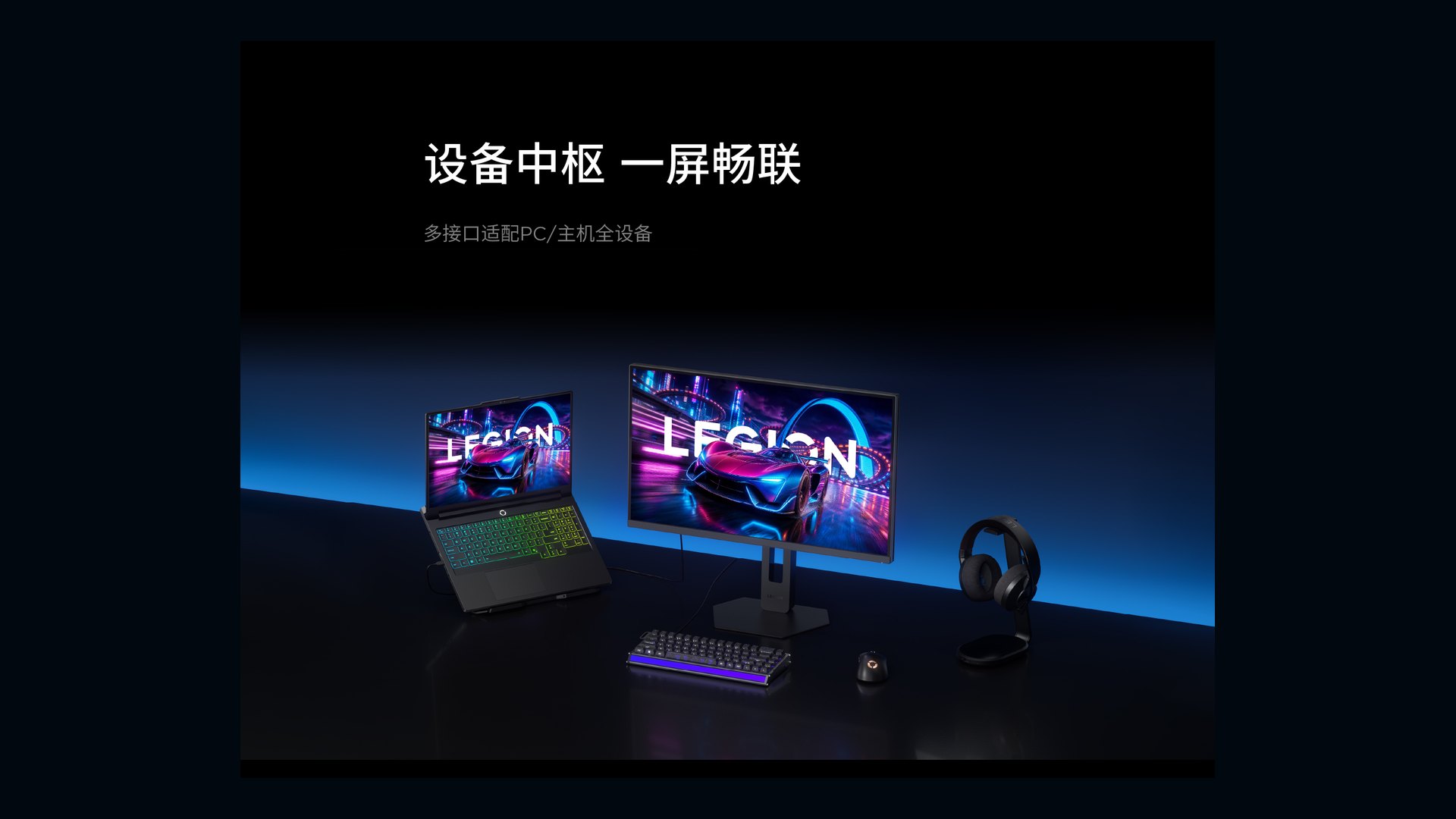
The panel is a 27-inch IPS running 2560 x 1440 at 320Hz, with 10-bit colour delivered through 8-bit plus FRC. Lenovo quotes 99% sRGB and 95% DCI-P3 coverage, 400 cd/m2 of brightness and a typical contrast ratio of 1,000:1.
Refresh rates that high usually arrive on 1080p panels or on OLED screens that cost several times as much.
How 1,149 yuan compares with the rest of Lenovo's monitor range
Lenovo's own store prices the 300Hz Legion 27Q-11 at 1,299 yuan and the 10-bit 240Hz Legion 27QD-10 at 1,399 yuan. The 320Hz model comes in 150 yuan under the first and 250 yuan under the second.
The cheapest 27-inch QHD Legion, the 8-bit 240Hz 27Q-10, is 999 yuan. Lenovo's QD-OLED versions of the same size start at 2,299 yuan.
Lenovo's pricing service returns 1,149 yuan on every sales channel it covers, with no promotional campaign attached and no higher base price sitting behind it. That reads as a standing store price rather than a launch promotion. Lenovo caps orders at one unit.
The 320Hz figure is native, not an overclock
Lenovo's product listing describes the refresh rate as native, and its footnotes call 320Hz the highest rate the monitor supports at 2560 x 1440. No overclock mode appears anywhere in Lenovo's material.
Lenovo adds that reaching 320Hz needs a compatible graphics card, interface and cable, and that the rate has to be selected manually in the operating system or the graphics driver.
Two HDMI 2.1 FRL ports each carry 2560 x 1440 at 320Hz, next to a single DisplayPort 1.4 input Lenovo rates at up to 32.4Gbps. A DisplayPort cable is in the box. Variable refresh support covers AMD FreeSync Premium, NVIDIA G-SYNC Compatible and VESA AdaptiveSync.
One naming trap is worth flagging. Lenovo already sells an older monitor called the Legion Y27q-20, a 165Hz display that shares almost nothing with this one except the digits.
Response times run from 0.5 ms to 5 ms
Lenovo publishes six response-time settings rather than one. The 0.5 ms figure applies in MPRT mode, 1 ms is the grey-to-grey time at overdrive Level 4, and the remaining steps run 2 ms, 3 ms, 4 ms and 5 ms with overdrive off.
Lenovo also states that turning MPRT on disables AMD FreeSync and can cause slight flicker. The headline 0.5 ms number and variable refresh rate are therefore mutually exclusive, which is the sort of caveat that rarely survives a spec sheet.
At 1440p the 27Q-20 lands between a 280Hz Alienware panel and the 500Hz class occupied by the ASUS ROG Swift OLED PG27AQDPR.
The stand is generous, the HDR is not
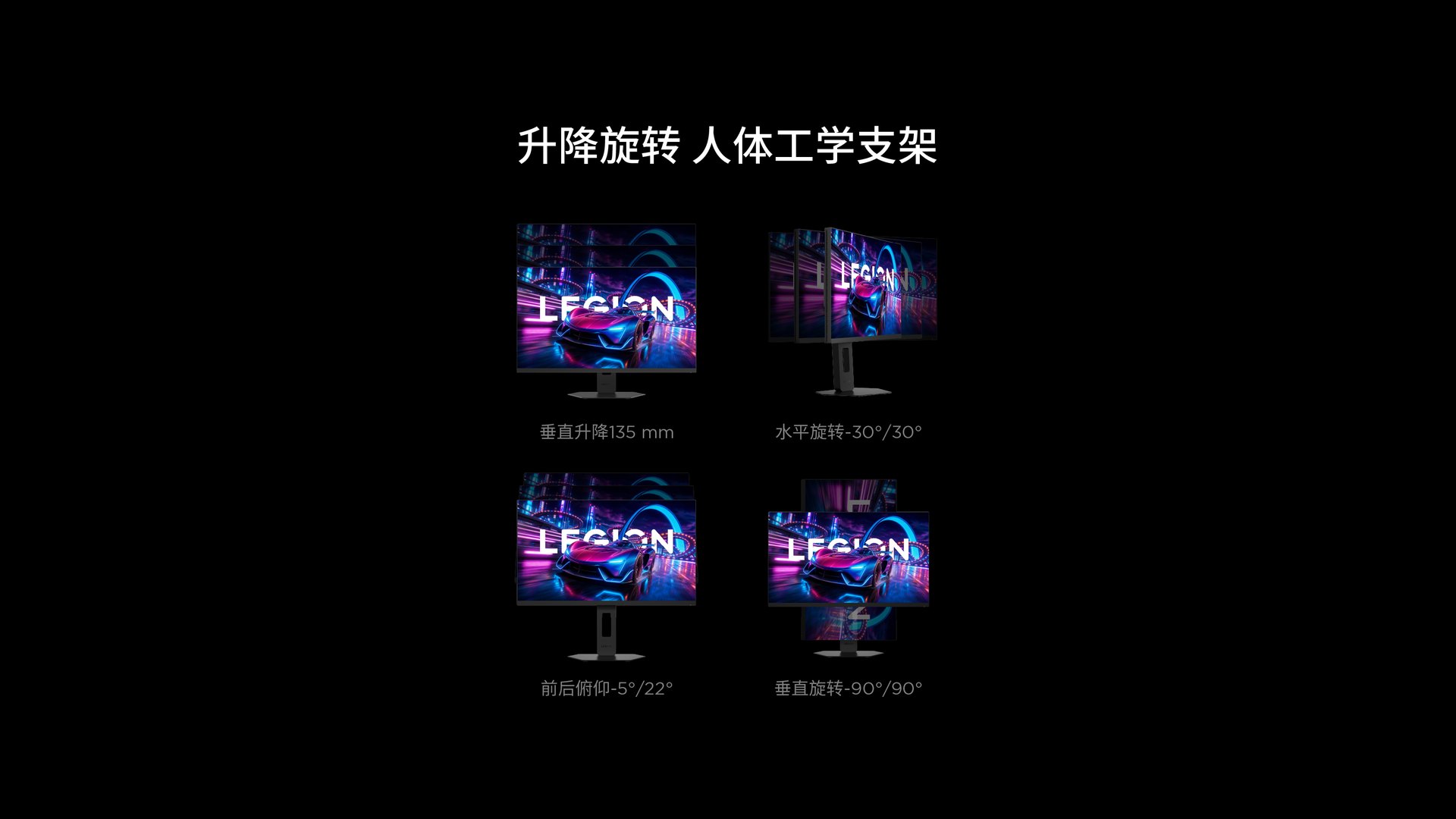
The stand tilts from -5 to 22 degrees, swivels 30 degrees each way, pivots 90 degrees in both directions and raises the screen by 135 mm. Full ergonomic adjustment is unusual in this price bracket, where tilt-only stands are the norm. A 100 x 100 mm VESA pattern is also present.
HDR is a thinner story. Lenovo certifies the monitor to DisplayHDR 400 and quotes 400 cd/m2 as both the typical and the peak brightness, so there is no headroom above the standard figure.
Lenovo's footnotes say the local dimming system uses four backlight bars split into two zones. The monitor has no speakers and no audio output of any kind.
What Lenovo has not published
Lenovo has not published a US price, a US release date or any availability outside China, and its global newsroom carries no announcement for the monitor. Converting the yuan figure would invent a number Lenovo has not set.
A US reference point exists for the specification, though not for this model. A 27-inch 1440p 300Hz Acer Nitro was listed at $229.99 on October 5. At 1080p, 320Hz displays such as the Alienware AW2525HM have been selling near $200.
Lenovo lists no power draw, no dimensions and no weight for the 27Q-20. The specification tab on its store page is empty, so every figure above comes from the artwork Lenovo attaches to the listing. Store prices in China can move without notice, and nothing in Lenovo's material commits the company to selling this monitor anywhere else.
Discussion (0)
Be the first to comment.