



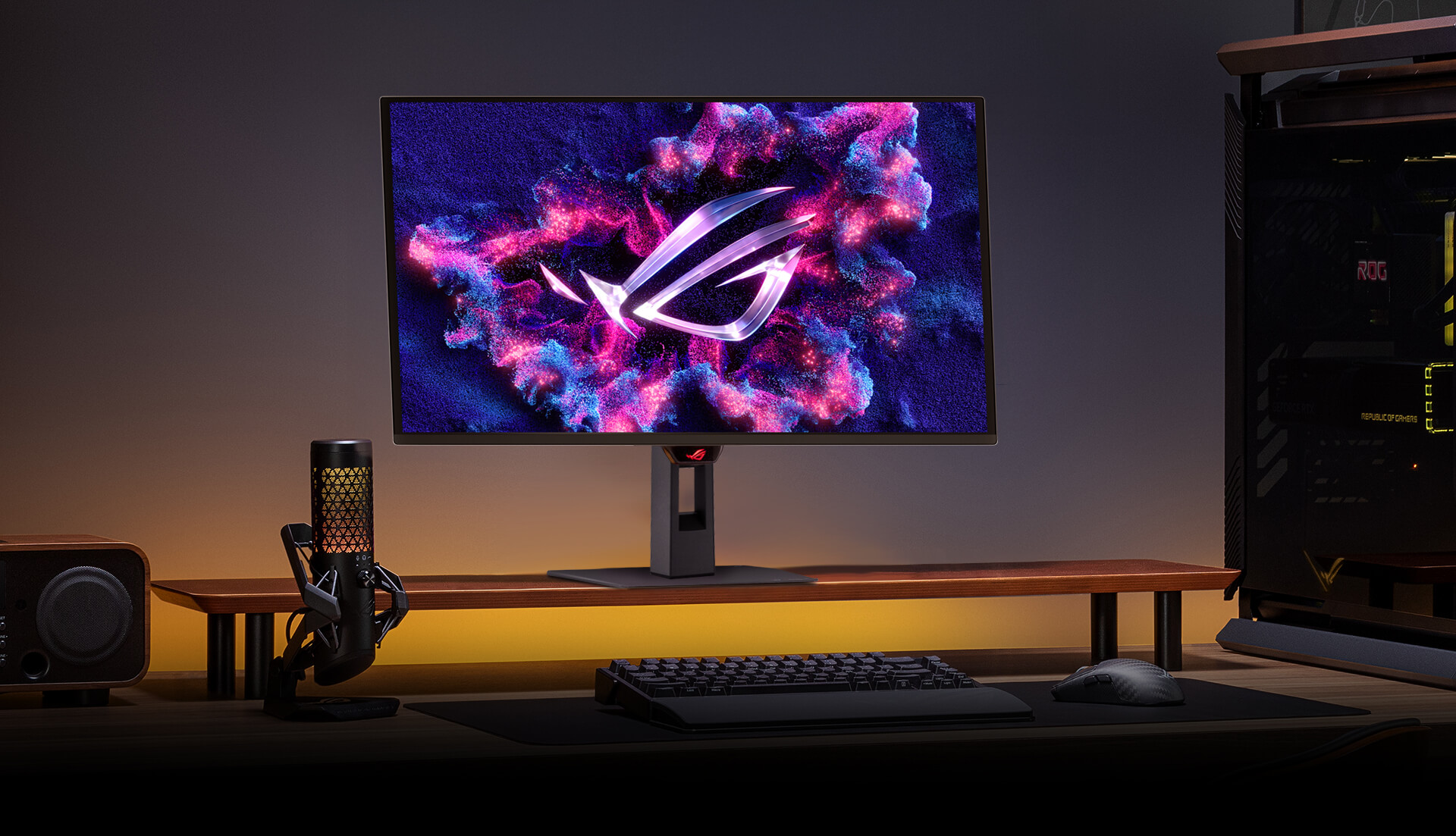
ASUS has listed the ROG Swift OLED PG27AQDPR, a new 26.5 inch gaming monitor built around a 2560 by 1440 QD-OLED panel with a refresh rate of up to 500Hz.
The monitor is aimed at competitive players who want extremely fast motion performance without moving down to a lower resolution. ASUS claims a 0.03ms gray-to-gray response time, alongside support for AMD FreeSync Premium Pro and NVIDIA G-SYNC Compatible technology.
Pricing and availability have not been confirmed. However, the new ROG Swift model shares many of its core panel specifications with the existing ROG Strix OLED XG27AQDPG, which is currently priced at $849 in the United States and around €799 in parts of Europe.
ASUS ROG Swift OLED PG27AQDPR specifications
The PG27AQDPR combines a QHD resolution with a refresh rate normally associated with lower resolution esports monitors.
| Specification | Details |
|---|---|
| Screen size | 26.5 inches viewable |
| Panel type | QD-OLED |
| Resolution | 2560 by 1440 |
| Maximum refresh rate | 500Hz |
| Response time | 0.03ms gray-to-gray |
| Typical brightness | 300 nits |
| Peak HDR brightness | Up to 1,000 nits |
| Contrast ratio | 1,500,000:1 |
| Colour depth | True 10-bit |
| Colour coverage | 99% DCI-P3 |
| Factory calibration | Delta E below 2 |
| HDR certification | VESA DisplayHDR 500 True Black |
| Adaptive sync | FreeSync Premium Pro and G-SYNC Compatible |
The 500Hz refresh rate is most useful for competitive games that can run at very high frame rates. Players will need a powerful graphics card and processor to approach 500 frames per second at 1440p, especially in newer titles.
For slower games, the QD-OLED panel should provide the more noticeable benefit through strong contrast, fast pixel response, and deep black levels.
Panel generation details remain unclear
ASUS currently provides conflicting information about the exact QD-OLED generation used in the monitor.
The main product page describes the PG27AQDPR as using a third generation QD-OLED panel. The technical specification section instead refers to Tandem QD-OLED technology.
The listed brightness, contrast, colour, and refresh rate figures match those of the existing ROG Strix OLED XG27AQDPG, which uses a third generation panel.
| ASUS listing | Panel description |
|---|---|
| Main product page | Third generation QD-OLED |
| Technical specifications | Tandem QD-OLED |
| Confirmed final panel type | Not yet clear |
Until ASUS updates the listing or provides further technical information, it is not possible to confirm whether the Tandem reference is accurate or a documentation error.
ROG Swift design adds a different stand and rear housing
The new monitor differs from the existing Strix model mainly through its exterior design and stand.
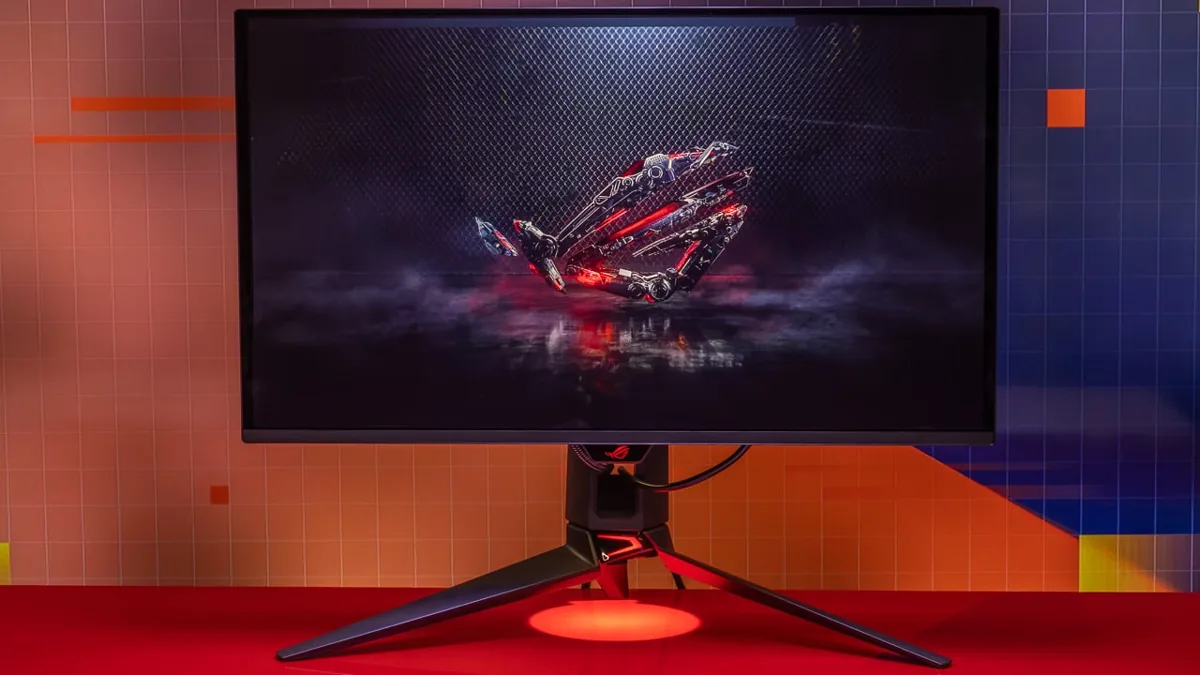
ASUS has given the PG27AQDPR a semi-transparent rear cover and an ROG logo projector positioned beneath the display. Its stand supports height adjustment, tilt, swivel, and pivot.
A quarter inch socket is also included for mounting a camera, light, microphone, or another compatible accessory.
| Stand feature | Included |
|---|---|
| Height adjustment | Yes |
| Tilt | Yes |
| Swivel | Yes |
| Pivot | Yes |
| Quarter inch accessory socket | Yes |
| ROG logo projector | Yes |
These additions may appeal to streamers and players who want a more elaborate desk setup, although they do not change the monitor’s core image quality.
OLED Care Pro aims to reduce burn-in risk
The PG27AQDPR includes ASUS OLED Care Pro features and a Neo Proximity Sensor.
The sensor detects when you move away from the screen and can automatically switch the panel to black. This is designed to reduce the time static images remain visible, lowering the risk of permanent image retention.
The monitor also includes OLED Anti-Flicker 2.0. ASUS says its luminance compensation algorithm reduces flicker by 20 percent compared with previous generation panels.
Settings can be managed through the DisplayWidget Center application using a mouse rather than the monitor’s physical controls.
| OLED protection feature | Purpose |
|---|---|
| Neo Proximity Sensor | Turns the screen black when you leave |
| OLED Care Pro | Provides panel maintenance functions |
| Uniform brightness | Limits sudden brightness changes |
| Custom heatsink | Helps manage panel temperature |
| OLED Anti-Flicker 2.0 | Reduces visible flicker |
| Three year warranty | Includes panel burn-in coverage |
ASUS is providing a three year warranty that covers OLED burn-in, giving buyers some protection against one of the main concerns associated with OLED monitors.
Connectivity lacks DisplayPort 2.1 and USB-C
The monitor includes one DisplayPort 1.4 input with Display Stream Compression and two HDMI 2.1 FRL ports.
It also provides two USB Type-A ports with 5Gbps transfer speeds and a headphone connection.
| Connection | Quantity |
|---|---|
| DisplayPort 1.4 with DSC | 1 |
| HDMI 2.1 FRL | 2 |
| USB Type-A 5Gbps | 2 |
| Headphone jack | 1 |
| USB-C | None |
| DisplayPort 2.1 | None |
The absence of DisplayPort 2.1 means the monitor relies on Display Stream Compression to deliver its maximum resolution and refresh rate through DisplayPort.
There is also no USB-C input, so the monitor cannot provide a single cable display and charging connection for laptops.
These limitations may be disappointing for a premium display, especially as more high-end monitors begin adopting DisplayPort 2.1.
The 500Hz refresh rate targets competitive gaming
A 500Hz display refreshes the image every two milliseconds. That can reduce motion blur and input delay when a game is running at a similarly high frame rate.
The difference will be most relevant in titles such as Counter-Strike 2, Valorant, Overwatch 2, and other competitive shooters. It will be less useful in cinematic single-player games that typically run at much lower frame rates.
| Game type | Expected benefit from 500Hz |
|---|---|
| Competitive shooters | Very high |
| Fast esports games | High |
| Racing games | Moderate |
| Action games | Moderate |
| Strategy games | Low |
| Cinematic single-player games | Limited |
The QHD resolution creates a demanding balance. Reaching 500 FPS at 2560 by 1440 will require reduced graphics settings in many games, even with high-end hardware.
Players who cannot reach those frame rates can still benefit from the OLED panel’s response time, contrast, and image quality.
Pricing will determine how the Swift model compares
ASUS has not announced when the PG27AQDPR will go on sale or how much it will cost.
The technically similar ROG Strix OLED XG27AQDPG provides a useful reference at $849 in the United States. The ROG Swift model may cost more because of its stand, rear design, accessory mount, and branding.
The final price will determine whether those additions justify choosing it over the existing Strix version.
The ASUS ROG Swift OLED PG27AQDPR offers a strong combination of QHD resolution, 500Hz performance, QD-OLED image quality, and extensive OLED protection. Its missing DisplayPort 2.1 and USB-C connections are notable weaknesses, while the conflicting panel descriptions need clarification before launch.

Discussion (0)
Be the first to comment.