


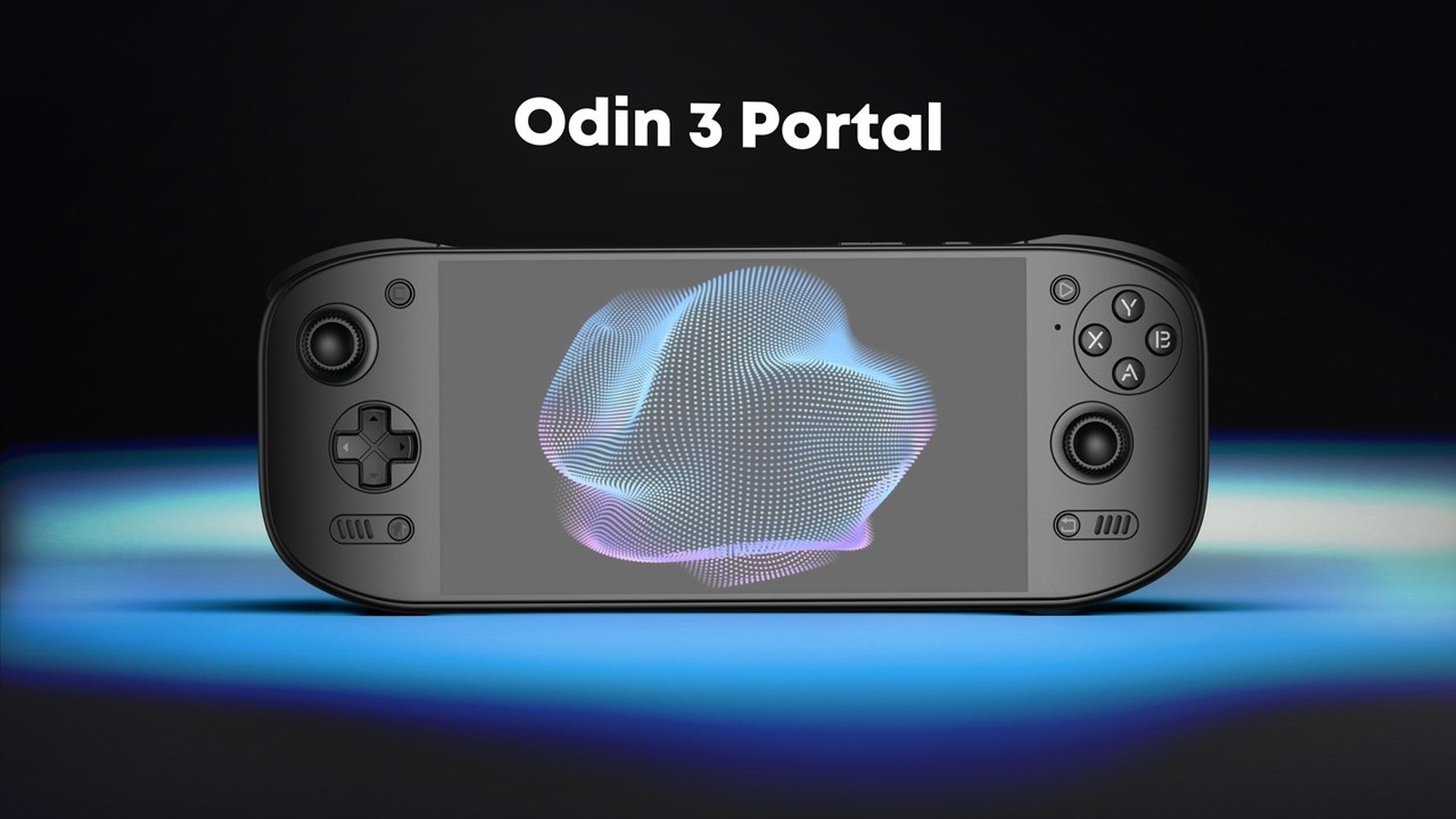
AYN's entire Odin 3 Portal announcement is a 38-second video posted to the company's own YouTube channel on October 19. In it AYN credits Hall effect sensing to the joysticks and says nothing at all about the triggers.
Every specification AYN has published about the handheld sits inside that clip as on-screen text. The description below it lists no specifications, and AYN's own store does not sell the product.
What AYN actually put on screen
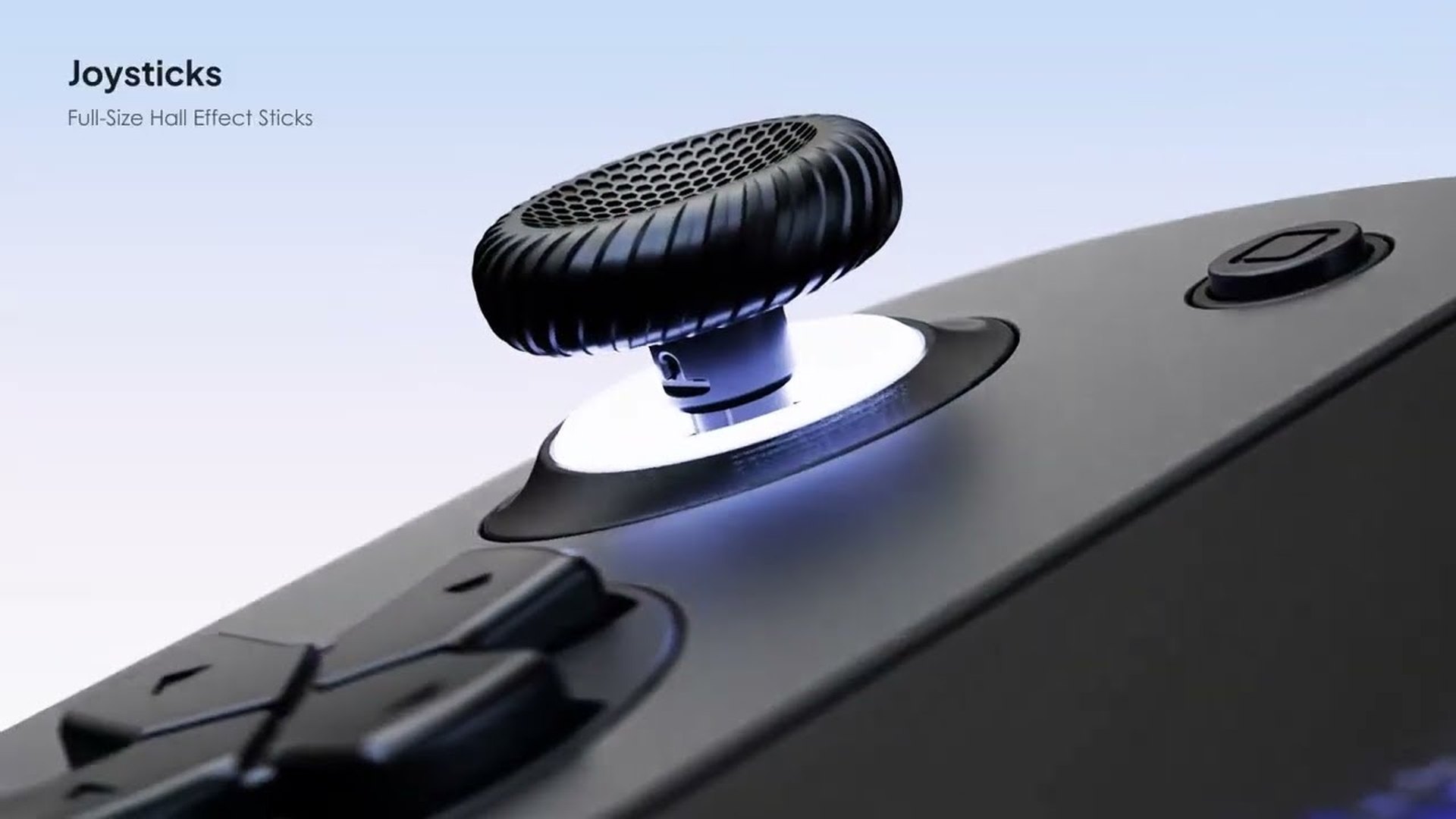
The video runs twelve caption cards and a title card reading Odin 3 Portal. The battery card gives 9,000mAh, and a card headed Lightweight Design reads: "More Battery Capacity. Better Cooling. Still Just 450g".
So AYN frames the extra mass as a win rather than a cost. A performance card reads "Powered by Qualcomm Dragonwing Q8".
A cooling card shows one fan behind a slotted exhaust grille along the top edge. Two more cards cover the body, promising paint that will not peel and grips described only as ergonomic.
AYN also claims "Anti-Fingerprint AG Glass" over the display, which is the only thing it says about the screen. The closing render shows a single oval button on the back of the right grip, and AYN does not name it, count it or call it a paddle.
Hall effect covers the sticks and nothing else
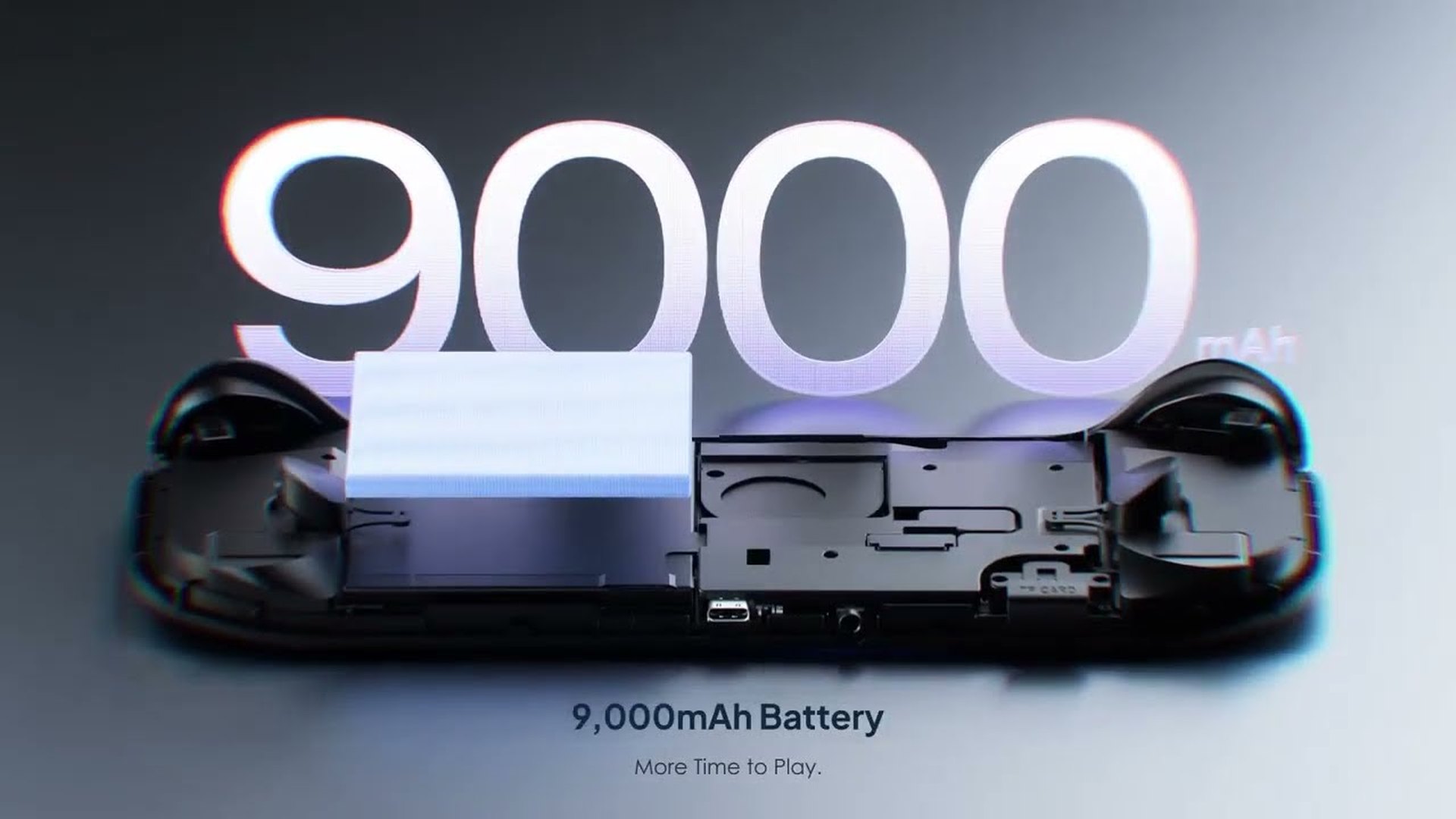
The joystick card reads "Full-Size Hall Effect Sticks". That is the only place in the video where AYN uses the term.
The trigger card reads "Precision in Every Pull", and the button card reads "Smooth Feel. Quiet Presses". Neither one names a sensor type, a magnet or analog travel.
AYN's existing Odin 3 listing follows the same pattern. Its spec line lists "Hall Sticks" and does not describe the triggers at all.
Stick sensing and trigger sensing are separate design choices, and the two get blurred together often. Digital Citizen covered a recent example in 8BitDo's move to TMR sticks on its cheaper C series pads.
The Portal keeps the Odin 3's chip
AYN names the same Dragonwing Q8 for the Portal that its Odin 3 store listing already names. No part number appears in either place, so the exact silicon is not pinned down by anything AYN has said.
Against the Odin 3's published 8000mAh and 390g, the Portal gains 1,000mAh and 60 grams. The only published changes are the battery, the weight, the cooling, the glass and the size of the sticks.
On AYN's own numbers, then, this is a bigger body rather than a faster machine.
AYN has nothing to sell yet
The obvious address for an Odin 3 Portal product page returns a 404. AYN's store catalogue lists 28 items, and the Portal is not one of them.
AYN's shipment dashboard has no Portal row either. Its newest entries are Odin 3 and Thor units dated October 13.
The line around it has already moved on price. Archived captures of AYN's own Odin 3 page show the 8GB and 128GB base model at $329 a year ago, $339 in June and $369 now.
The 16GB and 512GB tier went from $449 to $529 over the same stretch, and the 24GB and 1TB tier is out of stock in every colour. AYN publishes no reason for the increases, though MSI has warned that memory and SSD costs are pushing handheld prices up.
What AYN has not published about the Odin 3 Portal
There is no screen size, no panel type, no resolution and no refresh rate. RAM tiers, storage tiers, the Android version and the colours are all absent too.
No price appears anywhere, and no release or preorder date has been set. Anbernic opened preorders for its dual-screen handheld with a December 10 ship date days earlier, which is the level of detail AYN has not reached.
A 7-inch OLED panel has been reported for the Portal, but AYN has published no display specification of any kind. Figures and prices attached to an unlisted product can still change before it goes on sale.

Discussion (0)
Be the first to comment.