



Intel and SoftBank are working on a new memory technology called ZAM, or Z Angle Memory, and the early claims are ambitious. The goal is to offer a high bandwidth, high capacity, lower power memory option for AI accelerators, with up to twice the bandwidth of HBM4.
HBM is currently the key memory technology for high end AI GPUs, but it has limits. As AI chips demand more bandwidth and more capacity, HBM stacks also face challenges around heat, power, packaging complexity, and supply. ZAM is being designed to address some of those problems.
ZAM is built around a different stacked memory structure

The current ZAM design uses a nine layer stack. It includes eight DRAM layers and a logic controller, with very thin silicon substrates between the layers. The design also uses Through Silicon Vias and hybrid bonding to connect the stack.
The reported target is around 5.3TB per second of bandwidth per stack, with about 10GB capacity per stack and 30GB per package. ZAM is also expected to offer around 0.25Tb per second of bandwidth per square millimeter.
| Feature | ZAM target |
|---|---|
| Stack design | Nine layers |
| DRAM layers | Eight |
| Capacity per stack | Around 10GB |
| Capacity per package | Around 30GB |
| Bandwidth per stack | Around 5.3TB per second |
| Timeline | Around 2028 to 2030 |
The main advantage is not only speed. Intel and SoftBank are also targeting better thermals and lower power. ZAM’s vertical structure is meant to improve heat dissipation and reduce some of the structural problems that appear as HBM stacks grow taller and more power hungry.
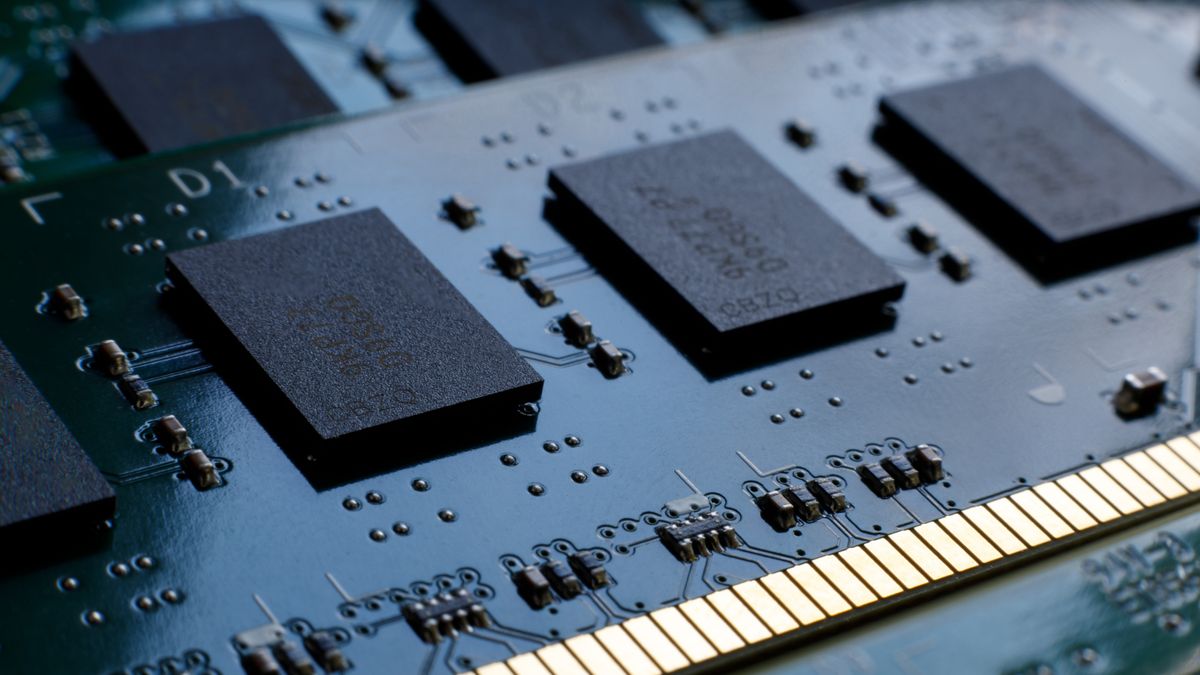
The longer term idea is to use ZAM in a 3.5D packaging approach. That would combine vertical and horizontal layers, high bandwidth memory, power and ground rails, silicon photonics, and legacy I O on one substrate. If it works, it could give AI chipmakers another path beyond standard HBM.
The timing matters. ZAM is not expected to arrive immediately. A 2028 to 2030 target means HBM4 and HBM4E will still dominate the near term AI hardware market. ZAM also needs working demos, manufacturing proof, software and platform support, and real adoption before it can be judged properly.
Still, the interest makes sense. AI chips are becoming more limited by memory movement, not only raw compute. Any memory technology that can increase bandwidth, lower power, and reduce heat has a clear opening.
For now, ZAM is best seen as a promising future option rather than an HBM replacement today. But if Intel and SoftBank can bring it to production at scale, it could become one of the more important memory technologies for AI hardware near the end of the decade.

Discussion (0)
Be the first to comment.