



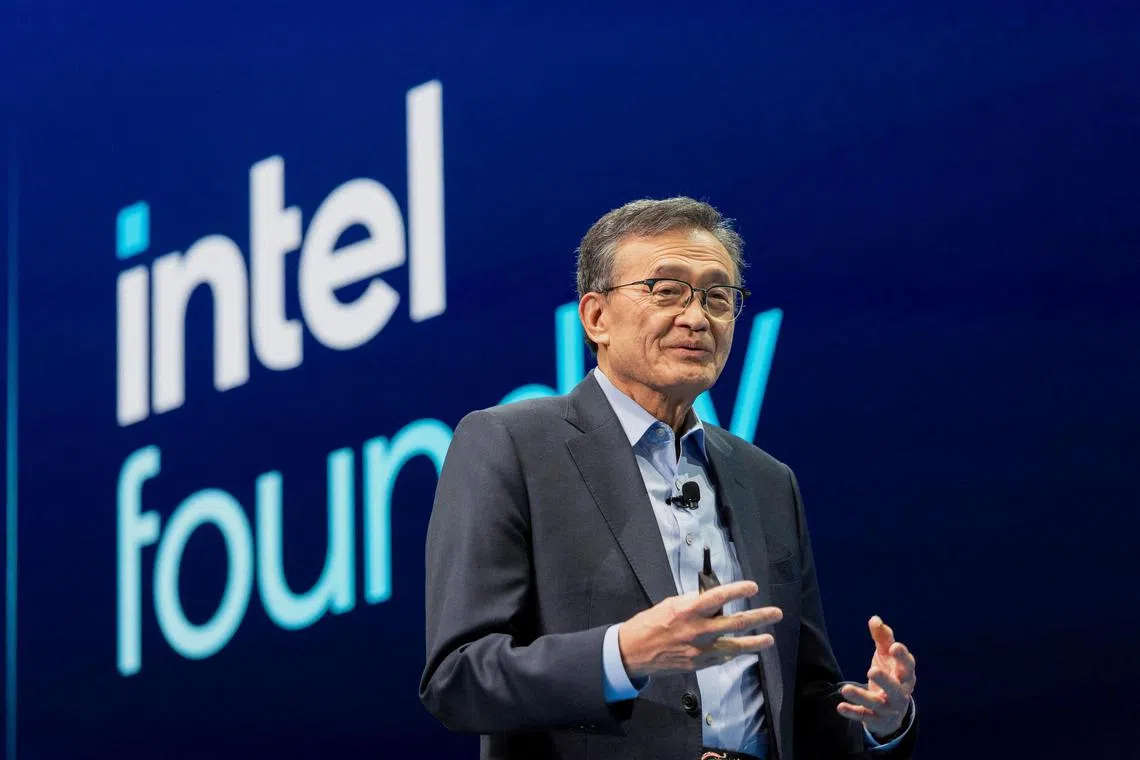
Intel CEO Lip Bu Tan says he was close to stepping away from the semiconductor industry before a personal plea convinced him to take on one more challenge: helping save Intel. In a recent podcast interview, Tan described how friends warned him not to accept the job, but one message about Intel’s importance to the industry and the United States changed his thinking.
Tan joined Intel as CEO in 2025 after years of experience in the chip industry, including his successful leadership at Cadence Design Systems. He said Intel had long been a role model for him because of its past strength in semiconductors, margins, manufacturing, and engineering culture. Watching the company lose ground in recent years made the decision more emotional.
The story gives a closer look at why Tan accepted one of the hardest jobs in technology. Intel is trying to rebuild its manufacturing edge, regain trust with foundry customers, and compete more directly with NVIDIA and AMD in AI, CPUs, GPUs, and custom silicon.
Why Lip Bu Tan almost rejected Intel
Tan said most industry friends advised him not to take the Intel job. Their reasoning was simple. Intel’s problems were deep, success was not guaranteed, and Tan already had a strong legacy after turning Cadence into a major success.
He also revealed that he had been considered for the Intel CEO role earlier, around 2021, but passed because of a promise to stay at Cadence until his successor became CEO. This time, the decision was different because he felt more emotionally invested in Intel’s future.
| Key point | Detail |
|---|---|
| CEO role | Lip Bu Tan joined Intel as CEO in 2025 |
| Earlier chance | He was reportedly a final candidate in 2021 |
| Main concern | Friends warned the turnaround could fail |
| Turning point | A friend asked him to save Intel before retiring |
| Family support | His wife supported the decision this time |
| Main focus | Foundry, AI chips, CPUs, GPUs, and packaging |
Tan said his wife also supported the move, telling him that his heart was already in it. That support helped him decide to accept the challenge.
Intel is trying to rebuild its foundry business
Intel’s recovery did not start from nothing. Former CEO Pat Gelsinger had already pushed the company toward a foundry focused strategy and laid the groundwork for advanced process nodes. Tan is now trying to turn that foundation into a more customer focused business.
The company is working to compete with TSMC and attract major outside customers. Intel’s strength is not only in process technology, but also in advanced packaging such as EMIB and Foveros. Those technologies matter because modern chips increasingly combine different compute blocks, memory, and accelerators in complex packages.
Intel is also pushing nodes such as 18A P and 14A as part of its long term foundry roadmap. If the company can prove those technologies at scale, it could become a stronger alternative for customers that want advanced chip production outside Taiwan.
Intel wants to build more than CPUs
Tan also discussed Intel’s future in purpose built silicon. He suggested that future growth will come from different types of CPUs, GPUs, and connectivity products designed for specific workloads.
That matters because the AI market is no longer only about general purpose processors. Companies want custom chips for training, inference, networking, edge computing, and agentic AI workloads. NVIDIA has built a massive lead with GPUs and software, while AMD has gained ground with CPUs and accelerators.
Intel wants to compete across that stack. Tan said the company has hired a top GPU architect and is also looking for top CPU architects to accelerate its roadmap.
AI is becoming central to Intel’s next chapter
Intel’s upcoming AI plans include future GPU architectures and data center products aimed at agentic AI workloads. The company is expected to launch Crescent Island based on Xe3P, while Jaguar Shores is also part of its longer term direction.
For Intel, this is a major shift. The company cannot rely only on traditional PC and server CPUs if it wants to grow in the AI era. It needs stronger accelerators, better packaging, advanced foundry customers, and software support that can compete in a market dominated by NVIDIA.
Tan appears to understand that Intel must become more flexible. Instead of selling only standard chips, Intel wants to build workload specific silicon and serve external customers through its foundry.
Tan also praised AMD’s turnaround under Lisa Su
Tan spoke respectfully about AMD CEO Lisa Su, calling her a friend and praising the work she has done. He recalled speaking with her when she was deciding whether to take the AMD job, a role that later became one of the most successful turnarounds in the chip industry.
That comparison is important. AMD was once seen as a struggling company, but strong leadership, focused execution, and better products helped it recover. Intel is now trying to write its own turnaround story.
The difference is that Intel’s challenge is larger in some ways. It has to fix products, foundry execution, customer confidence, AI strategy, and manufacturing perception at the same time.
Intel’s turnaround depends on execution
Lip Bu Tan’s story explains why he took the job, but Intel’s future will depend on results. The company needs to prove that its advanced nodes work, that outside customers trust Intel Foundry, and that its CPU and GPU teams can compete with the best in the industry.
The ambition is clear. Intel wants to return as a leading semiconductor company, not only by making its own chips, but also by building chips for others.
Tan’s decision to lead Intel may have started with a personal plea, but the real test is now underway. If Intel can combine process technology, packaging, AI hardware, and stronger customer focus, the company may finally have a path back to relevance in the most important parts of the chip market.



Discussion (0)
Be the first to comment.