



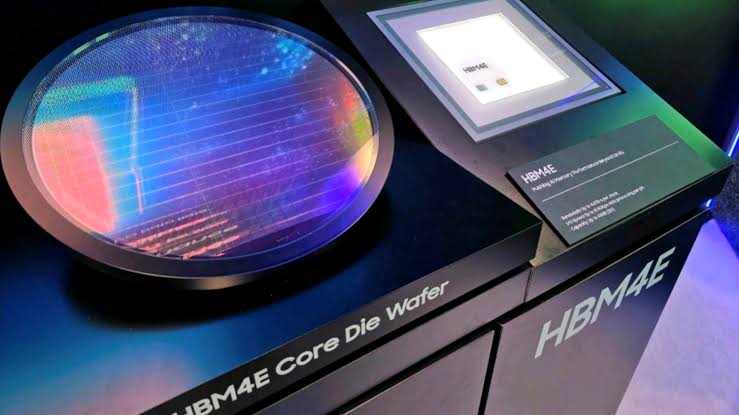
SK Hynix has started shipping samples of its next generation HBM4E memory to major customers, offering up to 48GB capacity in a 12 layer stack and speeds of up to 16Gbps per pin. The new memory is aimed at future AI accelerators and data center platforms that need higher bandwidth, better efficiency, and larger memory pools.
The timing matters because AI chip demand is pushing memory companies to move faster than ever. NVIDIA’s Rubin Ultra and AMD’s Instinct MI500 are expected to use next generation high bandwidth memory, and DRAM makers are now racing to secure design wins for those platforms.
SK Hynix previewed the same HBM4E technology at Computex 2026, and sampling has now begun. Samsung is also working on its own HBM4E and HBM5 memory technologies, which means the competition between the two Korean memory giants is moving into another important phase.
Why HBM4E matters for AI data centers
HBM, or high bandwidth memory, is one of the most important parts of modern AI accelerators. Training and running large AI models requires huge amounts of data to move quickly between memory and compute units. If the memory cannot keep up, the expensive AI chip becomes bottlenecked.
HBM4E is designed to improve that balance. SK Hynix says its 12 layer HBM4E sample reaches 48GB capacity and up to 16Gbps per pin, while also improving power efficiency by more than 20 percent compared with previous models.
| Memory type | Capacity | Stack design | Key focus |
|---|---|---|---|
| HBM3E | Up to 36GB | 12 layer | Current AI accelerators |
| HBM4 | Up to 48GB | Up to 16 layer | Next generation AI chips |
| HBM4E | 48GB | 12 layer | Higher speed and better efficiency |
That combination is important because future AI systems need both more capacity and faster data movement. AI companies are no longer only chasing raw compute. Memory bandwidth and energy efficiency are now just as critical.
SK Hynix is using advanced packaging to improve stability
SK Hynix says it is using Advanced MR MUF technology for the 12 layer HBM4E product. This helps the company reach 48GB capacity while maintaining structural stability in a tall memory stack.
Thermals are also a key part of the design. The company says HBM4E improves heat resistance by 17 percent compared with the preceding HBM4. That matters because AI accelerators run in dense server environments where memory chips are placed close to extremely power hungry processors.
A memory stack that cannot manage heat properly can limit performance or reliability. Better thermal behavior should help HBM4E operate more consistently in high bandwidth AI workloads.
NVIDIA and AMD could be major targets
The report points to NVIDIA Rubin Ultra and AMD Instinct MI500 as the kind of platforms that will rely on next generation HBM. These chips are expected to drive a large share of future AI data center spending.
For SK Hynix, supplying memory for those platforms would be a major business win. HBM has become one of the most valuable segments of the DRAM market because AI companies need massive quantities of it and are willing to pay for performance.
This is also why DRAM makers are pushing development so aggressively. The AI boom has changed memory from a supporting component into a strategic part of the chip market.
Samsung is racing with its own HBM roadmap
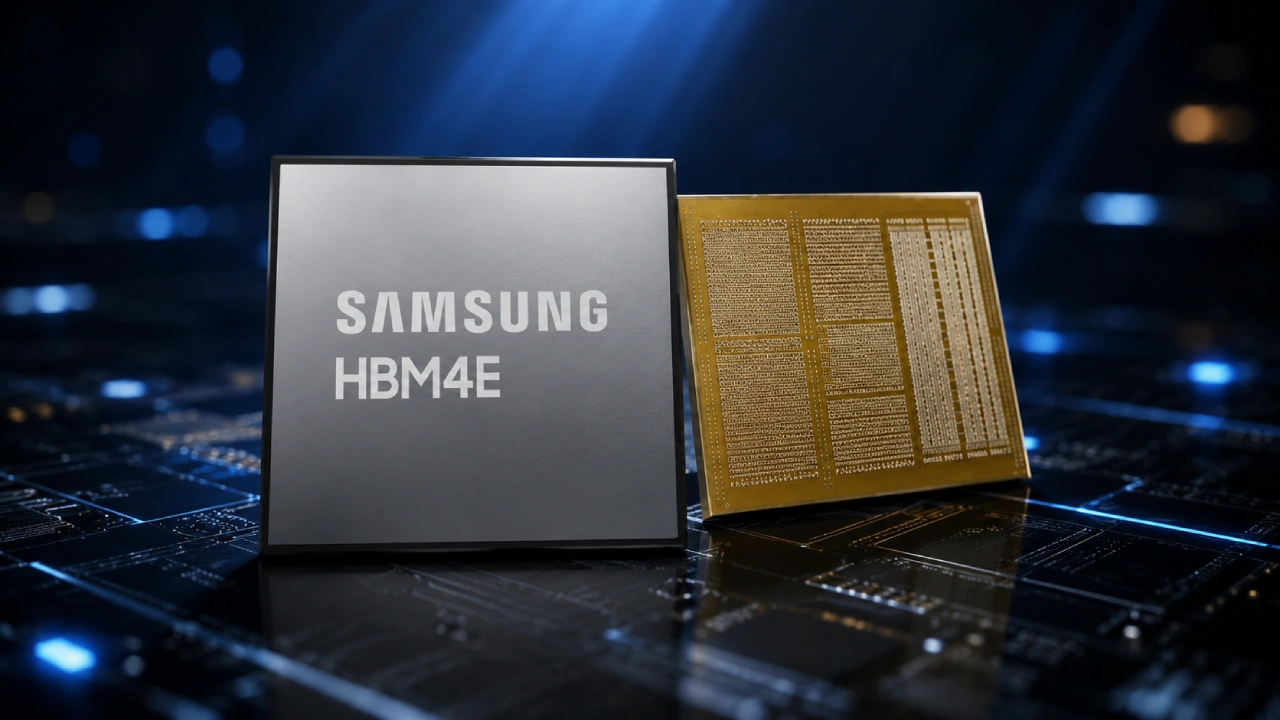
SK Hynix is not alone. Samsung also showed HBM4E and HBM5 related technologies at Computex 2026, including packaging and thermal improvements aimed at future AI memory stacks.
The race between SK Hynix and Samsung is important because large AI chip customers need reliable supply. NVIDIA, AMD, cloud companies, and hyperscalers cannot depend on weak memory output if demand keeps rising.
Whoever can deliver stable high capacity HBM at scale will have an advantage. That includes not only performance, but also yields, thermals, cost, and long term supply reliability.
HBM demand is reshaping the memory market
The rise of AI has forced DRAM makers to prioritize HBM development because it offers better margins and stronger demand than many traditional memory products. That shift has also affected the wider market, including consumer RAM and SSD pricing.
As more wafer capacity moves toward AI memory, other parts of the memory supply chain can feel pressure. This is one reason hardware prices across PCs, servers, and gaming devices have become harder to predict.
HBM4E shows where the industry is heading. Memory is no longer just a spec line on an AI accelerator. It is one of the main factors deciding how fast and efficiently future AI systems can run.
SK Hynix is trying to stay ahead in AI memory
SK Hynix already has strong experience with HBM3, HBM3E, and HBM4 production, and the company is now trying to turn that momentum into early HBM4E leadership. Shipping samples on schedule gives partners time to validate the memory before mass production.
The next step will be customer qualification and production readiness. If SK Hynix can move from sampling to reliable volume production, it could secure a key role in the next generation of AI hardware.
For now, the message is clear. AI chip demand is pushing memory makers into faster development cycles, and SK Hynix wants to be ready before the next wave of data center accelerators arrives.



Discussion (0)
Be the first to comment.