



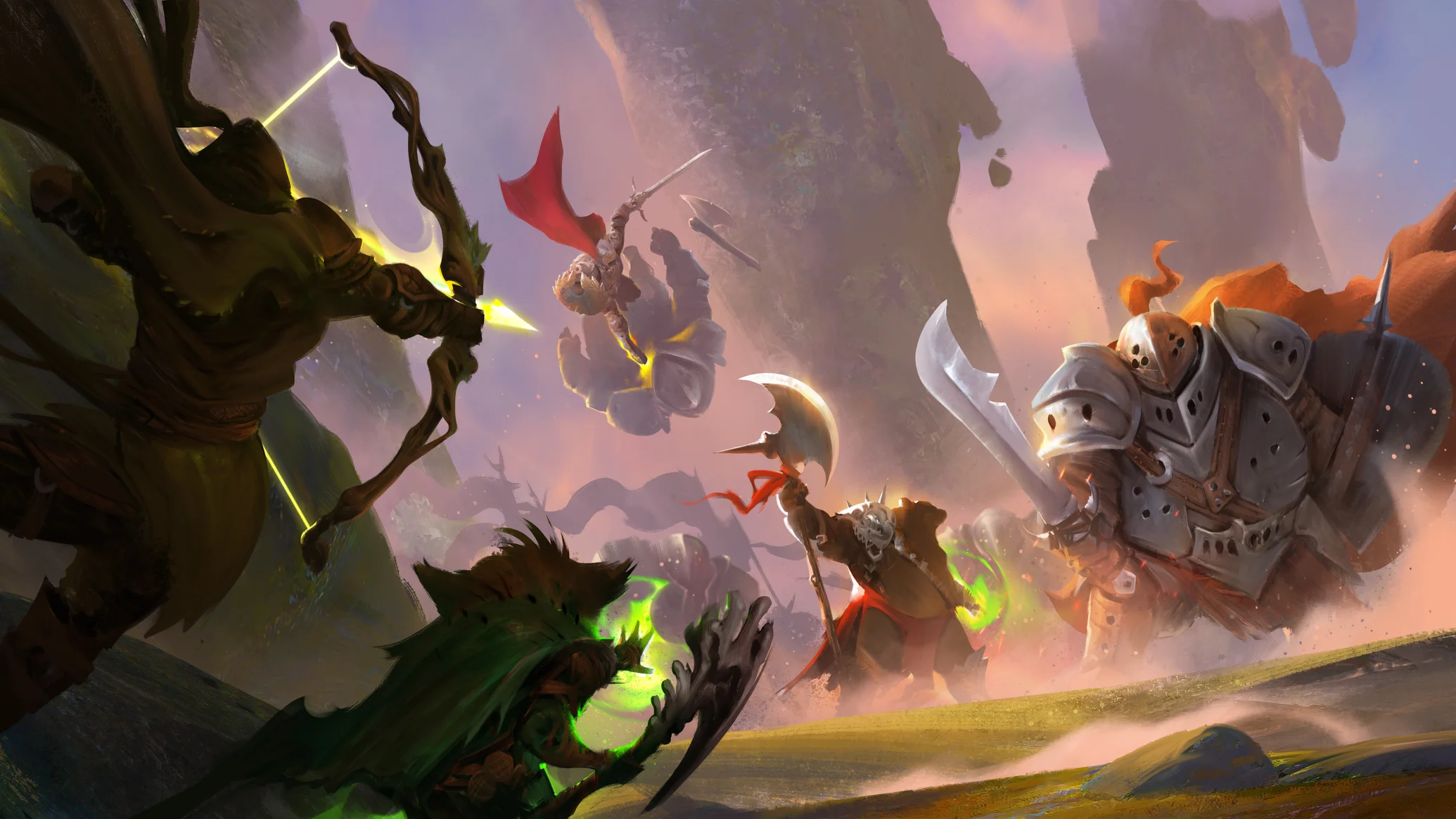
Guild Wars 3 is taking a more action focused approach to the MMO formula, with ArenaNet building movement, combat, enemy interactions, and multiplayer abilities around a new momentum system.
The game is still in pre alpha development, but its Gamescom 2026 demonstration provided the clearest look yet at how the sequel will play.
ArenaNet showed wall running, gliding, climbing, environmental attacks, cooperative combat mechanics, and enemies with specific weaknesses, all inside a persistent open world structure.
| Detail | Guild Wars 3 |
|---|---|
| Developer | ArenaNet |
| Current stage | Pre alpha |
| Setting | Orr, more than 1,000 years before Guild Wars 1 |
| Player role | Vaelwarden |
| Main movement system | Momentum |
| Platforms announced | PC and PlayStation 5 |
| Beta target | Fall 2027 |
| Combat direction | Action focused MMO combat |
| Elite skills | Charged through combat actions |
Guild Wars 3 Takes Place Long Before the Previous Games
The story is set more than a thousand years before the original Guild Wars.
Players will explore Orr during a period that has received very little detailed coverage in previous games.
At this point in the timeline, the gods have not yet fully left the world, and many events familiar to long time Guild Wars players are still far in the future.
ArenaNet says this setting was chosen partly because it provides room for new stories without requiring newcomers to understand decades of existing lore.
Players become members of the Vaelwardens, described as the first guild in Orr.
The group protects wilderness areas, magical regions, and people living outside the safety of major settlements.
Momentum Connects Gliding, Wall Running and Combat
The most important mechanic shown during the demonstration was Momentum.
Traditional MMOs often treat running, mounting, gliding, climbing, and combat as separate actions.
Guild Wars 3 is instead attempting to connect them continuously.
During the demonstration, the character jumped from a mountain, deployed a glider, gained speed by diving, approached a cliff, and carried that momentum directly into a wall run.
Mantling, climbing, and other movement mechanics form part of the same system.
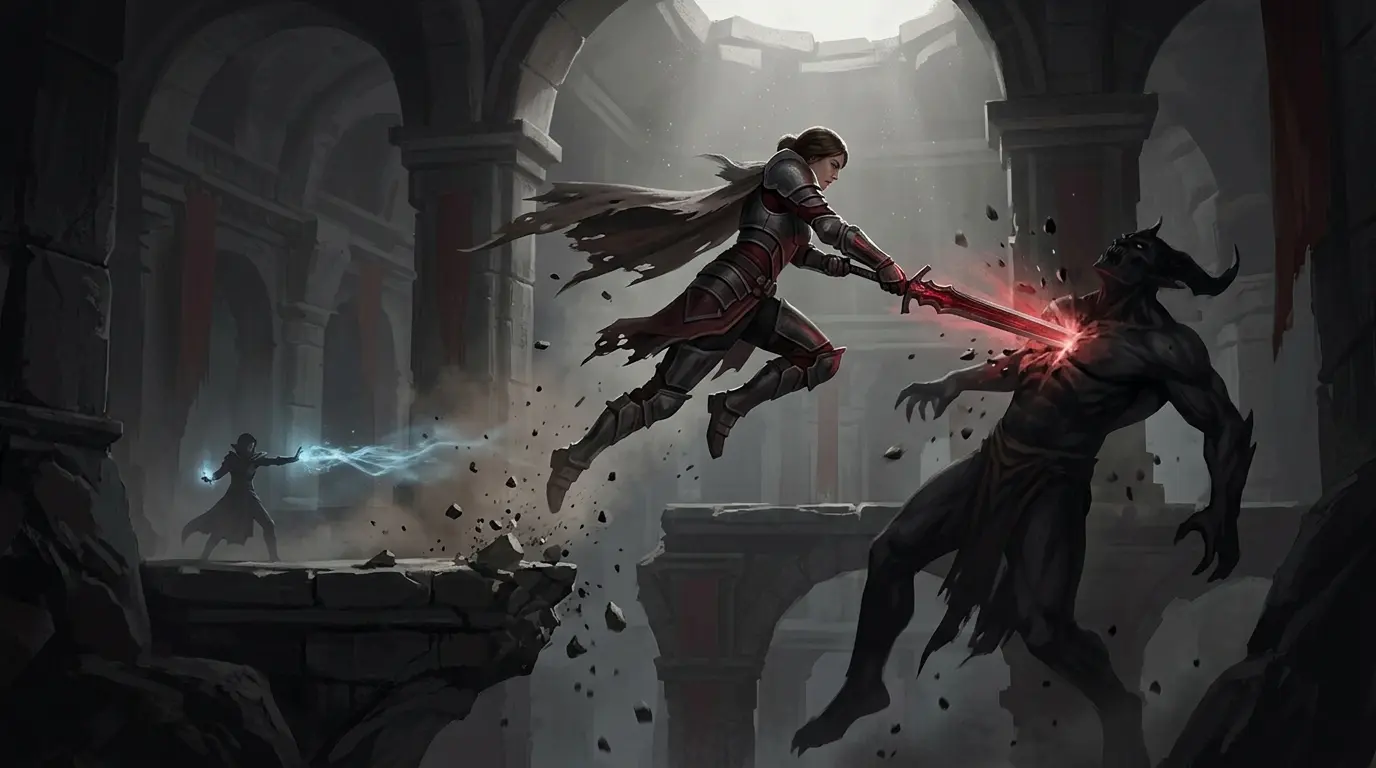
Momentum can then be converted into combat power.
A Warrior ability shown during the demo increased both its damage and its area of effect according to the character's downward speed.
This meant jumping from a wall and attacking from above produced a stronger result than using the same attack from ground level.
Terrain Can Become Part of Combat
Momentum also affects crowd control.
Enemies can be pushed farther when struck with greater momentum.
Large creatures require much more force before they can be moved.
The environment itself can also become part of a fight.
Players can knock enemies into walls to damage and stun them, while sufficiently large drops can cause fall damage or kill enemies outright.
The same rules can work against the player.
Large enemies can push characters into environmental hazards, so awareness of terrain may become an important part of difficult encounters.
Elite Skills Charge Through Player Actions
Build customization remains central to Guild Wars 3.
Elite skills return as especially powerful abilities, but ArenaNet is changing the way they become available.
Rather than relying only on a traditional cooldown, Elite skills charge through actions performed during combat.
The Warrior shown in the demo used an Elite skill called Rampage.
Activating it caused immediate damage while also improving attack speed, pushing strength, and jumping ability.
This allows movement and combat progression to reinforce one another rather than functioning as separate systems.
Cooperative Abilities Can Directly Affect Other Players
The demonstration also showed multiplayer mechanics designed around physical interaction between characters.
A Warrior could use a shield to hold the front line and block attacks.
That same shield could also function as a launch point for allies.
Another player could jump from it, gain momentum, and perform an aerial attack or move behind an enemy formation.
These cooperative interactions are intended to make party composition affect how players physically approach encounters rather than simply adding passive bonuses.
Larger Enemies Have Specific Weak Points
Some stronger enemies will contain multiple targetable areas.
The demonstration featured an enemy called Vileever carrying a magical backpack that powered a flamethrower.
Attacking the enemy directly was relatively dangerous.
A coordinated group could instead have one player keep the enemy occupied while another attacked the backpack from behind.
Destroying it caused an explosion that defeated the enemy.
ArenaNet says other large creatures will include similar weak points that may require positioning or cooperation to exploit.
Damage Type Weaknesses Are Returning
Guild Wars 3 is also bringing back stronger elemental and damage type weaknesses similar to the original Guild Wars.
One example involved forest spiders whose webs reduced movement and attack speed.
A Warrior could apply fire to nearby allies' attacks through a multiplayer combo ability.
The added fire could burn away the webs while simultaneously exploiting the spiders' vulnerability.
This suggests choosing abilities based on enemy types may become more important than in Guild Wars 2.
Orr Is Designed as a More Accessible Starting Point
The demo began near a Vaelwarden keep, one of several smaller gathering locations where players can meet, form groups, and prepare before exploring.
The capital city of Arah could be seen in the distance, while Warden's Watch was identified as one of the first towns players will visit.
The world also contains magical creatures called Rootrunners and other spirits connected to Orr's natural environment.
Because the game takes place so far before Guild Wars 1 and 2, ArenaNet has considerable freedom to introduce new factions, settlements, and conflicts without requiring players to know the later history.
The Current Build Is Still Very Early
The Gamescom demonstration lasted only around 10 to 15 minutes and was clearly labeled as pre alpha.
Visual quality was rougher than the game's earlier promotional material, and the frame rate was not yet consistently smooth.
That makes it too early to judge final performance or presentation.
ArenaNet is instead using the current build to demonstrate the foundations of its design.
Those foundations include continuous movement, environmental combat, physical multiplayer interactions, enemy specific weaknesses, and an MMO world that is intended to feel closer to a modern action game.
Guild Wars 3 is currently targeting a beta in Fall 2027, giving ArenaNet considerable time to refine these systems before players can test them more widely.



Discussion (0)
Be the first to comment.