



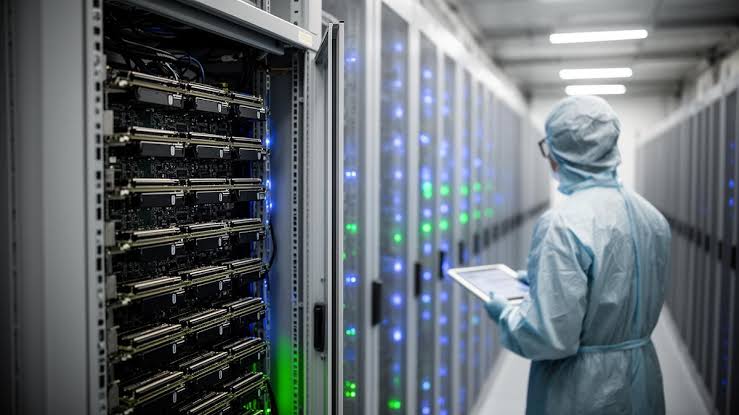
OpenAI's GPT 6 Astra is being positioned as a more capable computer operator that can coordinate multiple agents across browsers, desktop applications, coding environments, and other software.
While the model's main reasoning workload runs in the cloud, this kind of agent based computing can still create substantial work for the local PC. Virtual machines, containers, code compilation, browser sessions, testing tools, and local orchestration software all depend heavily on the host processor.
That could make CPU performance more important as agent based AI becomes more common, although claims that Astra will directly create a major sales increase for Intel and AMD remain speculative.
| Area | Potential local hardware impact |
|---|---|
| Main AI reasoning | Primarily cloud based |
| Agent orchestration | Can create local CPU workload |
| Virtual machines | CPU and memory intensive |
| Containers | Require local system resources |
| Code compilation | Often CPU intensive |
| Automated testing | Can use multiple CPU cores |
| Browser automation | Adds CPU and memory load |
| Market impact on Intel and AMD | Possible, but not established |
Astra Is Designed Around Multiple Coordinated Agents
The system described for GPT 6 Astra moves beyond a conventional chatbot workflow.
Instead of only producing instructions, the model can reportedly coordinate agents that interact with software, browse websites, work with spreadsheets, produce documents, and execute longer workflows.
For more complex tasks, a main orchestration agent can divide work among several sub agents.
Those agents may test different approaches in parallel, validate results, debug code, or repeat parts of a workflow when something fails.
This structure could make the system more capable of completing extended computer based tasks without constant human input.
Local PCs Still Have Work to Do
Cloud based AI does not mean the local machine remains idle.
Enterprise deployments may place agents inside virtual machines, containers, sandboxes, or other isolated environments.
Creating, running, and shutting down these environments can consume considerable CPU and memory resources.
Local orchestration software can add another layer of processing, especially when companies connect an AI system with proprietary files, internal applications, or private development environments.
If several agents are working at once, those workloads can multiply.
A coding agent, for example, might launch development tools, compile software, execute unit tests, inspect results, and repeat the process several times.
Most of that execution work would still happen on the machine or server hosting those tools.
Parallel Agents Could Favor High Core Count CPUs
Agent based workloads could make processors with more cores and threads useful in some environments.
Running several isolated tasks at the same time benefits from having enough CPU resources to keep one workload from blocking another.

This does not mean every Astra user will suddenly need a workstation class processor.
Light browser automation or document work may require relatively modest resources.
Software development, virtualized enterprise environments, and large numbers of simultaneous agents are more likely to benefit from stronger CPUs.
That distinction is important when considering the potential impact on Intel and AMD.
CPU Demand Increase Is Still a Market Prediction
The argument that agent based AI will create a demand windfall for Intel and AMD is plausible, but it is not a confirmed outcome.
CPU demand depends on how Astra is deployed, how much processing remains local, whether workloads move to company servers, and how efficiently agent software is optimized.
Enterprises could also consolidate these tasks onto shared infrastructure rather than upgrading every employee PC.
As a result, the hardware effect may differ considerably between individual systems, developer workstations, and enterprise servers.
Security Makes Isolation More Important
Autonomous computer control also creates new security concerns.
Organizations may prefer to run powerful agents inside restricted environments so that software access, files, networking, and system permissions can be controlled.
That makes technologies such as containers, virtual machines, and sandboxes particularly relevant.
These isolation layers can reduce risk, but they also add resource overhead.
A system running several agent environments simultaneously may therefore need more CPU cores, memory, and storage performance than a conventional office PC.
Agentic AI Could Change What Matters in a PC
The current AI hardware discussion often focuses heavily on GPUs and NPUs because they accelerate model inference.
Agent based computing adds another requirement.
The AI may make decisions in the cloud, but the actions it requests still have to be executed somewhere.
When those actions involve local programs, tests, browsers, virtual machines, or development tools, the CPU remains central to the workflow.
If multi agent systems become common in professional software, local computing requirements could shift toward processors that handle many simultaneous tasks efficiently.
That creates a potential opportunity for Intel and AMD, but the scale of that opportunity will depend on real Astra deployments rather than early demonstrations and expectations.
Discussion (0)
Be the first to comment.