



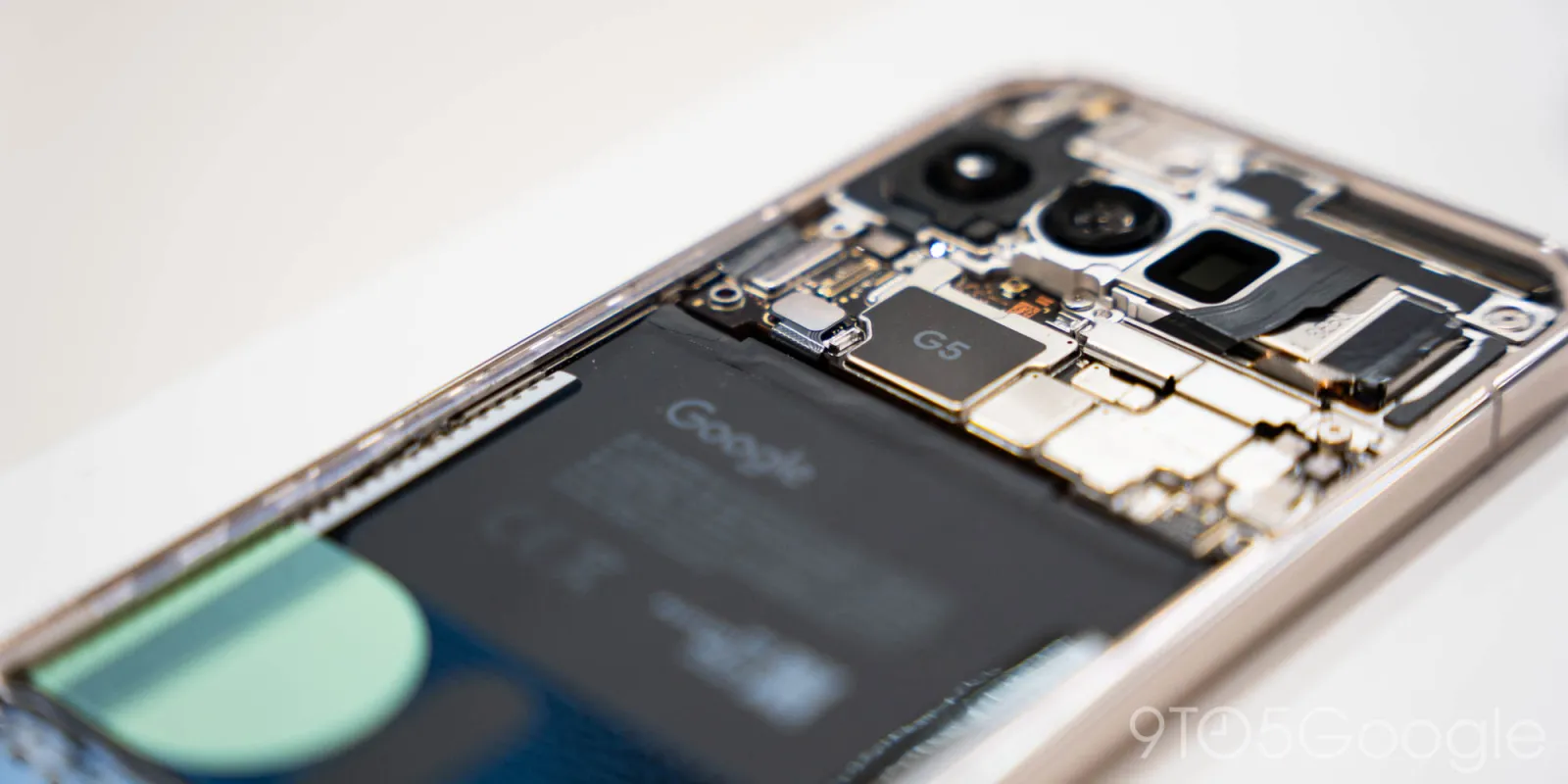
Google’s next Tensor chip may bring a strange mix of upgrades and compromises. A new leak claims the Tensor G6, expected to power the Pixel 11 series, could use newer ARM CPU cores but an older PowerVR GPU that first appeared around 2021. If accurate, the decision may again raise questions about Google’s priorities for its in-house mobile chips.
The leak comes from Mystic Leaks on Telegram, as cited by Android Authority in the reference report. Since Google has not confirmed the Tensor G6 specs, this should still be treated as an early rumor. But it fits a familiar pattern: Tensor chips often focus more on AI, imaging, and software features than on leading gaming performance.
Tensor G6 could improve CPU and security features while still leaving Pixel gamers with a weaker graphics setup
The more positive part of the leak is the CPU side. Tensor G6 is reportedly moving to newer ARM C1 Ultra and C1 Pro cores, with the main big core said to reach 4.11GHz. That could help general performance, app speed, and efficiency compared with older Tensor designs.
However, the chip may also move from an eight-core layout to a seven-core setup in a 1+4+2 design. That would not automatically be bad, because performance depends on architecture, clocks, cache, power limits, and software tuning. But it does suggest Google may still be making careful cost and die-size decisions rather than chasing the biggest possible chip.
The GPU rumor is the more controversial part. The Tensor G6 is said to use the PowerVR CXT-48-1536, a graphics unit that originally launched several years ago. That could be disappointing for Pixel buyers who expect a flagship phone to compete strongly in gaming and graphics-heavy tasks.
| Rumored Tensor G6 area | What the leak suggests |
|---|---|
| CPU | Newer ARM C1 Ultra and C1 Pro cores |
| CPU layout | 7-core design in a 1+4+2 format |
| GPU | PowerVR CXT-48-1536, reportedly from 2021 |
| Security | New Titan M3 security chip |
| Main concern | Google may be prioritizing die size and AI over graphics power |
Google may be betting that the NPU can carry more of the chip’s “smart” workload. That makes sense for Pixel phones, where features like image processing, voice tools, translation, and AI assistance are a major part of the selling point. A stronger NPU can help with those tasks more than a faster GPU.
But that does not fully solve the gaming issue. Mobile games, emulators, and graphics-heavy apps still depend heavily on the GPU. If the Tensor G6 really uses an older graphics design, Pixel 11 phones may struggle to match rival Android flagships using newer Snapdragon or MediaTek chips.
The leak also mentions the Titan M3 security chip, which would continue Google’s focus on hardware-level protection for sensitive data. That is useful, especially for encryption keys and biometric information. But for many buyers, security improvements are harder to notice than frame rates, heat, or battery drain during heavy use.
This is the problem Google may face with Tensor G6. The chip could become better at AI and everyday smart features, but still look weak on spec sheets if the GPU rumor is correct. For Pixel fans who mostly care about cameras, software, and AI, that may be fine. For users who want a true flagship gaming phone, it could be another reason to look elsewhere.
Discussion (0)
Be the first to comment.