



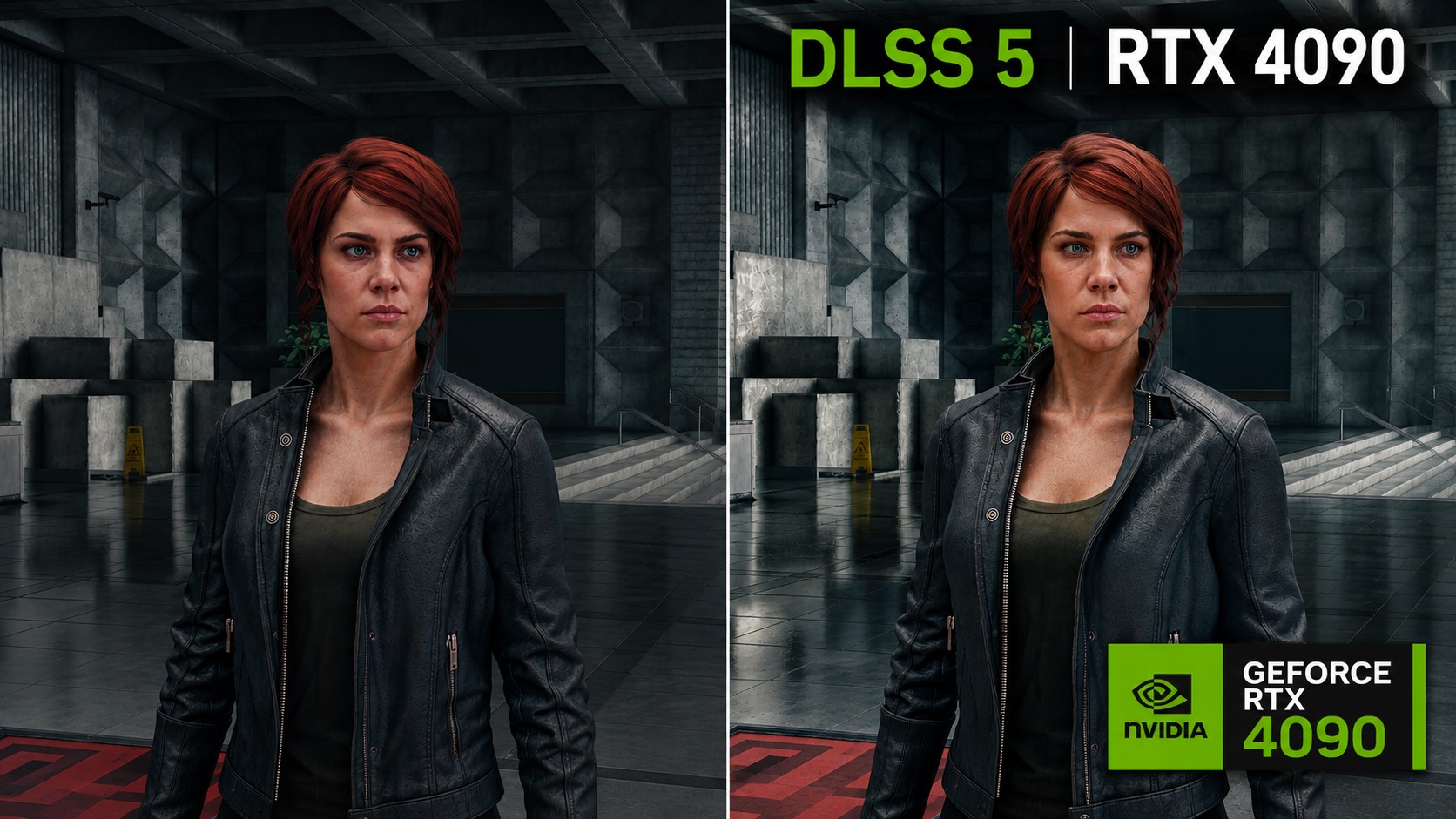
A new community tool called DLSS 5 Autopilot is making NVIDIA's Neural Rendering technology more practical in unsupported games by changing when DLSS 5 is applied in the rendering pipeline.
The mod introduces Quality, Balanced, and Performance modes similar to those already used with DLSS Super Resolution. These options reduce the workload placed on DLSS 5 and can significantly improve performance, although image quality may also decline depending on the selected mode and game.
NVIDIA currently offers official DLSS 5 support in NBA 2K27, while modders have been experimenting with the technology in other titles.
| Feature | DLSS 5 Autopilot |
|---|---|
| Main purpose | Improve DLSS 5 performance in unsupported games |
| Added modes | Quality, Balanced, Performance |
| Supported APIs through feeder | DirectX 10, 11 and 12 |
| Native DLSS required | No, with DLSS5 Feeder |
| RTX 40 Multi Frame Generation support | Available through separate unlock component |
| Main tradeoff | Higher performance at reduced image quality |
| Official NVIDIA feature | No |
Autopilot Changes Where Neural Rendering Happens
The performance problem with standard injected DLSS 5 comes from how Neural Rendering is processed.
In its normal form, DLSS 5 works on the final output resolution. Lowering the game's internal rendering resolution therefore does not reduce the amount of work performed by the Neural Rendering stage.
DLSS 5 Autopilot changes that order.
It applies Neural Rendering before the upscaling stage, which means the neural workload can run at a lower internal resolution before DLSS Super Resolution reconstructs the final image.
That makes traditional Quality, Balanced, and Performance modes possible.
The tradeoff is predictable. Processing fewer pixels reduces computational cost but can also reduce visual fidelity.
Unsupported Games Can Use DLSS 5 Through Feeder
The package also includes a component called DLSS5 Feeder.
This is designed to inject DLSS 5 into games using DirectX 10, DirectX 11, or DirectX 12, even when those games do not support DLSS natively.
That considerably broadens the range of titles available for experimentation.
Results are unlikely to be consistent across every game.
DLSS 5 depends heavily on the visual information supplied by the game, and titles without developer integration may lack the data or tuning needed to produce convincing results.
A game with a particular art style, unusual materials, or limited motion information may therefore react very differently from one designed around realistic rendering.
Performance Gains Come With Visual Tradeoffs
The main appeal of Autopilot is that it makes DLSS 5 less demanding.
Neural Rendering in its current form can create a substantial performance penalty when injected into unsupported titles.

Moving the neural stage earlier in the rendering pipeline reduces the number of pixels it has to process.
Quality mode should preserve more detail while providing a smaller performance improvement.
Balanced and Performance modes can reduce the workload further, but with increasingly visible compromises.
The exact balance will vary by title, resolution, GPU, and rendering settings.
RTX 40 Cards Can Also Gain Multi Frame Generation in Some Games
DLSS 5 Autopilot includes support for Multi Frame Generation on RTX 40 series graphics cards through the RTX40MFG Unlock project.
This does not mean every game can suddenly use Multi Frame Generation.
The feature only works in titles that already support MFG in some form.
It is therefore separate from the broader DLSS5 Feeder functionality, which focuses on adding Neural Rendering to otherwise unsupported games.
Official DLSS 5 Support Is Still Very Limited
NBA 2K27 remains the first major official implementation of DLSS 5 Neural Rendering.
That controlled integration allows developers and NVIDIA to tune the system around the game's materials, lighting, characters, and rendering pipeline.
Modded implementations do not have the same level of developer support.
That makes tools such as Autopilot more useful as technical experiments than as replacements for native integration.
They can demonstrate how the technology behaves across different games, but visual quality and stability may vary widely.
Modding Is Showing Another Path for DLSS 5
DLSS 5 Autopilot highlights how much the cost of Neural Rendering depends on where it is placed in the graphics pipeline.
By moving the neural stage ahead of upscaling, the mod gives players a way to exchange image quality for considerably lighter processing demands.
It also expands experimentation beyond officially supported titles through DirectX 10, 11, and 12 injection.
For now, the tool remains an unofficial community project. Its results should therefore be judged on a game by game basis rather than treated as representative of future native DLSS 5 implementations.



Discussion (0)
Be the first to comment.