



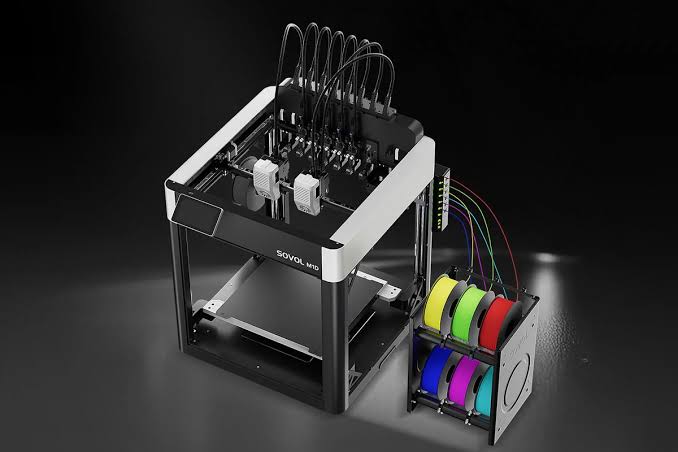
3D printers are excellent tools for turning digital designs into physical objects. They are fast, flexible, and especially useful for prototypes, fixtures, models, and complex geometries.
However, some projects eventually need better surface finishes, greater rigidity, tighter dimensions, or materials that are difficult to print effectively. This is where desktop CNC machining becomes a useful complement rather than a replacement.
By combining both tools, a workshop can move easily between rapid prototyping and functional manufacturing.
Additive and Subtractive Manufacturing Solve Different Problems
A 3D printer builds an object layer by layer. This makes it well suited to lightweight structures, internal features, organic forms, and other geometries that may be difficult to machine.
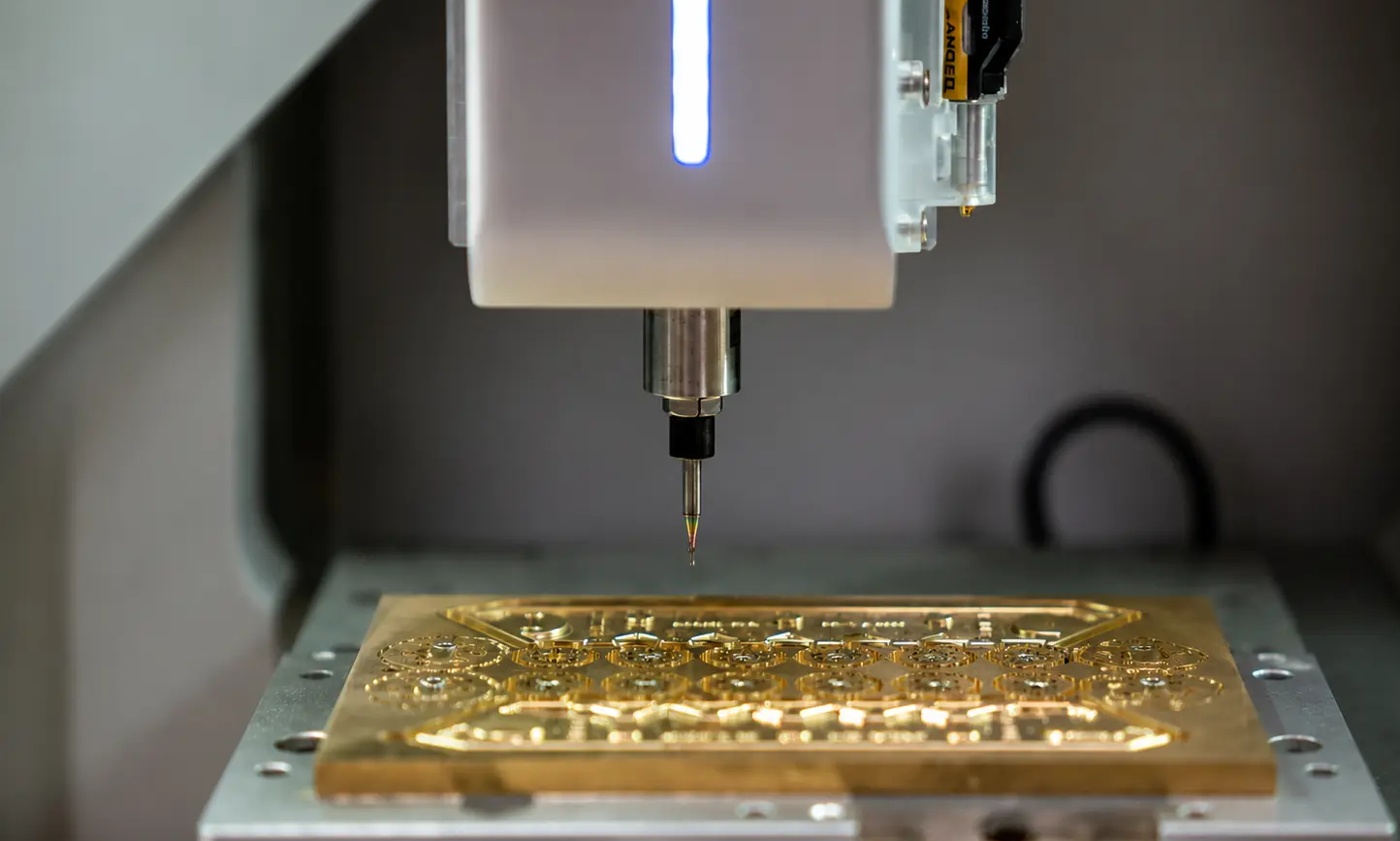
CNC machining works differently. It starts with a solid piece of material and removes material using cutting tools.
3D printing is particularly useful for:
- rapid prototypes;
- complex plastic parts;
- lightweight structures;
- quick design iterations;
- one-off components.
CNC machining becomes more attractive when a part requires:
- aluminum, brass, wood, acrylic, or engineering plastics;
- flat and accurate surfaces;
- threaded holes or precision features;
- consistent dimensions;
- stronger mechanical performance.
Neither process is universally better. Each is suited to different manufacturing needs.
Prototype With a 3D Printer, Then Machine the Final Part
One of the most practical hybrid workflows is to use 3D printing during early design stages and CNC machining once the geometry has been validated.
For example, a designer creating an aluminum mounting bracket can first print an inexpensive plastic version to check dimensions, hole locations, clearances, and fit.
Once the design works, the same CAD model can be prepared for CNC machining.
This approach reduces wasted material and machining time while allowing the finished part to benefit from the strength and properties of the final material.
CNC Machining Expands Material Options
Desktop 3D printers work well with materials such as PLA, PETG, ABS, nylon, and resin, but some applications benefit from solid metals or other machinable materials.
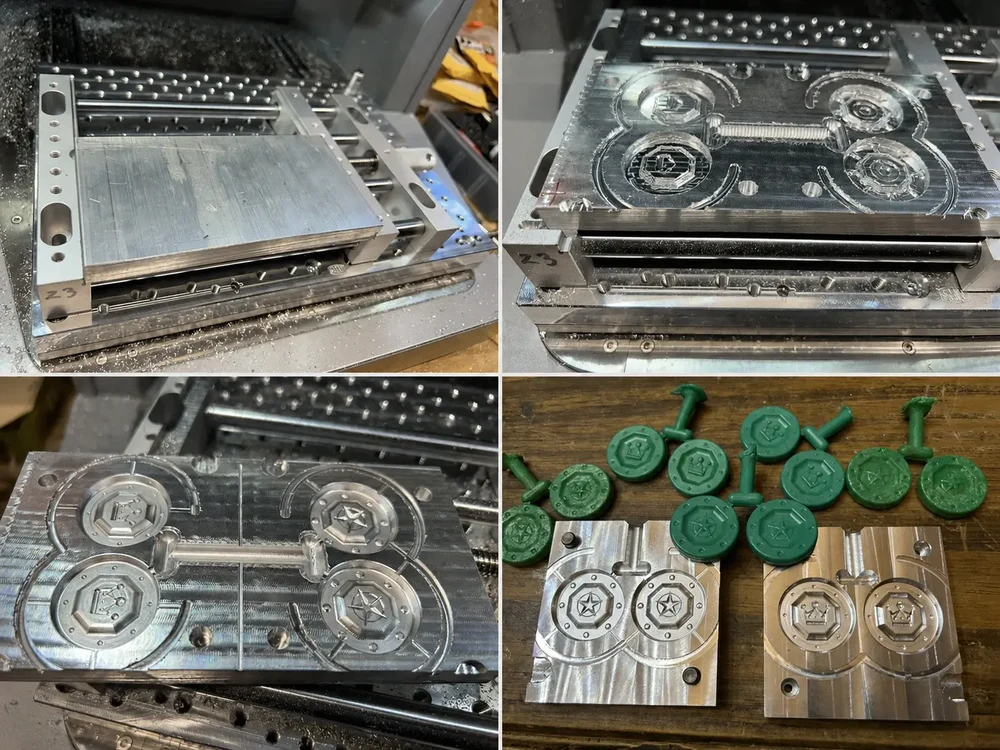
Aluminum is commonly used for structural brackets, electronics housings, robotics components, and mechanical assemblies. Wood is useful for signs, decorative projects, molds, and furniture parts, while acrylic can provide clean transparent or polished surfaces.
Modern systems from manufacturers such as Makera make CNC machining more accessible to smaller workshops, allowing users to add subtractive manufacturing without moving directly to a large industrial machining center.
3D Printing Can Support CNC Machining
The relationship also works in the opposite direction. A 3D printer can produce useful accessories for CNC machining, including:
- soft jaws;
- locating fixtures;
- drill guides;
- vacuum adapters;
- tool holders;
- workholding supports.
For an irregularly shaped workpiece, a custom printed fixture can help position and secure the part during machining.
This can be especially useful for prototypes and small-batch production where creating traditional fixtures may take more time.
CNC Machines Can Finish Printed Parts
Some parts can benefit from both manufacturing methods.
A large plastic housing, for example, may be inexpensive to 3D print but still require accurate mounting surfaces or holes. These critical features can be machined afterward.
In this type of hybrid workflow, 3D printing creates the overall geometry efficiently, while CNC machining handles the areas where dimensional accuracy or surface quality matters most.
Both Begin With a Digital Model
Both 3D printing and CNC machining usually start with CAD.
For 3D printing, the model is prepared in slicing software. For CNC machining, it is prepared in CAM software, where the user defines tools, cutting operations, depths, feeds, speeds, and toolpaths.
Someone already familiar with CAD and 3D printing therefore has useful knowledge that transfers to CNC machining. The main new concepts include workholding, cutter selection, feeds and speeds, tool access, and chip evacuation.
Desktop CNC Makes Hybrid Workshops More Practical
Compact CNC machines have made it easier to add machining capabilities to home workshops, classrooms, prototyping labs, and maker spaces.
A modern desktop CNC machine can operate alongside 3D printers and other benchtop tools without requiring a full industrial machine shop.
A workshop might use 3D printing for prototypes, housings, fixtures, and complex plastic parts, while CNC machining handles metal components, precise interfaces, molds, engraved parts, and finished functional pieces.
Together, they greatly expand what a small digital workshop can produce.


Discussion (0)
Be the first to comment.