



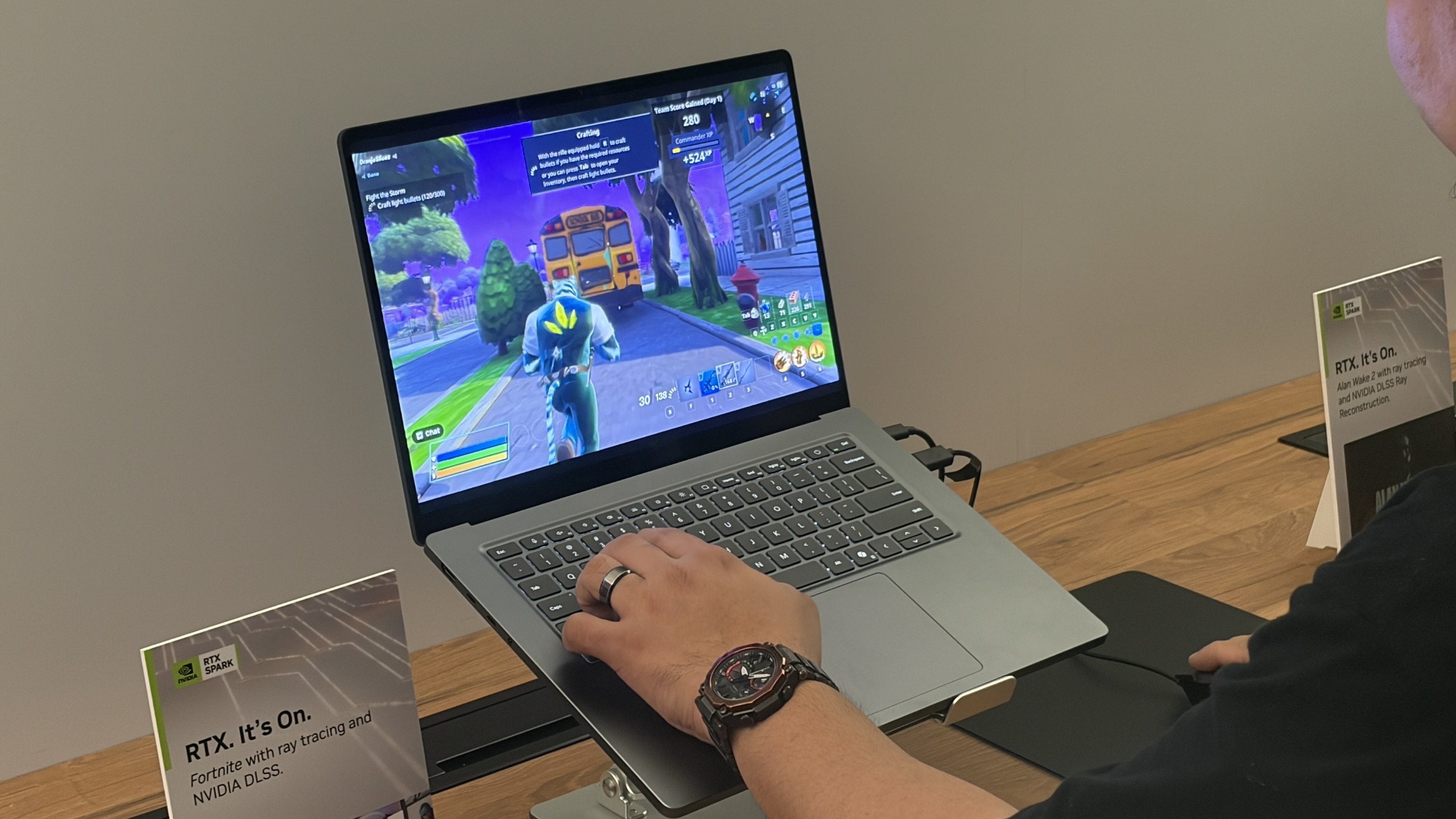
NVIDIA's RTX Spark platform is being positioned as a powerful option for people who want one portable Windows PC for both demanding work and modern gaming, but a 10 hour road trip should provide a more realistic test of whether that promise holds up away from a charger.
A Lenovo Pro 9n equipped with RTX Spark will be used as the only gaming and work device during the trip, replacing the usual combination of a thin work laptop and Steam Deck.
The test will focus on battery life, gaming performance, heat and whether carrying one larger laptop is genuinely more convenient than traveling with two separate devices.
Ray Tracing Could Be the Biggest Battery Challenge
RTX Spark's Blackwell class GPU supports NVIDIA technologies including ray tracing, upscaling and Multi Frame Generation.
Those features can make demanding games look impressive, but they can also increase power consumption significantly.
An early test with The Witcher 3: The Wild Hunt Remastered showed the potential problem clearly. With ray tracing and Multi Frame Generation enabled on the Pro 9n's 15.3 inch OLED display, the laptop reportedly lost around 10% of its battery every 10 minutes.
At that rate, battery powered AAA gaming with maximum visual settings would clearly be difficult to sustain for a long journey.
| Travel test area | Main question |
|---|---|
| AAA gaming | Can RTX Spark deliver good performance on battery? |
| Ray tracing | Is the visual improvement worth the power use? |
| Battery life | Can one laptop last through work and gaming sessions? |
| Workloads | Can it handle writing, web browsing and photo editing throughout the trip? |
| Heat | Does gaming become uncomfortable on a lap? |
| Portability | Is one laptop easier to carry than a laptop plus Steam Deck? |
| Charging | How much heat is produced while gaming and recharging? |
Lowering resolution, refresh rate or graphics settings could improve endurance substantially, so the trip will also test whether ray tracing remains practical after tuning the system for battery use.
One Device Could Make Travel Simpler
The main appeal of replacing a Steam Deck with an RTX Spark laptop is reducing the amount of equipment carried.
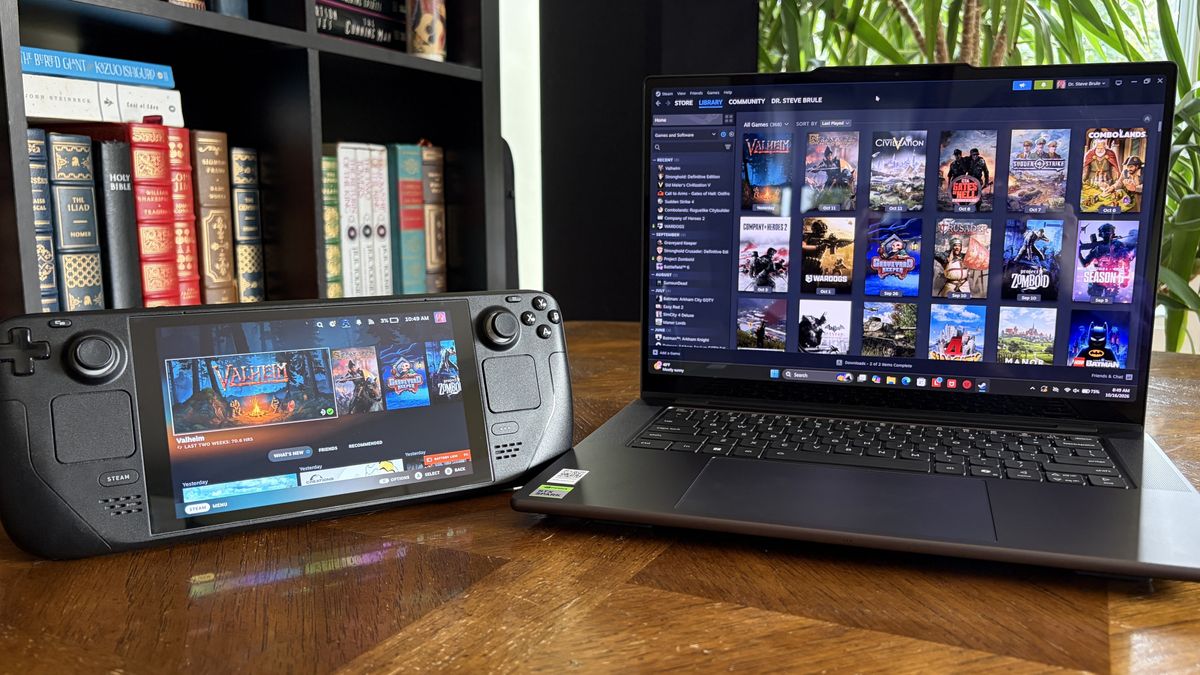
A handheld requires its own protective case and charger, while a laptop capable of doing both jobs could eliminate some of that extra hardware.
A standard game controller is also easier to pack than a handheld PC and its case.
There is a tradeoff, however.
Dedicated handhelds make it easy to separate work and entertainment. The Steam Deck can be put away when it is time to concentrate, while the laptop remains dedicated to productivity.
With one device, everything happens on the same machine.
The Pro 9n therefore needs to switch quickly between writing, web browsing, photo editing and gaming without creating significant problems with battery life, performance or heat.
Battery Life Will Depend Heavily on the Workload
The travel test will divide time between productivity and gaming.
Work tasks are expected to include writing, browsing through a mobile hotspot and photo editing.
Those workloads should consume considerably less power than AAA gaming with ray tracing enabled, but the important question is whether the combined use can last through a realistic travel day.
A charging outlet will be available if necessary, which creates another useful test.
Gaming laptops can become considerably warmer while simultaneously charging and operating under heavy load. In a confined vehicle or aircraft seat, that heat can make an otherwise powerful machine uncomfortable to use.
A Laptop Still Cannot Match Handheld Ergonomics
Portability is also about more than weight and bag space.
Gaming handhelds such as the Steam Deck are designed to be held comfortably for long periods and generally keep most of their heat away from the player's lap.
A 15.3 inch laptop presents a different problem.
Even when using an external controller, the Pro 9n still needs to sit somewhere. In a cramped seat, placing a large laptop on your legs could become uncomfortable, particularly if the chassis becomes hot during demanding games.
That could prove to be the area where a dedicated handheld retains its biggest practical advantage.
The upcoming road test is therefore not intended to prove that RTX Spark can run games. Its Blackwell GPU has already demonstrated that capability. The more useful question is whether an RTX Spark laptop can combine gaming and productivity efficiently enough to replace a separate handheld during real travel.
The results will depend on whether performance, battery endurance, heat and portability remain balanced once the laptop is removed from a desk and used for hours without easy access to ideal conditions.



Discussion (0)
Be the first to comment.