



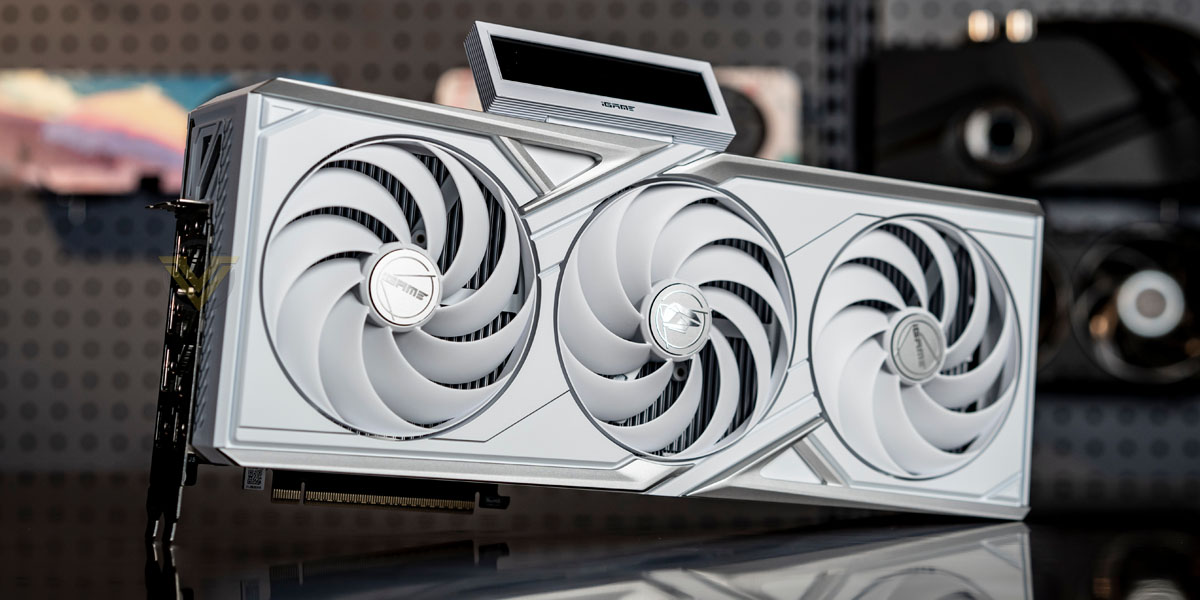
Colorful says China has not banned the GeForce RTX 5090 D v2, pushing back against recent reports while showing a new overclocking focused version of the GPU at Computex. The company said it continues to make and sell RTX 5090 D v2 graphics cards, and its latest iGame model suggests the card is still very much part of Colorful’s high end lineup.
The standout product is the Colorful iGame GeForce RTX 5090 D v2 Arcanix 24GB. It is a limited edition graphics card built for enthusiasts and overclockers, with a fully custom PCB, a massive triple slot cooler, and dual 16 pin power connectors. That alone makes it clear this is not a basic RTX 5090 D v2 design. It is meant for buyers who want more power headroom and a more premium build.
The card uses a white design with silver and gold accents, giving it a cleaner and more luxurious look than many standard gaming GPUs. Colorful also added a fourth fan on the back of the card, similar to the cooling approach seen on some other extreme flagship graphics cards. The goal is simple: improve airflow and help manage heat when the GPU is pushed hard.
Colorful’s RTX 5090 D v2 Arcanix is aimed at serious overclockers
| Product | Main highlight |
|---|---|
| iGame GeForce RTX 5090 D v2 Arcanix 24GB | Limited edition GPU with dual 16 pin connectors |
| iGame X870E Vulcan W OC V14 | White AMD motherboard built for memory overclocking |
| BattleAX B850 and B860 boards | Mainstream AMD and Intel motherboard options |
| 007 First Light themed GPU | Custom themed graphics card design |
The second major product is the iGame X870E Vulcan W OC V14 motherboard. Colorful has given this board an all white design with reflective finishes, RGB lighting, and a premium layout for AMD Ryzen systems. It uses a strong VRM design cooled by aluminum finned heatsinks, while power comes through dual 8 pin CPU connectors.
The board is clearly built for overclocking. It includes only two DIMM slots, which usually helps with higher memory speeds because the signal path is simpler than on four slot boards. Colorful claims the board can push DDR5 memory beyond 10,000 MT/s, making it a serious option for memory tuning enthusiasts.
The motherboard also includes a removable tuning panel with power, reset, and retry buttons, plus a large LCD. These features are useful for overclockers who test hardware outside a normal case or frequently restart systems during tuning sessions.
Expansion is also strong. The board includes six M.2 slots and two PCIe Gen5 x16 slots. The top PCIe slot has an EZ DIY mechanism, and the M.2 heatsinks and covers are also designed for easier access. That should make installation and upgrades less frustrating, especially for users who swap SSDs often.
The rear I/O includes Turbo, BIOS Update, and Clear CMOS buttons, along with several USB ports, 5GbE LAN, dual USB 40G Type C ports, Wi Fi 7, and even a PS/2 port. The PS/2 port is unusual on a modern high end board, but some overclockers still appreciate it for legacy input support during extreme testing.
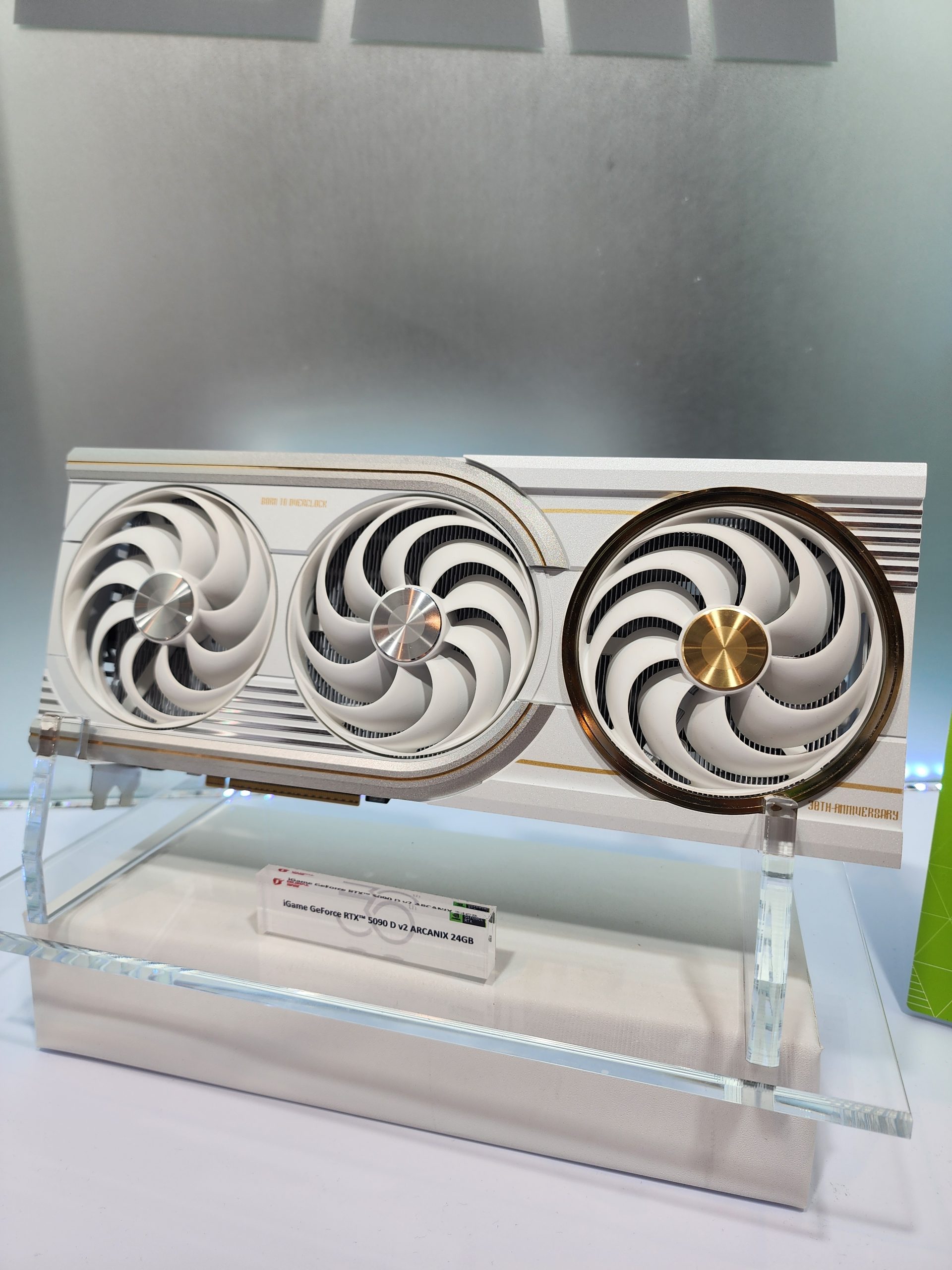
Colorful did not confirm pricing or availability for either the RTX 5090 D v2 Arcanix or the X870E Vulcan W OC V14. The graphics card will be a limited edition product, so it is unlikely to appear widely in normal retail channels.
The company also showed more mainstream BattleAX motherboards based on AMD B850 and Intel B860 chipsets, along with a 007 First Light themed graphics card. Those products suggest Colorful is covering both enthusiast and mainstream buyers, but the iGame hardware is clearly the highlight.
The biggest takeaway is that Colorful is treating the RTX 5090 D v2 as an active product, not a banned or discontinued one. Its new Arcanix card is built like a flagship overclocking model, while the X870E Vulcan W OC V14 gives AMD builders a matching white motherboard with serious tuning features.
For PC enthusiasts, Colorful’s Computex lineup shows that extreme GPU and motherboard designs are still alive, even as prices, power demands, and regulatory questions make the high end hardware market more complicated.



Discussion (0)
Be the first to comment.