



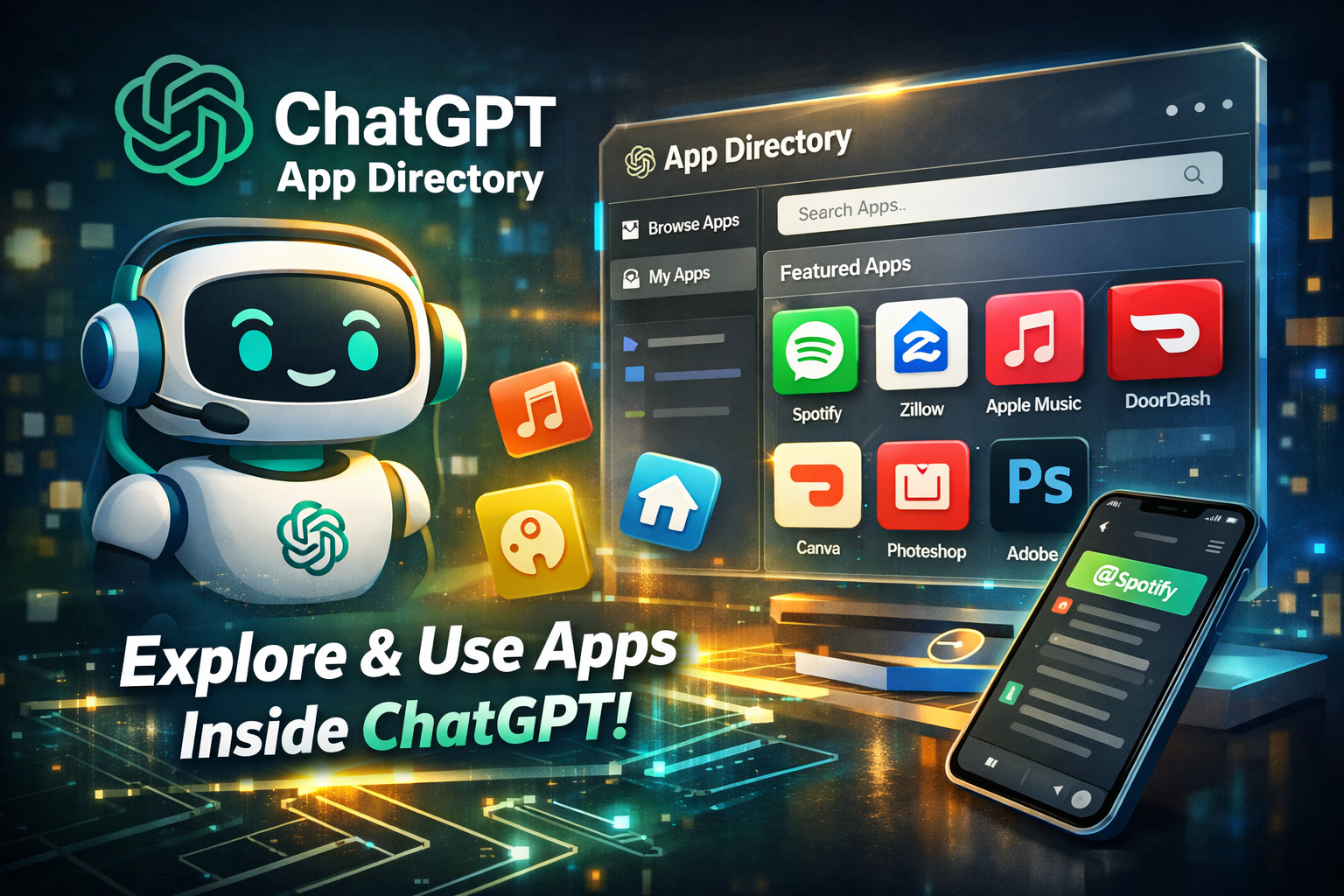
After launching GPT 5.2 few days ago, OpenAI has officially turned ChatGPT into a platform. The company has launched a built-in App Directory, allowing users to discover and use third-party apps directly inside ChatGPT, without leaving the chat interface.
The move positions ChatGPT closer to an operating system for AI-powered tasks, rather than a standalone chatbot.
A built-in app store inside ChatGPT
The new App Directory lives directly within ChatGPT’s interface on the web and supported mobile apps. Users can browse available apps, add them with a click, and then invoke them during conversations using natural language or simple @mentions.
Once enabled, apps work alongside ChatGPT, handling specific tasks like music playback, design editing, food ordering, or data lookups, all within the same chat window.
Developers can now submit ChatGPT apps
OpenAI has opened submissions for third-party developers, alongside the release of a dedicated Apps SDK. The SDK lets developers build apps designed specifically for conversational use, rather than traditional menus or screens.
Apps go through a review process before appearing in the directory. OpenAI requires clear privacy policies, minimal data access, and transparent disclosures around how user data gets handled.
This marks a major expansion of OpenAI’s developer ecosystem and gives creators a new distribution channel directly inside ChatGPT.
Early apps include major consumer services
Several well-known services already support app-style integrations or appear in early versions of the directory. These include Spotify, Apple Music, DoorDash, Canva, Adobe Photoshop, and Zillow.
With these apps, users can build playlists, edit designs, explore real estate listings, or place food orders without switching between separate apps or browser tabs.
The experience focuses on speed and context, allowing actions to flow naturally from the conversation.
Why this matters
The App Directory signals a shift in how people may discover and interact with digital services. Instead of searching app stores or websites, users can now find tools at the moment they need them, inside an AI conversation.
For OpenAI, this move transforms ChatGPT from a productivity assistant into a platform that hosts interactive micro-apps. For brands and developers, it opens a new surface for user engagement and discovery.
Monetization still coming later
For now, OpenAI allows apps to link out to external websites or native apps to complete purchases or subscriptions. The company has not yet announced built-in payments or revenue sharing models.
OpenAI has confirmed it plans to explore monetization options in future updates, including support for digital goods, but no timeline has been shared.
Gradual rollout continues
The ChatGPT App Directory is rolling out gradually across regions, with new apps expected to appear regularly. OpenAI plans to expand discovery features and developer tools as the ecosystem grows.
With this launch, ChatGPT moves another step beyond chat, becoming a central hub where conversations and actions happen in the same place.


Discussion (0)
Be the first to comment.