



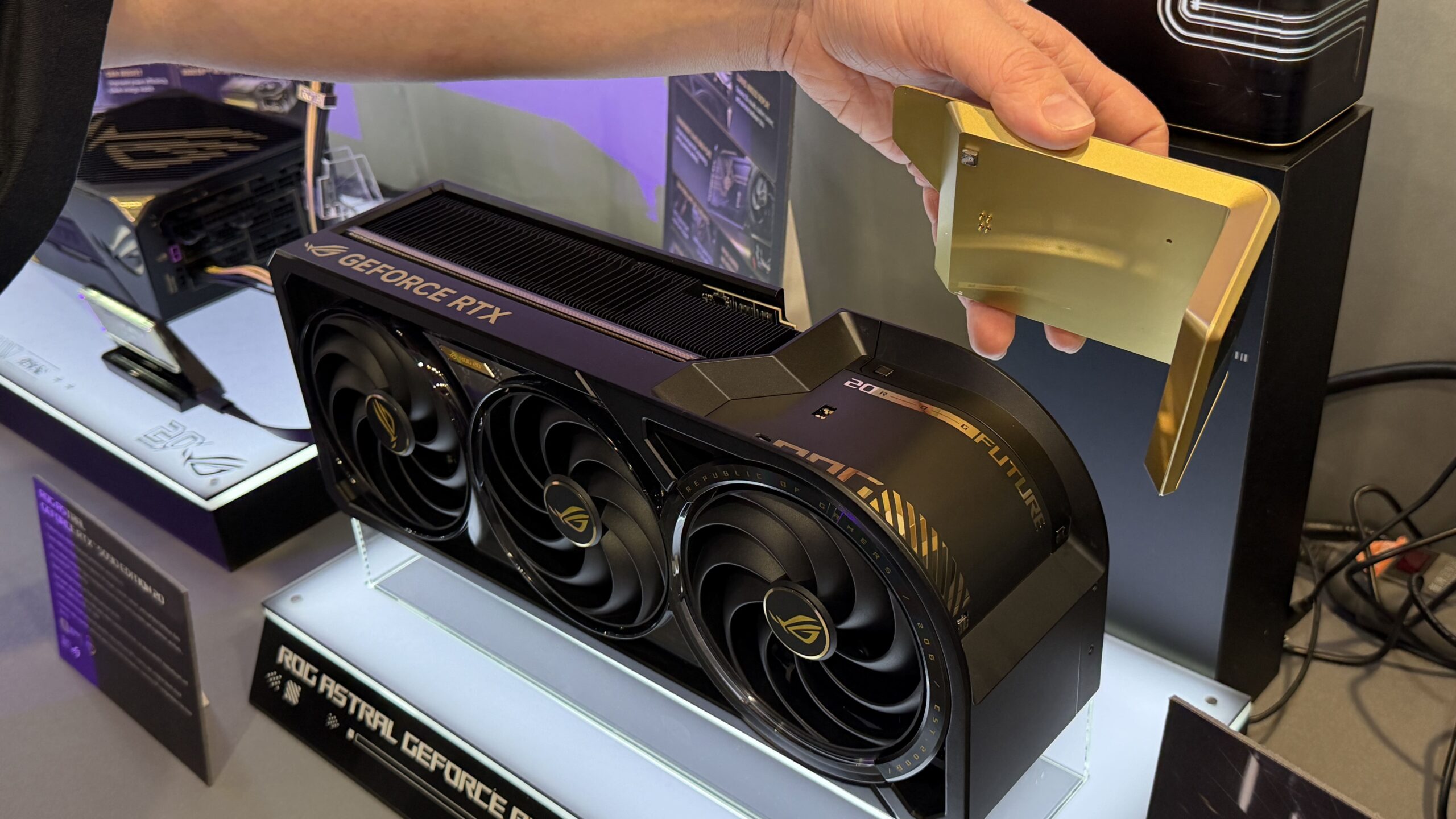
ASUS has listed its ROG Astral GeForce RTX 5090 Edition 20 at €6,499.95 through a European retailer, putting the special anniversary card near $7,435 before regional pricing differences. The listing makes it one of the most expensive consumer GeForce RTX 5090 models seen so far.
The card is part of ASUS’s ROG 20th Anniversary range and appears to be positioned as a limited premium edition rather than a standard high-end graphics card. It is based on NVIDIA’s GeForce RTX 5090 with 32GB of GDDR7 memory, but the price is far beyond what even most enthusiast PC builders would consider reasonable.
The listing does not confirm whether €6,499.95 will be the official price across every market. However, it gives a clear indication that ASUS plans to charge a major premium for the Edition 20 design.
The Edition 20 Is More Expensive Than Most RTX 5090 Models
RTX 5090 pricing has already been pushed upward by high demand, limited supply, and rising memory costs. Standard premium partner cards have often appeared well above NVIDIA’s original expected pricing, but the ROG Astral Edition 20 takes that trend to another level.
| RTX 5090 model | Reported pricing |
|---|---|
| ASUS ROG Astral RTX 5090 Edition 20 | €6,499.95, around $7,435 |
| ASUS ROG Matrix RTX 5090 | Around $4,000 at launch |
| ROG Matrix retail range | Roughly $6,000 to $8,000 in some listings |
| ASUS ROG Astral RTX 5090 OC | Around $4,329 in some markets |
The Edition 20 is not likely to offer performance that is dramatically different from other RTX 5090 cards. Most of the extra cost appears to come from its limited-edition status, custom design, premium cooling, anniversary branding, and collector appeal.
ASUS Is Targeting Collectors Rather Than Typical Gamers
The ROG Astral Edition 20 was introduced as part of ASUS’s 20th anniversary celebration for the Republic of Gamers brand. That makes it more comparable to a collector-focused graphics card than a regular retail GPU.
Limited hardware editions can attract buyers who want unusual designs, exclusive packaging, matching components, or a display piece for a high-end custom build. However, the pricing creates a difficult argument for anyone who only wants gaming performance.
At around $7,435, the card costs more than many complete gaming PCs built around a standard RTX 5090.
| What buyers are paying for | What it likely means |
|---|---|
| RTX 5090 GPU | Top-tier gaming and AI performance |
| 32GB GDDR7 memory | High-end gaming and creator workloads |
| Limited anniversary design | Collector value |
| Premium cooling and PCB design | Better thermals and aesthetics |
| ROG branding | Higher price compared with mainstream models |
For most buyers, a lower-priced RTX 5090 from ASUS, MSI, Gigabyte, or another board partner would likely offer nearly the same real-world frame rates.
High Memory Costs Are Adding Pressure Across the GPU Market
The RTX 5090 is already expensive because it uses high-end GDDR7 memory, a large GPU die, advanced power delivery, and premium cooling hardware. Rising DRAM and memory prices are making the situation worse across the wider PC market.
That does not fully explain a price above €6,400, but it gives GPU makers more room to position limited models as ultra-premium products.
The broader issue is that high-end graphics cards are becoming less accessible even for enthusiasts. Buyers are increasingly faced with a choice between paying a large premium for a new flagship GPU, waiting for supply to improve, or considering a lower-tier model that offers better value.
The ROG Astral Edition 20 Is a Showcase Product
The ROG Astral RTX 5090 Edition 20 is likely to remain a rare product aimed at collectors, showcase systems, and buyers who want the most exclusive ASUS graphics card available.
It may be impressive hardware, but its price means it makes little sense as a practical purchase for ordinary gaming or creative work. A standard RTX 5090, if available at a more reasonable price, should provide nearly identical performance without the extreme anniversary markup.
For everyone else, the listing is another sign that premium GPU pricing has entered a new level where special-edition cards can cost as much as a complete high-end workstation.



Discussion (0)
Be the first to comment.