



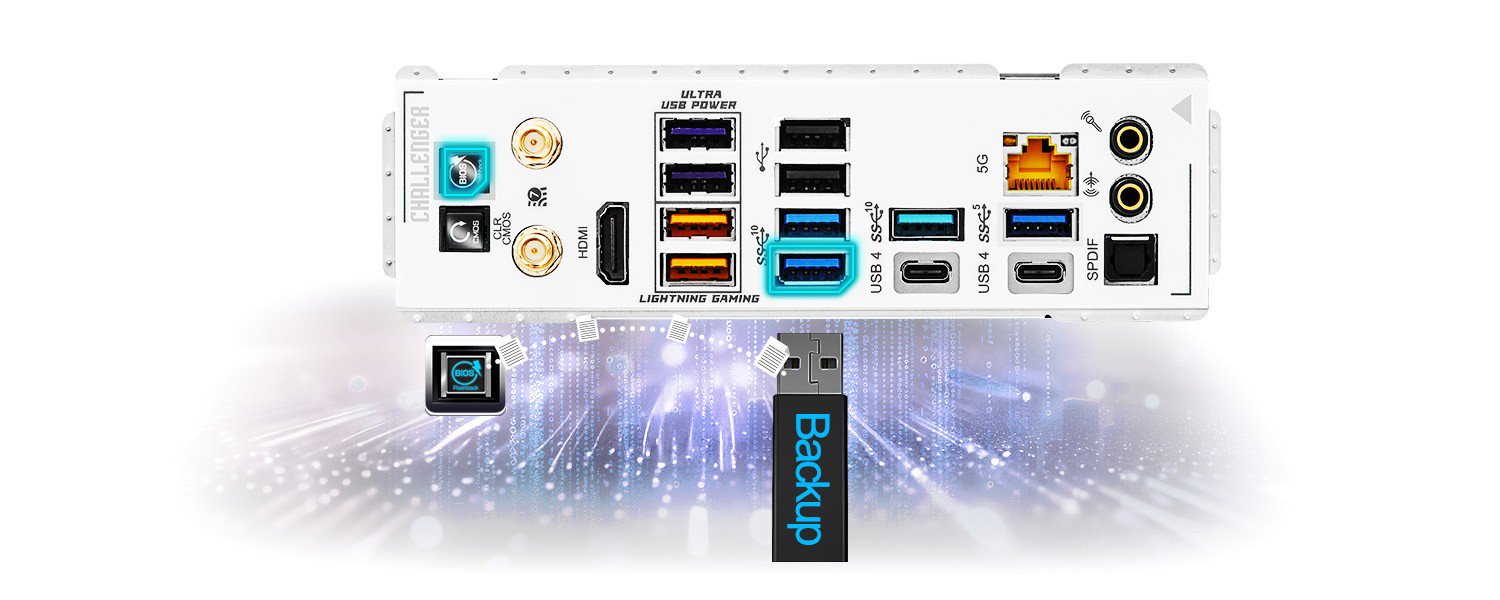
ASRock’s X870E Challenger WiFi White aims to make AMD’s latest AM5 platform more accessible by offering high-end connectivity, strong power delivery, modern storage support, and a white design at a $229 price point.
The motherboard targets builders who want an upgrade path for Ryzen 7000, Ryzen 8000, Ryzen 9000, and future AM5 processors without paying the higher prices often attached to flagship X870E boards. It includes the core features expected from AMD’s top desktop chipset, including PCIe 5.0 support, USB4 connectivity, DDR5 memory support, and CPU overclocking tools.
At $229, the board sits in an interesting position. It is not an entry-level AM5 option, but it also avoids the premium pricing that has become common among enthusiast motherboards. For gaming PCs, content creation systems, and all-purpose Ryzen builds, it appears to offer a practical balance between features and cost.
X870E Gives AMD Builders More PCIe 5.0 and USB4 Support
AMD’s X870E chipset sits at the top of the current AM5 motherboard lineup. It uses two Promontory 21 chipset dies and is designed for builders who need more expansion, storage, and high-speed connectivity than mainstream boards can provide.
One of the biggest benefits is support for PCIe 5.0 graphics and NVMe storage. This gives the board room for current high-speed SSDs and future graphics hardware, even if many gaming systems still perform well with PCIe 4.0 devices today.
USB4 is also included as a standard feature on X870E boards. That is important for people who use fast external storage, docks, displays, and professional accessories.
| Feature | ASRock X870E Challenger WiFi White |
|---|---|
| Chipset | AMD X870E |
| CPU socket | AM5 |
| Memory support | DDR5 |
| PCIe support | PCIe 5.0 for graphics and NVMe |
| USB4 | Included |
| Storage support | Multiple M.2 SSD options |
| Overclocking | CPU and memory overclocking |
| Price | $229 |
AM5 Support Makes It a Long-Term Platform Choice
The AM5 platform remains one of AMD’s strongest advantages for PC builders. AMD has committed to supporting the socket through at least 2029, which gives buyers more confidence that a motherboard purchased today may support future CPU upgrades.
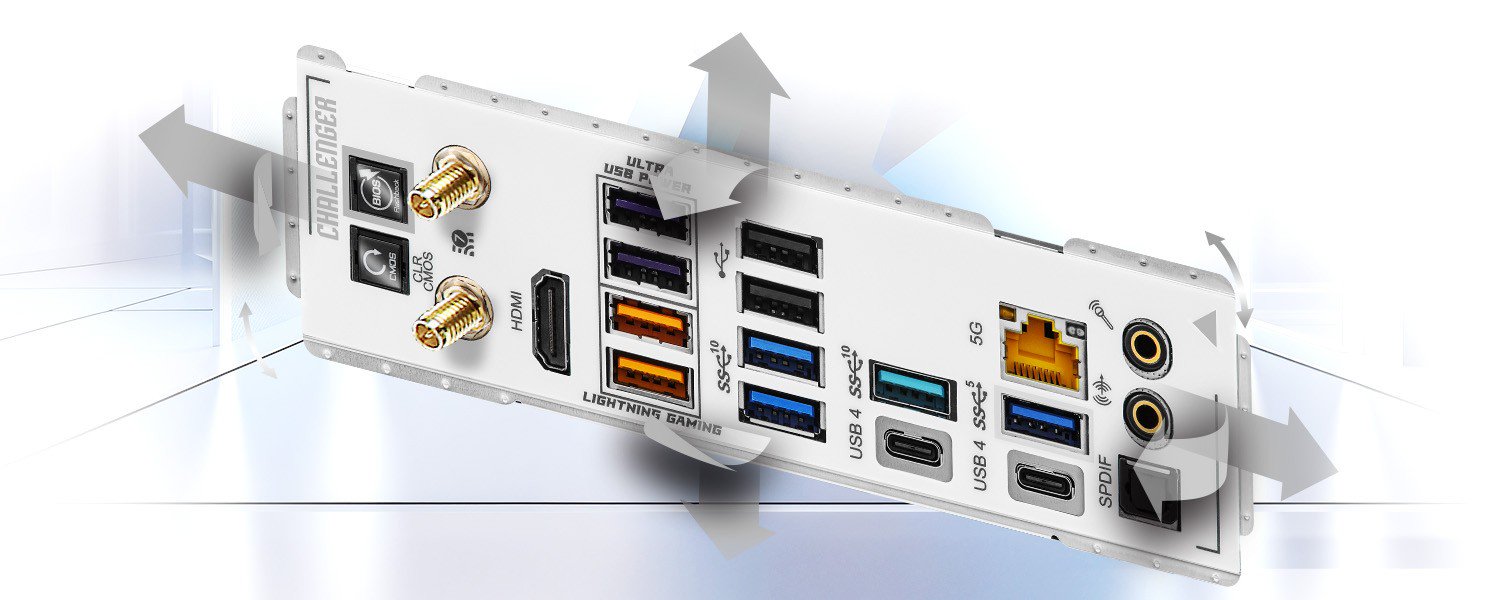
That is especially useful for people moving from AM4 systems. A buyer can start with a midrange Ryzen processor and upgrade later without replacing the motherboard, memory, and other major components.
The X870E Challenger WiFi White supports DDR5 memory and offers higher EXPO memory clock support than older AM5 generations. High-speed DDR5 can improve performance in some games and productivity tasks, though buyers should still choose memory based on stability and price rather than chasing the highest advertised speed.
The White Design Includes Stronger Power Delivery and Upgrade-Friendly Storage
ASRock has built the Challenger WiFi White around a white visual theme, making it suitable for white PC builds without forcing buyers into the most expensive motherboard category.
The board also includes upgraded VRM hardware for stable CPU power delivery. This matters most for high-core-count Ryzen processors, Precision Boost Overdrive tuning, and long productivity workloads where the CPU remains under sustained load.
Storage upgrades should also be simpler than on some compact boards. The design includes multiple M.2 slots and a full-sized M.2 2280 SSD slot, allowing builders to use widely available PCIe SSDs rather than smaller and more expensive formats.
That can help reduce future upgrade costs, especially as game sizes and project files continue to increase.
X870E Is Not Necessary for Every Ryzen Gaming PC
Despite its strong feature set, X870E is not required for every AM5 build. A B850 or B650 motherboard can still be a better choice for buyers focused on a single graphics card, one or two SSDs, and standard USB connectivity.
The X870E Challenger WiFi White makes the most sense for buyers who want USB4, more expansion options, PCIe 5.0 support, higher-end power delivery, and a longer upgrade path.
For $229, ASRock’s board appears to bring premium AM5 features closer to the mainstream market. It may not be the cheapest way to build a Ryzen gaming PC, but it offers a stronger foundation for anyone planning to keep and upgrade their system over several years.



Discussion (0)
Be the first to comment.