



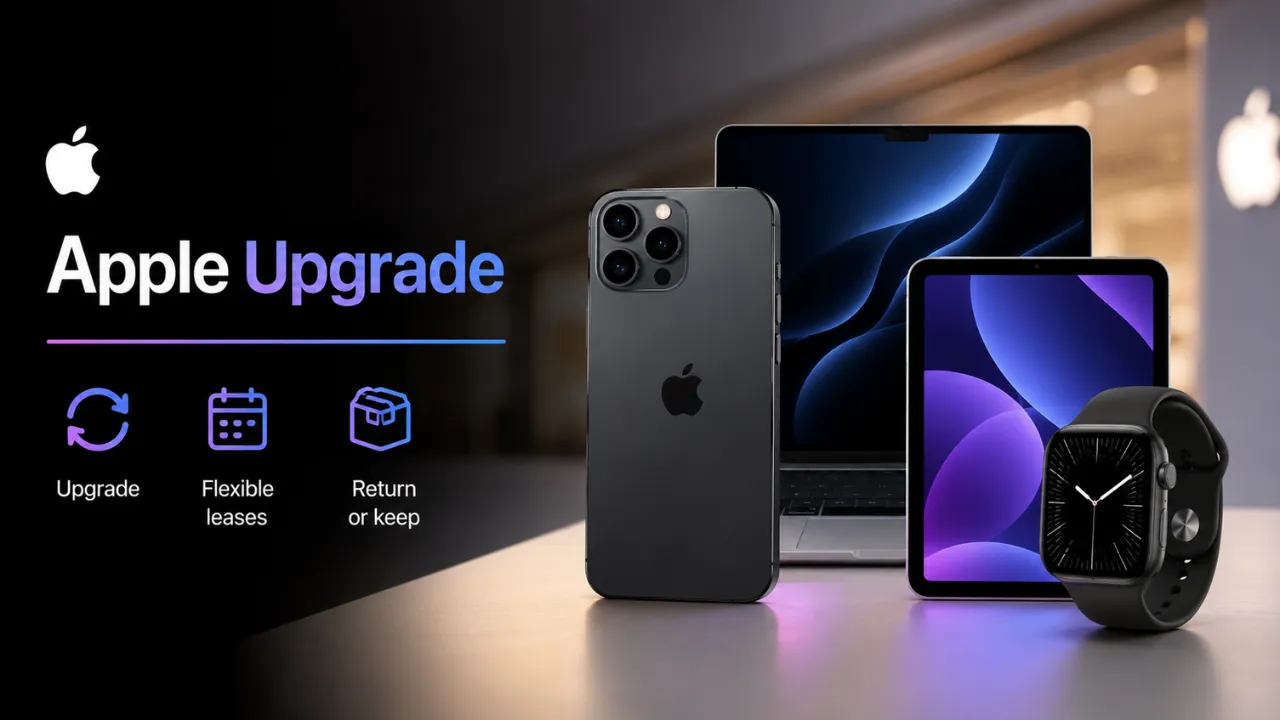
Apple is reportedly preparing a new hardware leasing service that would allow customers to pay monthly for selected iPhones, Macs, iPads, and Apple Watches instead of purchasing them outright.
The program, called Apple Upgrade, is expected to launch in the United States on July 28, 2026, through Apple’s online store and physical retail locations. Klarna will reportedly provide the financing and assume much of the credit risk.
Customers would undergo a soft credit check when applying. Lease periods are expected to last 24 months for iPhones and Apple Watches, while Macs and iPads would use 36 month agreements.
At the end of the term, customers could return the device, move to a newer product, or pay the remaining balance to keep it. Early upgrades and buyouts may also be available, although additional fees could apply.
The main concern is that AppleCare will not be included. Customers who want protection against accidental damage would need to purchase coverage separately.
Apple Upgrade could replace existing iPhone payment programs
Apple reportedly plans to stop accepting new customers into its current iPhone Upgrade Program and standard iPhone financing options after Apple Upgrade becomes available.
The existing iPhone Upgrade Program includes AppleCare+ in the monthly payment and allows customers to move to a new iPhone after making 12 payments. Apple Upgrade appears to use longer lease terms and separates device protection from the financing agreement.
| Program detail | Reported Apple Upgrade terms |
|---|---|
| Expected launch | July 28, 2026 |
| Availability | United States |
| Financing partner | Klarna |
| Credit check | Soft credit check |
| iPhone and Watch term | 24 months |
| Mac and iPad term | 36 months |
| AppleCare included | No |
| Early upgrade | Expected, possibly with fees |
| End of lease options | Return, upgrade, or buy |
| Business purchases | Not eligible |
| Education purchases | Not eligible |
The reported structure makes Apple Upgrade closer to a traditional lease than a standard instalment plan. Customers can spread the cost over a longer period, but they do not automatically own the device after making every scheduled payment.
Anyone who wants to keep the hardware must pay the remaining purchase amount at the end of the agreement.
Some lower priced Apple products will not qualify
Apple Upgrade is expected to cover most of the company’s main hardware lines, but several products will reportedly be excluded.
The iPhone 16, MacBook Neo, Apple Watch SE, and entry level iPad are not expected to qualify. Business and education purchases will also remain outside the program.
These exclusions suggest Apple is targeting individual customers interested in more expensive devices. The program could make a premium iPhone, MacBook, iPad Pro, or Apple Watch appear more affordable by focusing attention on the monthly payment rather than the full retail price.
Apple raised prices across parts of its Mac and iPad ranges in late June following higher memory and storage costs. Further increases have not been ruled out, and new iPhones could also become more expensive later in 2026.
A leasing service would help Apple manage customer resistance to higher prices without offering direct discounts.
AppleCare will need to be purchased separately
The lack of bundled AppleCare is one of the most important differences between Apple Upgrade and the current iPhone Upgrade Program.
AppleCare+ can cover accidental damage, battery service, and other repairs depending on the plan. Without it, customers remain responsible for repair costs if a leased device suffers a cracked display or other damage.
That could be especially important when returning a product at the end of the lease. The current report does not explain whether Apple or Klarna would charge customers for excessive wear, accidental damage, or missing accessories.
Customers will need to include the separate AppleCare price when calculating the real monthly cost.
A lease that initially looks cheaper may become considerably more expensive once insurance, fees, taxes, and an eventual buyout are included.
Missed payments could trigger a restricted iPhone mode
Code discovered in an iOS 27 beta reportedly suggests that Apple is developing a system that could limit access to financed or leased iPhones when payments fall behind.
The technology is known as App Managed Features. An authorised financing application could enrol the iPhone and regularly check whether the customer’s account remains in good standing.
If payments are missed, the financing provider could activate a Restricted Mode that blocks access to most applications.
| Expected to remain available | Could be restricted |
|---|---|
| Phone | Most third party apps |
| Settings | Entertainment apps |
| Wallet | Games |
| Health | Social media apps |
| Passwords | Non essential services |
| Clock | Other installed software |
| Accessibility tools | Access determined by provider |
Messages, Home, medication applications, and other emergency related services may also continue working. However, the financing provider could reportedly have some control over which applications remain accessible.
The feature has not been officially linked to Apple Upgrade, but it would provide a way to enforce lease or financing agreements without completely disabling essential phone functions.
The possibility of remote restrictions is likely to raise questions about privacy, ownership, and how much control a financing company should have over a customer’s device.
Leasing lowers the initial cost but may increase long term spending
Apple Upgrade could help customers obtain expensive hardware without paying the full amount at purchase.
However, the monthly payment alone will not show the complete financial impact. A customer may pay for two or three years and still need to return the product or make an additional payment to own it.
Early upgrades may also encourage customers to replace devices more frequently than necessary.
For Apple, this structure creates predictable monthly payments and may keep customers within its product ecosystem. Returned devices could potentially be refurbished and resold, although the reported details do not explain how Apple will handle them.
For shoppers, the program may be useful when cash flow matters more than total cost. It will be less attractive for people who normally keep an iPhone, Mac, or iPad for several years after paying it off.
Klarna gives Apple a way to offer leasing without running the loans
Apple previously worked on its own hardware subscription program but ended that effort in late 2024.
Partnering with Klarna allows the company to offer a similar monthly payment model without building and operating a large consumer lending system internally.
Klarna would reportedly provide the financial backing and take on much of the credit risk. The arrangement could give the payments company access to a large base of Apple customers while allowing Apple to focus on hardware sales and retail operations.
Neither Apple nor Klarna has officially confirmed Apple Upgrade. The reported July 28 launch date, product eligibility, lease terms, and fees could therefore change before the service becomes available.
The final terms will determine whether Apple Upgrade offers genuine flexibility or mainly makes increasingly expensive hardware feel more affordable. Customers will need to compare the total lease cost, separate AppleCare charges, early upgrade fees, and final buyout price before deciding whether the program is better than purchasing a device directly.
Discussion (0)
Be the first to comment.