



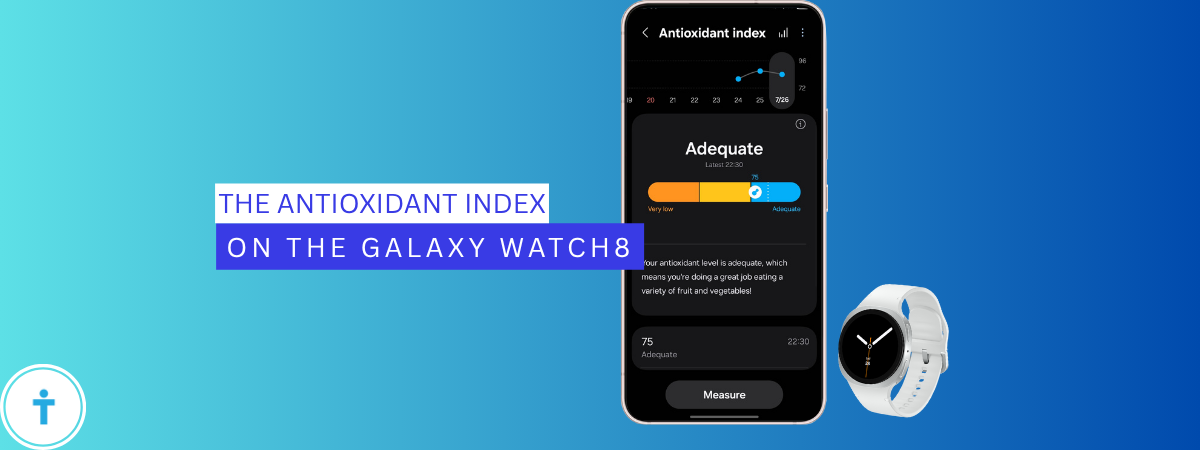
What if your smartwatch could analyze your body and tell if you’re eating enough fruits and vegetables in about ten seconds? Samsung Galaxy Watch8 can do that for you and calculate a metric called the Antioxidant Index, which measures the level of carotenoids in your skin that increases only through food and dietary supplements. This index can help you determine if you’re eating enough fruits and vegetables for optimal health and assist you in improving your diet. Here’s how it works:
NOTE: For those of you who prefer a video, we have made the YouTube clip below. The tutorial contains a bit more information than the video, and continues below it.

 Place the Samsung Galaxy Watch8 upside down
Open the Samsung Health app on your smartphone and scroll down to the Antioxidant Index option. Tap it.
Place the Samsung Galaxy Watch8 upside down
Open the Samsung Health app on your smartphone and scroll down to the Antioxidant Index option. Tap it.
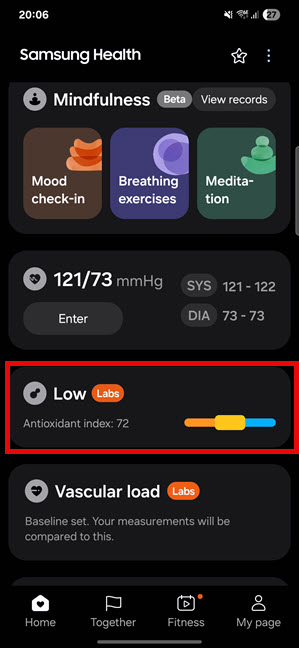
 Tap the Antioxidant index
Then, tap Measure.
Tap the Antioxidant index
Then, tap Measure.
 Tap Measure
Read the guide, which shows you how to measure this index by pressing your thumb firmly on the center of the sensor. Tap OK.
Tap Measure
Read the guide, which shows you how to measure this index by pressing your thumb firmly on the center of the sensor. Tap OK.
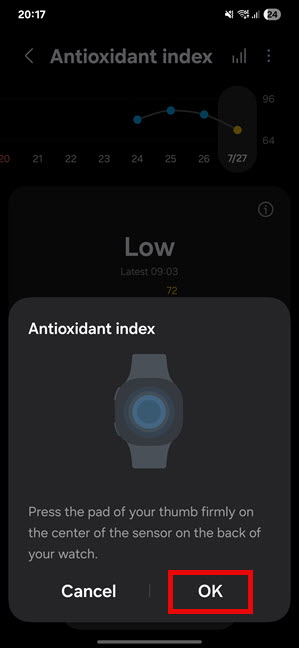 Tap OK
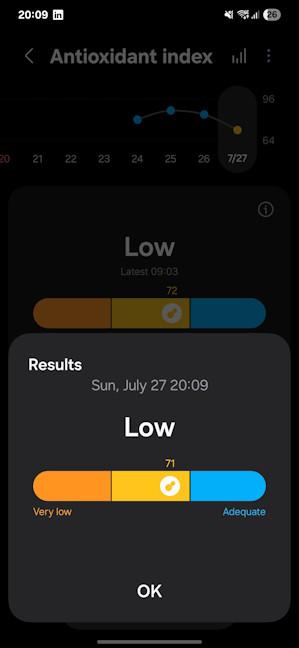
Press and hold your thumb on the sensor and wait for the measurement to complete. You see your result, which is a score that is classified as very low, low, or adequate.
Tap OK
Press and hold your thumb on the sensor and wait for the measurement to complete. You see your result, which is a score that is classified as very low, low, or adequate.
 Wait for the measurement to be complete
The higher the score, the higher the level of antioxidants in your blood.
Wait for the measurement to be complete
The higher the score, the higher the level of antioxidants in your blood.
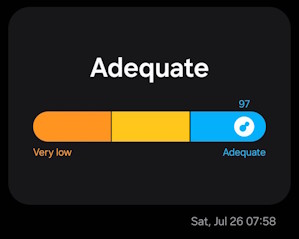
 I woke up with a great Antioxidant index
I went on to do my regular morning sports routine and measured the Antioxidant index just before having a healthy and tasty breakfast with my nephew, which included an omelet and a lot of veggies we both like. 🙂
We went cycling in the woods near Bucharest for a couple of hours. It was an extremely hot day (42 °C/107.6 °F), and I didn’t feel like eating a full lunch. Instead, I had a couple of watermelon slices. Later on, I also enjoyed ice cream with my nephew as a reward for finishing our cycling session in such hot weather. Since I hadn’t eaten much, I took another measurement in the evening, just before dinner with a friend. The Antioxidant index had dropped a little, but it was still at a healthy level. I intentionally made some unhealthy choices for dinner - having a large burger with fries, ketchup, and mayo, and a beer (alcohol has a high negative impact on the level of antioxidants in your blood). I measured the Antioxidant index again, just before going to sleep: it dropped a bit more, but it was still at a healthy level.
I woke up with a great Antioxidant index
I went on to do my regular morning sports routine and measured the Antioxidant index just before having a healthy and tasty breakfast with my nephew, which included an omelet and a lot of veggies we both like. 🙂
We went cycling in the woods near Bucharest for a couple of hours. It was an extremely hot day (42 °C/107.6 °F), and I didn’t feel like eating a full lunch. Instead, I had a couple of watermelon slices. Later on, I also enjoyed ice cream with my nephew as a reward for finishing our cycling session in such hot weather. Since I hadn’t eaten much, I took another measurement in the evening, just before dinner with a friend. The Antioxidant index had dropped a little, but it was still at a healthy level. I intentionally made some unhealthy choices for dinner - having a large burger with fries, ketchup, and mayo, and a beer (alcohol has a high negative impact on the level of antioxidants in your blood). I measured the Antioxidant index again, just before going to sleep: it dropped a bit more, but it was still at a healthy level.
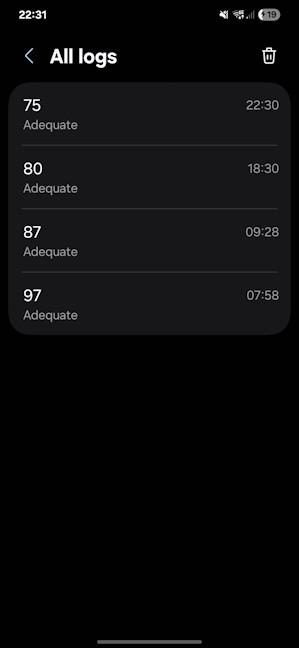 The Antioxidant index throughout the day
I noticed another decrease in the Antioxidant index the next morning, when I had a low score of 72. My score remained at a similar level throughout the day, reflecting my poor dietary choices from the previous day.
The Antioxidant index throughout the day
I noticed another decrease in the Antioxidant index the next morning, when I had a low score of 72. My score remained at a similar level throughout the day, reflecting my poor dietary choices from the previous day.
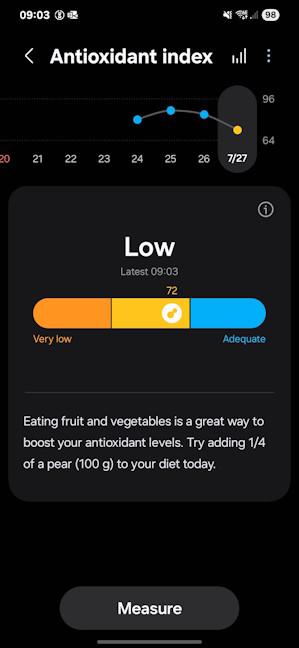 I woke up with a poor Antioxidant index
But why doesn’t this Antioxidant index score drop or increase faster? That’s because of how digestion works. According to medical sources, food can remain in the stomach between 40 minutes and two hours, depending on the type of food you eat, your age, overall health, and other factors. It also takes between 24 and 72 hours for food to move through the entire digestive system, from the time it enters your mouth to its elimination. Therefore, the result you see measured by your Samsung Galaxy Watch8 doesn’t reflect the level of antioxidants generated by what you just ate. What you see is the result of your diet from the days before. And, if you eat an unhealthy meal, but you generally have a healthy diet, it won’t have a significant impact on the Antioxidant index and your overall health. Similarly, if you have an unhealthy diet, eating veggies for one meal or one day won’t change things in a meaningful way. The purpose of the Antioxidant index is to help you educate yourself on the impact of your food choices and to build a healthier diet over time. Therefore, be patient with yourself and with the evolution of your Antioxidant index.
I woke up with a poor Antioxidant index
But why doesn’t this Antioxidant index score drop or increase faster? That’s because of how digestion works. According to medical sources, food can remain in the stomach between 40 minutes and two hours, depending on the type of food you eat, your age, overall health, and other factors. It also takes between 24 and 72 hours for food to move through the entire digestive system, from the time it enters your mouth to its elimination. Therefore, the result you see measured by your Samsung Galaxy Watch8 doesn’t reflect the level of antioxidants generated by what you just ate. What you see is the result of your diet from the days before. And, if you eat an unhealthy meal, but you generally have a healthy diet, it won’t have a significant impact on the Antioxidant index and your overall health. Similarly, if you have an unhealthy diet, eating veggies for one meal or one day won’t change things in a meaningful way. The purpose of the Antioxidant index is to help you educate yourself on the impact of your food choices and to build a healthier diet over time. Therefore, be patient with yourself and with the evolution of your Antioxidant index.
How to measure the Antioxidant Index on your Galaxy Watch?
First, take your Samsung Galaxy Watch8 off your wrist and place it upside down on a flat surface near you.How does this Antioxidant Index evolve?
I wanted to see how the Antioxidant index evolves through the day, so I made a dietary experiment. On a Saturday morning, I woke up and measured this index. I was happy to see that I had a great score of 97, which reflected my commitment to eating healthily. 🙂

Discussion (0)
Be the first to comment.