



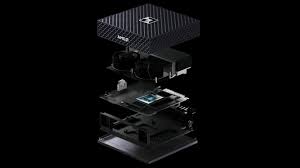
AMD is preparing a compact AI developer PC built around its Ryzen AI MAX Plus 395 chip, and it may launch as soon as June. The device, called Ryzen AI Halo, is aimed at developers who want a small local AI system without paying NVIDIA DGX Spark prices.
The timing makes sense. Local AI development is growing quickly, but many people do not need a full server setup. A powerful mini PC with unified memory, ROCm support, and preloaded AI tools could be useful for developers, researchers, and creators who want to run models locally.
Ryzen AI Halo is built for local AI work in a small form factor
The Ryzen AI Halo Mini PC is expected to use AMD’s top Ryzen AI MAX Plus 395 SoC. That chip belongs to the Strix Halo family and combines Zen 5 CPU cores, RDNA 3.5 graphics, and an XDNA 2 NPU.
AMD is positioning the device as an AI developer platform. It is expected to support ROCm, including the newer ROCm 7.2.2 stack, and come optimized for tools such as LM Studio, ComfyUI, and VS Code. AMD also says the platform can support models such as GPT OSS, FLUX 2, and SDXL. <table> <tr> <th>Feature</th> <th>Expected detail</th> </tr> <tr> <td>Processor</td> <td>Ryzen AI MAX Plus 395</td> </tr> <tr> <td>CPU</td> <td>Up to 16 Zen 5 cores</td> </tr> <tr> <td>GPU</td> <td>Up to 40 RDNA 3.5 compute units</td> </tr> <tr> <td>Memory</td> <td>Up to 128GB LPDDR5X 8533</td> </tr> <tr> <td>Software</td> <td>ROCm, LM Studio, ComfyUI, VS Code support</td> </tr> <tr> <td>Cooling</td> <td>Dual fan cooling system</td> </tr> </table>
The most important part is unified memory. AMD has shown the platform with up to 128GB of memory and claimed support for large local models. That gives the Ryzen AI Halo a clear role: run bigger AI workloads locally than a normal laptop or mini PC can comfortably handle.
The obvious comparison is NVIDIA’s DGX Spark, which has become more expensive and is listed at $4,699 for the 128GB LPDDR5X version. AMD has not announced pricing yet, but the report expects Ryzen AI Halo to land somewhere around $2,000 to $3,000. That would make it far cheaper than NVIDIA’s box, though final performance and software support will matter more than price alone.
There are already Strix Halo mini PCs in the market, such as GMKtec’s EVO X2 with Ryzen AI MAX Plus 395, 96GB memory, and 2TB storage for roughly $2,300 to $2,400. AMD’s own Ryzen AI Halo device appears to be a more direct developer focused platform, with software support and model optimization presented as part of the package.
The challenge is software. NVIDIA still has a major advantage because CUDA is deeply established in AI development. AMD’s ROCm has improved, but developers will want to know how stable it is, how many models run cleanly, and whether performance is good without too much manual setup.
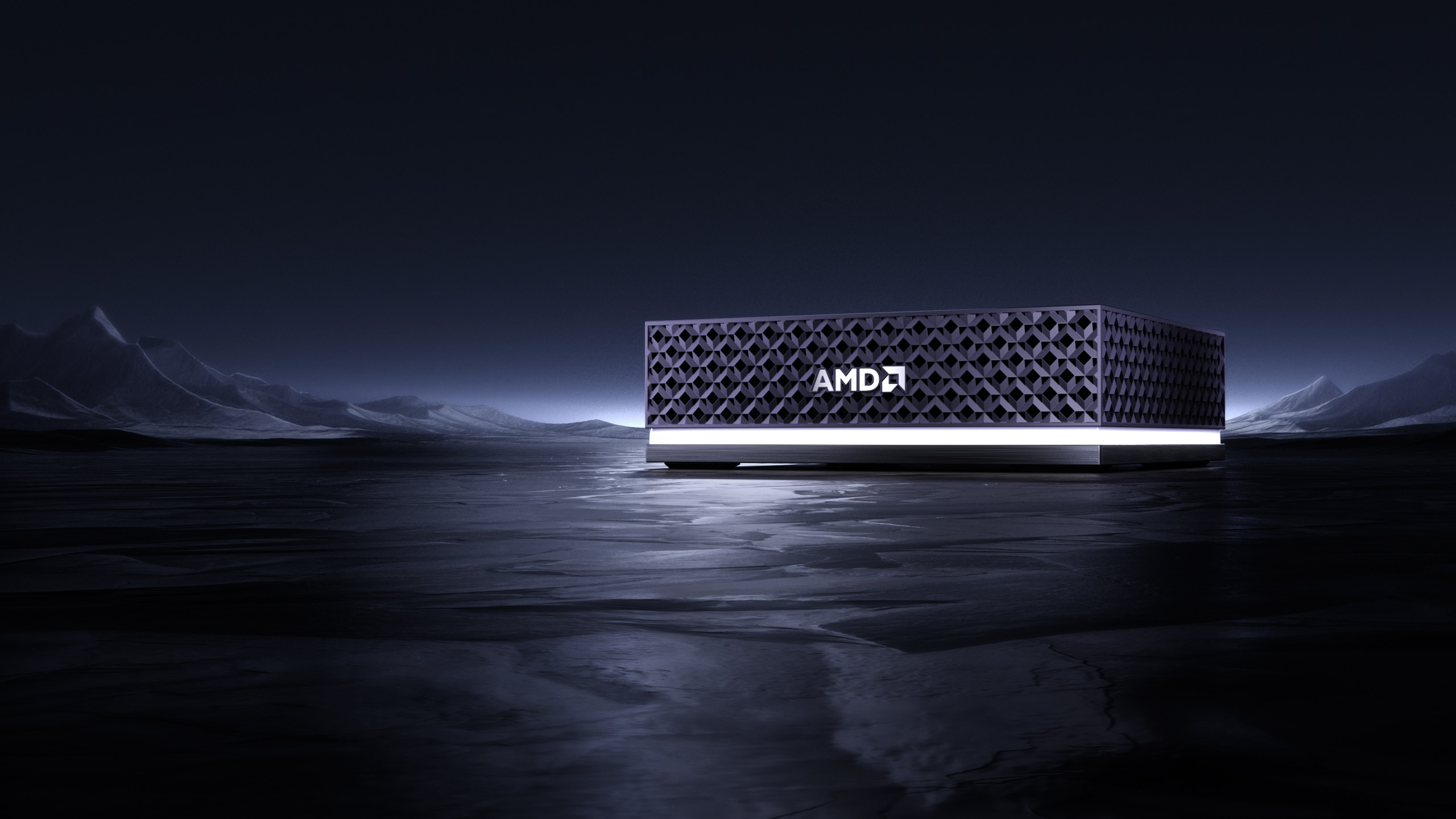
If AMD gets the software experience right, Ryzen AI Halo could become a practical local AI machine for people who want strong memory capacity and a compact desktop footprint. It does not need to beat DGX Spark in every metric. It needs to offer enough performance, enough memory, and a simpler price point for developers who want to build and test AI projects locally.

Discussion (0)
Be the first to comment.