



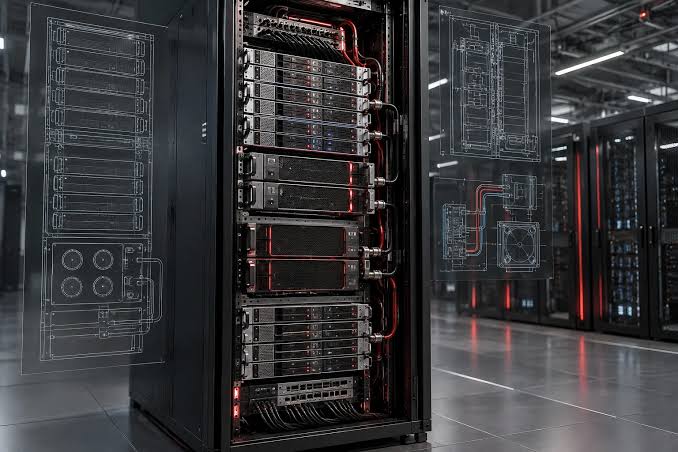
AMD has introduced Helion, a new rack scale platform designed for agentic AI deployments, with configurations ranging from a CPU only system containing up to 32,768 Zen 6 cores to an integrated CPU and GPU option for enterprise workloads.
Announced at OCP 2026, Helion is being presented as an open infrastructure blueprint that customers and partners can adapt according to their performance, power and cost requirements.
AMD plans to contribute the design to the Open Compute Project, allowing other organizations to further develop and deploy systems based on the architecture.
Helion Offers CPU Only and CPU Plus GPU Designs
AMD is dividing Helion into two primary configurations.
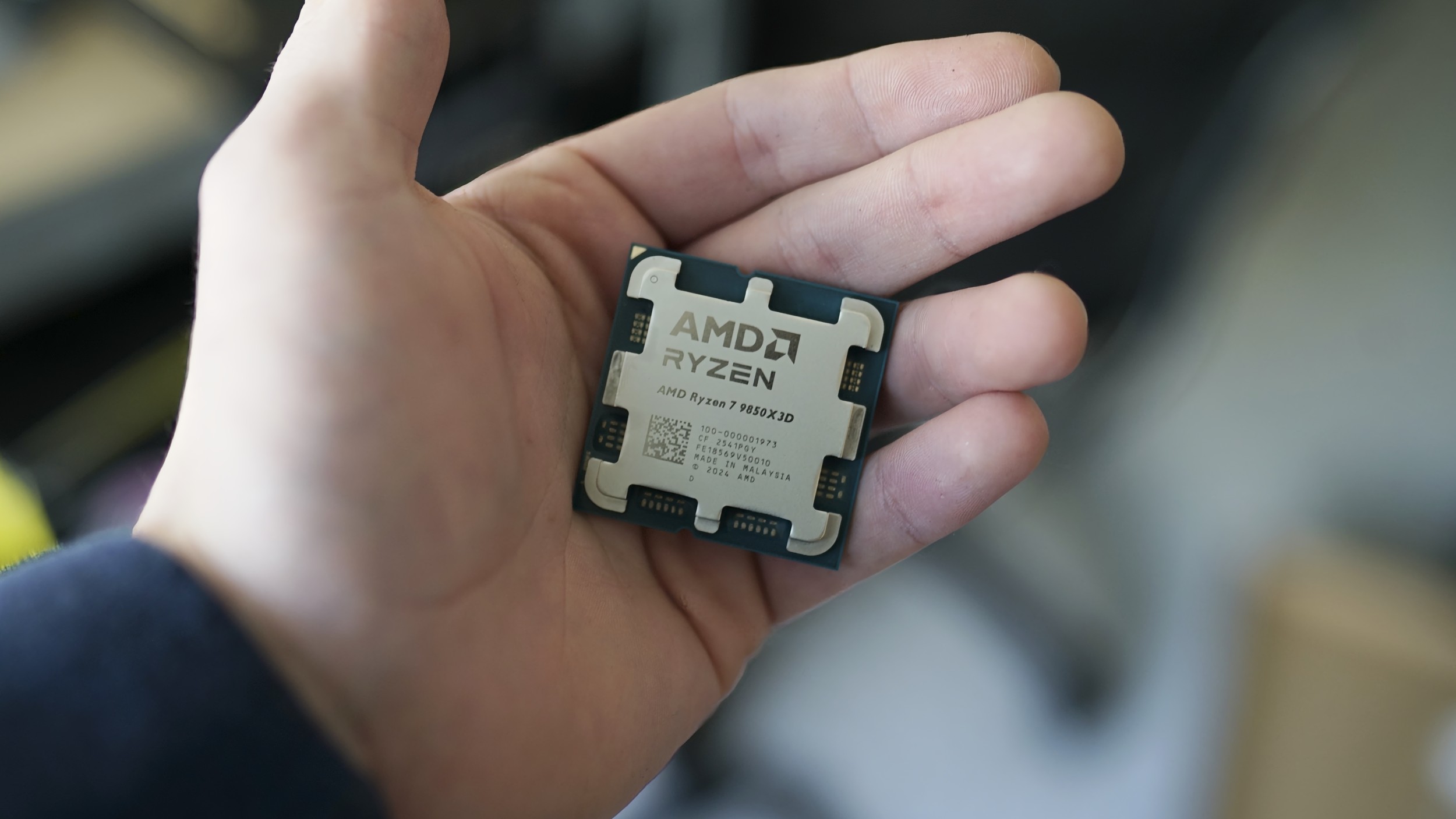
The first is aimed at hyperscale customers and relies entirely on 6th generation EPYC processors based on the Zen 6 architecture. This configuration can scale to as many as 32,768 CPU cores within a single rack.
AMD's EPYC 9006 Venice family can provide up to 256 Zen 6C cores per processor. Using those flagship chips, reaching 32,768 cores would require 128 processors.
The CPU focused design is intended primarily for running large numbers of AI agents while model inference can be handled by separate infrastructure.
| Helion configuration | Main hardware | Target workload |
|---|---|---|
| CPU only rack | Up to 32,768 Zen 6 CPU cores | Hyperscale agent execution |
| All in one rack | EPYC Venice CPUs plus Instinct MI350P GPUs | Enterprise agentic AI |
| Maximum GPU count | Up to 16 MI350P GPUs | Accelerated inference and general AI compute |
| Networking | Up to 102 Tbps | High bandwidth rack communication |
| Cooling | Air cooled | Standard rack deployment |
| Broader availability | First half of 2027 | Partners and customers |
The second design combines EPYC Venice processors with AMD Instinct MI350P GPU nodes.
This configuration is intended for enterprise customers that want agent execution, model inference and general compute within the same rack instead of separating those tasks across different systems.
Up to 16 MI350P GPUs and 74 Petaflops of FP4 Compute
The integrated Helion configuration can support up to 16 Instinct MI350P GPUs.
AMD lists up to 74 petaflops of FP4 performance for the rack, giving customers substantial accelerator capacity for AI inference and related workloads.
The platform can also provide up to 102 Tbps of networking bandwidth.
AMD describes the rack as a 21 ORv3 440U air cooled design with support for DC MHS compliant HPM hardware and Caliptra Root of Trust security.
The company is positioning Helion as a flexible system rather than a fixed hardware configuration.
Partners can adjust the balance of CPUs and GPUs depending on whether a deployment needs more resources for running agents, performing model inference or supporting general compute tasks.
Agentic AI Does Not Require the Same Hardware Everywhere
AMD argues that agentic AI should not be treated as one uniform workload.
The company points to applications ranging from personal assistants and enterprise software to code execution and more complex automated workflows.
Each of those workloads can place different demands on CPU performance, memory, GPU acceleration and power consumption.
That is the reason AMD is offering both CPU heavy and GPU accelerated Helion configurations.
In workloads where thousands of independent agents need to execute code, make decisions or interact with services, CPU core density can become particularly important.
Other deployments may require significantly more accelerator performance for running large AI models, making the integrated GPU option more appropriate.
Helion Takes an Open Platform Approach
The architecture follows the broader approach AMD is using with its Helios rack platform.
Helios combines EPYC 9006 Zen 6 processors with Instinct MI400 GPUs based on the company's CDNA 5 architecture.
Helion is positioned differently, focusing on a more flexible blueprint for agentic AI rather than a single high end accelerator configuration.
AMD says the design will use open software and standards while allowing system builders to adapt hardware around customer requirements.
Contributing Helion to the Open Compute Project should also make the design available to a wider hardware ecosystem instead of keeping it limited to AMD built systems.
First Helion Configurations Are Expected in November 2026
AMD says the first Helion rack configurations are expected to be ready by November 2026.
Broader availability is planned for the first half of 2027.
The platform gives AMD another way to expand its data center strategy beyond individual processors and accelerators by providing complete rack level designs.
For hyperscale customers, the standout option is the CPU only rack with as many as 32,768 Zen 6 cores. Enterprise customers, meanwhile, can choose integrated EPYC and Instinct systems capable of handling both agent execution and accelerated AI inference inside the same infrastructure.
Discussion (0)
Be the first to comment.