



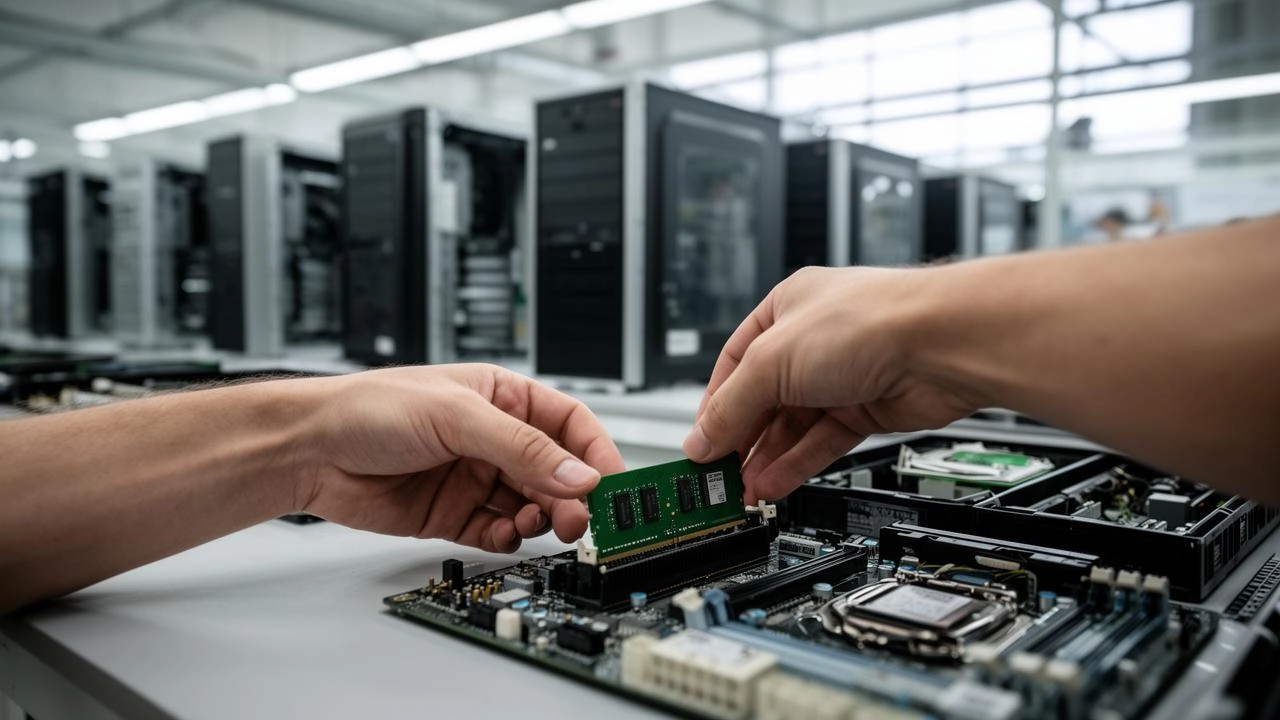
Acer expects PC component prices to remain under pressure through the first half of 2027, but the company does not believe the current memory shortage will continue until 2030.
Chairman Jason Chen said supply conditions should gradually improve as semiconductor manufacturers expand production capacity. He expects prices to peak around the middle of 2027 before beginning to decline during the second half of the year.
For buyers, that means the near term outlook remains difficult. Memory, SSDs, GPUs and other PC components are still facing cost increases, with additional price adjustments expected before conditions improve.
PC prices could rise by 5 to 20 percent in late 2026
Chen expects component costs to continue climbing during the fourth quarter of 2026.
The projected increase ranges from about 5 percent to 20 percent, depending on the product category and supply situation.
| Period | Expected market trend |
|---|---|
| Q4 2026 | Component prices could rise by 5 to 20 percent |
| Early 2027 | Further increases remain possible |
| Mid 2027 | Prices may reach their peak |
| Second half of 2027 | Gradual declines could begin |
| 2030 | Acer does not expect current shortages to last this long |
The pressure is affecting a wide range of PC hardware.
DDR4 and DDR5 memory prices have risen significantly, SSDs remain affected by NAND supply conditions, and graphics cards continue to face higher costs.
CPU pricing could also move upward as foundry costs increase.
Acer says memory supply is already improving
Despite the current situation, Chen said DDR4 and DDR5 memory are no longer facing the most severe stage of the shortage.
Supply is gradually increasing as manufacturers expand production.
CPU availability is also said to be improving, although some entry level and mid range models remain constrained.
That is important because a broader recovery requires improvement across several component categories rather than memory alone.
PC makers depend on CPUs, memory, storage, displays and other parts arriving in sufficient quantities. A shortage in only one area can still increase the final cost of a complete system.
Chen believes additional production capacity will eventually create enough supply to ease current pricing pressure.
Demand may become weaker than supply
Another factor could be changing demand.
Chen noted that more suppliers are approaching PC manufacturers with components to sell, while purchasing demand appears comparatively weaker.
If supply continues to increase while demand remains soft, manufacturers may eventually have to reduce prices to move inventory.
That could help explain why Acer expects pricing to peak around mid 2027 rather than continue rising indefinitely.
However, the timing remains uncertain.
Component pricing can be affected by AI demand, semiconductor manufacturing costs, inventory levels and changes in consumer spending.
AI demand remains a major source of pressure
The rapid expansion of AI infrastructure has placed strong demand on several parts of the semiconductor supply chain.
Memory manufacturers are allocating more capacity toward higher value products used in servers and AI accelerators, while data center demand is also influencing broader supply and investment decisions.
That can indirectly affect consumer hardware by reducing available capacity or keeping prices elevated.
At the same time, chip manufacturers are expanding their facilities to increase production.
Those investments take time to translate into meaningful supply, which is why Acer does not expect immediate relief.
Chen's outlook suggests the PC market may have to endure several more months of rising prices before conditions begin to stabilize.
The key period could be the second half of 2027. If additional semiconductor capacity comes online and demand does not rise at the same pace, component prices could finally start moving downward after an extended period of increases.

Discussion (0)
Be the first to comment.