



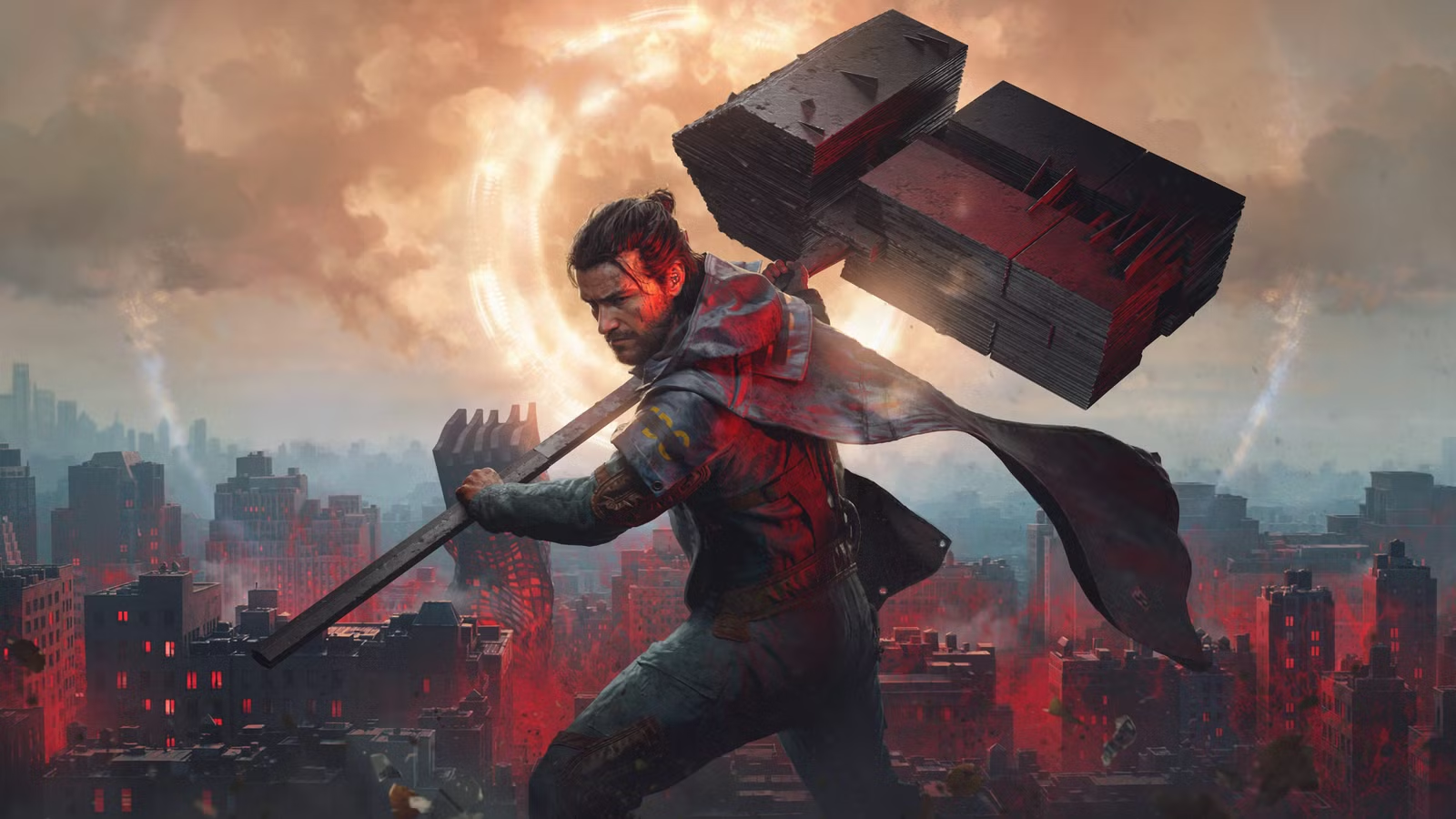
CONTROL Resonant is a much larger and more experimental sequel than its predecessor, shifting the series toward an action RPG structure while changing its protagonist, combat style and setting.
The game launches on September 24, 2026 for PC, PlayStation 5 and Xbox Series X and S. It once again uses Remedy's Northlight Engine, but moves away from the Oldest House as its main setting and instead opens up a heavily distorted version of Manhattan.
The result is an ambitious sequel with strong exploration, visuals and combat, although its larger scale also creates problems with repetitive activities, uneven progression and weaker side content.
Dylan Faden becomes the new protagonist
CONTROL Resonant takes place seven years after the original game.
Dylan Faden has finally awakened from his coma following the events of Control. During the previous game, he became a willing vessel for the Hiss after years of experimentation by the Federal Bureau of Control.
Jesse Faden managed to cleanse him, but Dylan is still carrying enormous guilt over what happened.
According to the story, 536 FBC employees died in a single day because of the Hiss outbreak connected to him.
The sequel begins with another crisis. The Hiss and Mold have escaped containment after seven years of lockdown, Jesse is missing, and The Board selects Dylan to deal with the situation.
Dylan begins following traces of his sister into mysterious areas called Faults. These locations are connected to the breakdown of reality and also reveal more information about the siblings' childhood.
The story works as a continuation of the relationship between Jesse and Dylan, with the emotional focus now reversed. Jesse previously felt guilty for leaving Dylan behind, while Dylan now struggles with his own actions during the first game.
Manhattan is the game's strongest element
The biggest improvement comes from the world itself.
CONTROL Resonant turns Manhattan into a paranatural playground where gravity, architecture and normal physical rules constantly break down.
Roofs can become floors, streets can rotate, and buildings may exist at impossible angles.
Exploration gradually becomes a puzzle because Dylan gains abilities that allow him to navigate increasingly strange environments.
The world is also filled with secrets, optional lore and upgrade crates.
| Major element | CONTROL Resonant approach |
|---|---|
| Main character | Dylan Faden |
| Setting | Distorted Manhattan |
| Structure | Large action RPG |
| Main combat style | Melee |
| Exploration | Gravity shifts, traversal abilities, puzzles |
| Main playtime | Around 40 hours in the reviewed run |
| Completion with side content | Up to about 50 hours |
| Engine | Northlight |
| Platforms | PC, PS5, Xbox Series X and S |
Some rewards improve Health or Power after collecting enough upgrade crates, while other secrets exist mainly to expand the game's lore.
The level design makes good use of the unusual setting, often asking you to think about navigation differently rather than simply following a marker.
Gravity changes also affect combat, with enemies sometimes appearing on inverted streets or walls during encounters.
Combat moves from guns to aggressive melee
Combat is one of the largest departures from the original Control.
Instead of focusing primarily on shooting, CONTROL Resonant is built around melee fighting.
Dylan uses a paranatural weapon called the Aberrant, which can transform into different forms.
You can choose a primary form, secondary form and combo finisher.
Possible configurations include fast dual daggers, a heavy hammer and a large two handed sword that damages multiple nearby enemies.
The system takes inspiration from fast action games and strongly encourages aggression.
There is no traditional parry. Dylan mainly relies on dodging, and health is recovered by killing enemies.
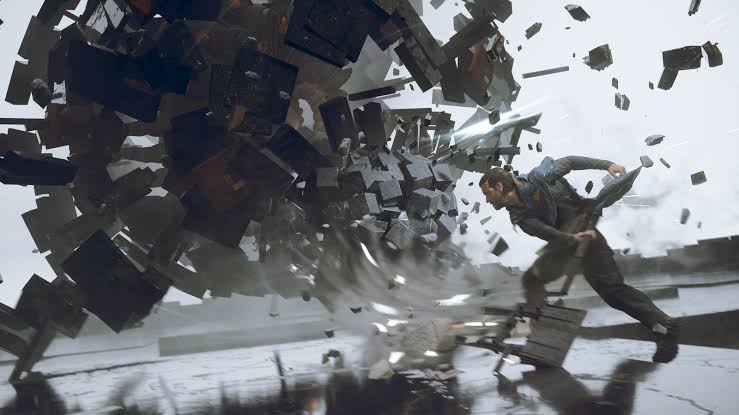
Normal enemies can also keep respawning until stronger enemies known as Heavies are defeated.
That forces you to prioritize major threats rather than simply clearing every enemy on screen.
Enemies have both health and Falter meters. Filling the Falter meter opens them to execution attacks.
Executions can trigger Dominance, temporarily increasing Dylan's damage.
Paranatural abilities support different combat styles
Dylan gradually unlocks several supernatural abilities.
Power is required to use them, while the Power meter is replenished through melee attacks.
Shield can absorb incoming damage and also deal Falter damage.
Ignite adds fire damage to attacks, while Push can knock enemies into environmental hazards or over ledges.
Players can create two ability sets and switch between them through the directional pad.
Weapons and powers can also be improved through skill trees and Artifacts.
Only three Artifacts can be equipped at once.
Progression is not always flexible, however. Some skill tree paths eventually force players into abilities connected to summoned allies even if their preferred build is focused elsewhere.
Certain weapons and abilities also appear substantially more useful than others.
Some fights suffer from excessive enemy health
Although the basic combat system works well, balance becomes inconsistent in some encounters.
Several enemies have very large health pools, making longer fights feel repetitive.
Some boss encounters involving Hedrons are particularly affected.
Certain phases involve slowly reducing large health bars before a sudden shift introduces much more difficult mechanics.
The game includes an Assist mode with extensive difficulty adjustments, but it is hidden inside the options menu rather than being presented clearly at the start.
There is no conventional difficulty selection screen.
That makes the default balance more important, since some players may never discover the available customization options.
Side activities struggle to support the larger runtime
CONTROL Resonant can take around 40 hours to complete, with closer to 50 hours possible when exploring more optional content.
That scale creates one of the game's biggest weaknesses.
Many side activities lack the depth expected from a modern action RPG of this size.
Recurring World Events include killing Apex enemies, chasing Altered objects, recovering supply packages, defending FBC Rangers and clearing Mold or Hiss activity.
Once these events have been completed several times, they can become predictable.
A late game system called Tasks adds additional job board activities such as collecting packages or visiting specific locations.
These activities increase the amount of content but do not necessarily make the world feel more meaningful.
Zoe De Vera stands out among the supporting cast
One of the stronger new characters is Zoe De Vera, Dylan's field handler.
She communicates with him regularly over radio and initially treats him cautiously because of his history with the Hiss.
Her attitude gradually changes as Dylan completes missions and proves himself.
She eventually risks her own position to defend him from Security Chief Simon Arish, who remains hostile toward Dylan because of what happened during the original crisis.
Outside Dylan, Jesse and Zoe, however, the supporting cast receives less meaningful development than the game's length might suggest.
Path tracing looks impressive, though performance has minor issues
The Northlight Engine continues to deliver highly detailed environments and strong lighting.
On PC, path tracing significantly improves the presentation, especially in Manhattan's dense urban environments and surreal interiors.
There are still some technical concerns.
Frame pacing can become inconsistent when Frame Generation is enabled, and occasional traversal stutters appear while moving through the open world.
The stuttering is not described as severe, but it remains noticeable.
A launch update could potentially improve those issues.
CONTROL Resonant takes several risks by changing protagonists, emphasizing melee combat and expanding into a much larger action RPG.
Its strongest elements are the warped Manhattan environment, traversal systems, main storyline and aggressive combat.
Its weakest areas are closely connected to that increased scale. Repetitive side activities, uneven progression and some overly long encounters show that the larger structure is less polished than the central adventure.
Even with those limitations, the sequel significantly expands what Control can be rather than simply repeating the first game's formula.


Discussion (0)
Be the first to comment.