



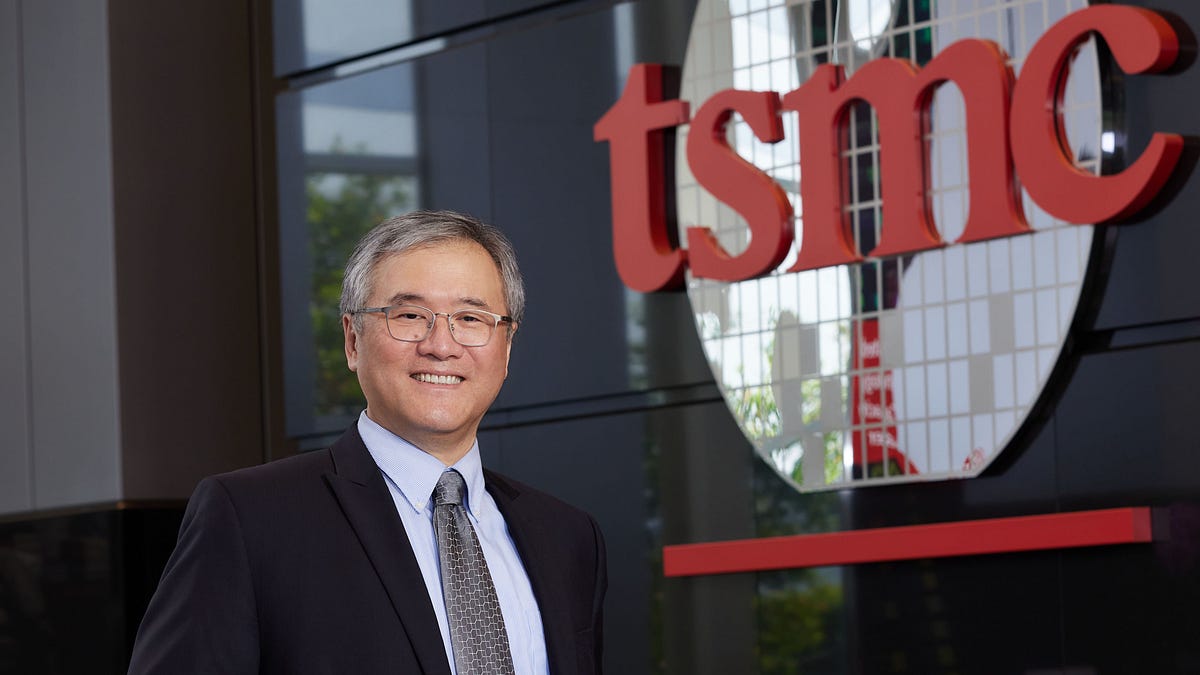
A senior TSMC executive says artificial intelligence can help with chip design and software development, but it is not yet capable of independently solving the hardest problems involved in creating future semiconductor manufacturing technologies.
Y. J. Mii, TSMC's co chief operating officer, compared today's AI systems to a three year old Superman. His point was that AI can be extremely powerful while still lacking the judgment needed to understand every consequence of its decisions.
He argued that humans should remain responsible for final decisions, especially when the work involves technologies that do not yet exist and therefore lack the historical data needed to train reliable AI systems.
AI works better when the problem has clear inputs and outputs
TSMC already uses AI extensively in areas such as coding and chip design.
Mii said software development is relatively suitable for AI because the tasks are often well defined. Chip design can also benefit from AI because electronic design automation depends on known inputs, design rules and measurable outputs.
This makes it easier for AI systems to optimize layouts, circuits and large groups of transistors.
| Area | AI suitability |
|---|---|
| Coding | Strong, because tasks can be clearly defined |
| Chip design | Useful for optimization and EDA workflows |
| Transistor optimization | Helpful at large scale |
| Next generation process development | More limited |
| Final decision making | Should remain with humans |
Semiconductor design software companies are already adding agent based AI tools to automate parts of circuit and chip development.
However, Mii believes manufacturing technology development is a different challenge.
Future process nodes lack the data AI depends on
TSMC is developing advanced process technologies including A14 and technologies beyond the 1.4 nanometer class.
The difficulty is that these future processes involve materials, equipment and manufacturing conditions that may never have been used before.
AI systems generally perform best when they can learn from large amounts of existing data.
When engineers are attempting something entirely new, that information may not exist.
Mii said this limits how much AI can contribute to the discovery process.
If existing manufacturing equipment or materials are physically incapable of reaching a target, an AI model cannot simply remove those physical limitations.
Researchers must instead develop new materials, production techniques or equipment.
This type of work depends heavily on experimentation, engineering judgment and scientific discovery.
AI still has an important role inside semiconductor companies
Mii's comments do not suggest that TSMC is avoiding AI.
The company is using the technology where it can improve productivity, including programming and parts of the design process.
AI could also help engineers analyze large datasets, identify patterns and explore possible solutions more quickly.
The limitation comes when AI is asked to solve problems where there is little or no previous information to learn from.
In those cases, human researchers still need to determine which ideas are physically possible and which experiments are worth pursuing.
Mii also raised concerns about sharing sensitive corporate information with AI systems because confidential technical data could potentially leak outside the company.
For a semiconductor manufacturer developing closely guarded process technologies, protecting design and manufacturing information remains a major priority.
Global expansion creates a different challenge
TSMC is also expanding manufacturing outside Taiwan, which creates problems that have little to do with AI or process technology.
Mii said one of the biggest difficulties is finding experienced senior managers capable of running international teams.
Advanced fabs require large groups of engineers and specialists, but their success also depends on managers who understand both semiconductor manufacturing and local working environments.
That means TSMC's future growth will depend on more than building factories and developing smaller process nodes.
The company also needs experienced people who can manage increasingly complex global operations.
Mii's broader message is that AI can become a powerful engineering tool, but its usefulness depends on the nature of the problem. For established tasks with clear rules and large datasets, it can provide substantial assistance. For the discovery of entirely new manufacturing technologies, human expertise and experimentation remain central.


Discussion (0)
Be the first to comment.