



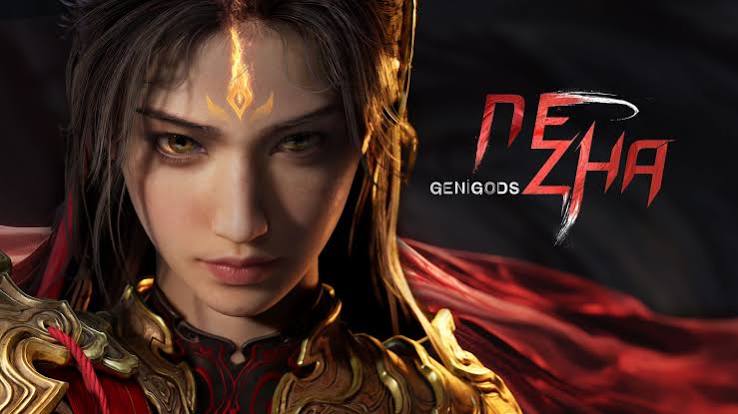
Genigods: Nezha is an upcoming action game built around Chinese creation mythology, with its developers aiming to give the setting the same kind of large scale treatment that earlier action games brought to Greek mythology.
The project is being developed by Genigods Lab, a studio whose founders have around two decades of industry experience. The team previously worked on mobile titles, including a My Hero Academia game and the Condor Heroes series, which has surpassed 10 million downloads. Genigods: Nezha marks the beginning of what the studio calls its Genesis era, with plans for a trilogy based on Chinese creation mythology over the next decade.
Nezha starts before humanity exists
The game takes a very different approach to the familiar Nezha legend.
Instead of beginning with the rebellious young hero known from later Chinese mythology, the story goes much further back to the creation of the world.
The setting draws from the myth of Pangu, the primordial giant whose body became the natural world, and Nüwa, the goddess who created humans from clay and repaired the broken sky.
In the game, Pangu has fallen into an eternal sleep, ten suns are scorching the land, gods are fighting across the heavens and monsters are emerging from the abyss.
You initially play as the Spirit Pearl, created by Nüwa from earth, water and fire. The character begins as something closer to an artifact than a person, later evolves into the first human, represented as a woman formed from water and clay, and is eventually reborn as Nezha.
| Feature | Genigods: Nezha |
|---|---|
| Genre | Action game |
| Engine | Unreal Engine 5 |
| Target release | 2028 |
| Platforms | PC, PlayStation 5, Xbox Series X and S |
| Campaign length | Around 25 hours |
| Major boss encounters | More than 10 |
| Development team | Around 60 people |
| Development stage | Early development |
| Planned series | Three games over roughly 10 years |
| PC feature | Path tracing planned |
The story also brings in other major figures from Chinese mythology, including Yi, the legendary archer associated with shooting down excess suns, Yu the Great, known for taming floods, and the giant Kuafu, who helps the player reach the Sun Tree connecting mortal and celestial realms.
Combat is built around fluid movement
Genigods Lab is designing combat around the idea of water and constant adaptation.
The game's philosophy takes inspiration from the concept of being fluid rather than rigid, which translates into fast movement between ground and aerial combat.
Nüwa gives the protagonist the Heart of Sacred Water, a sentient companion that grows alongside her and acts as both a source of power and a puzzle solving tool.
Combat moves quickly between launches, aerial combinations and execution attacks.
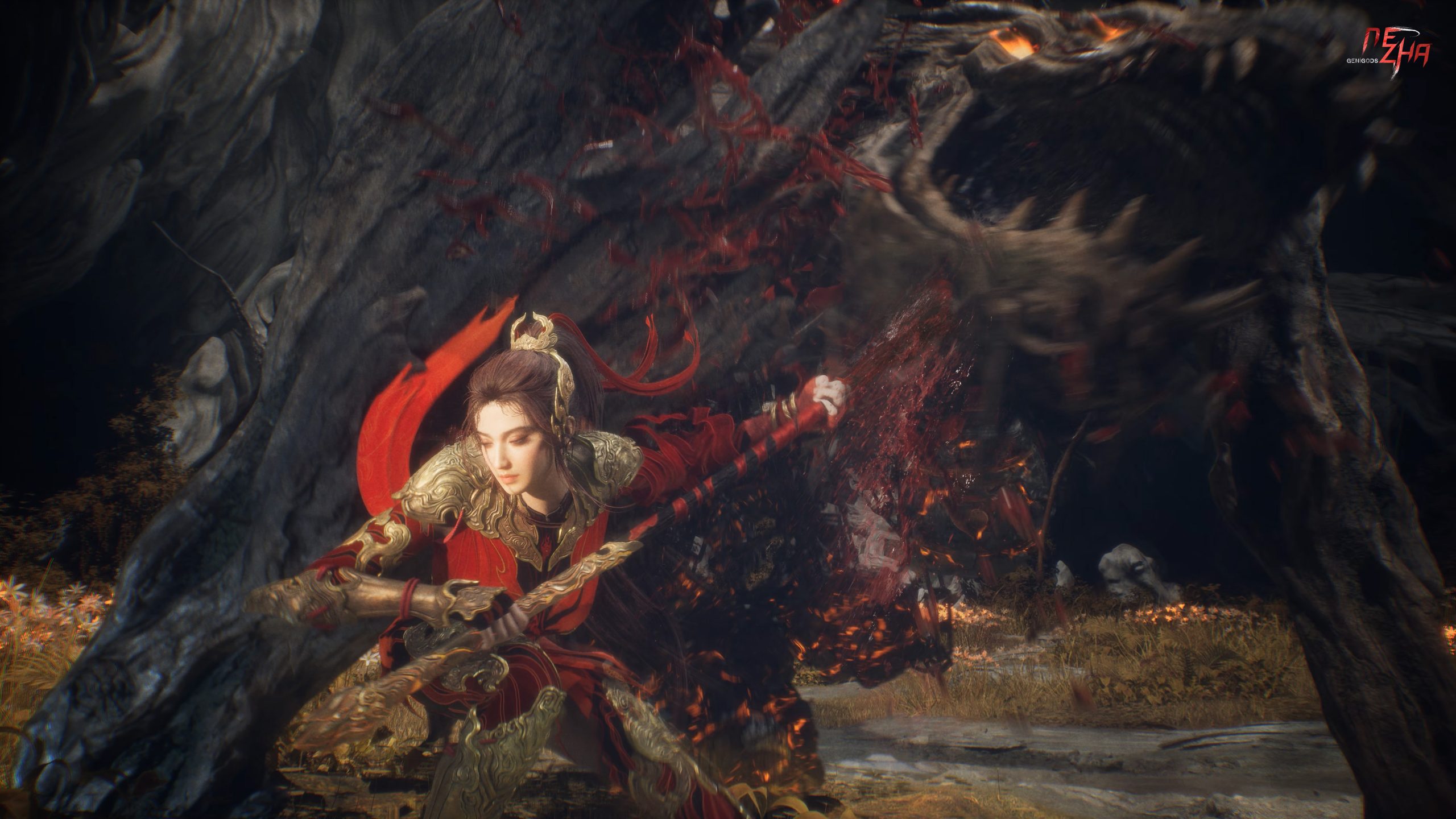
The developers have pointed to early God of War games and Devil May Cry as major references for the intended pace.
A playable demo showed a large number of combat techniques, including Air Dash, Uppercut, Multi Kick, Serpentine Volley, Plantain Fan, Aquatic Time Cage, A Thousand Arrows and several dragon themed attacks.
The system also includes a Divine Power gauge. During the demo, the meter changed depending on the state of the fight. Filling it completely allowed the player to perform an execution that stunned the enemy and created an opening for additional damage.
Relics can transform Nezha's weapons
Another major system is Relic Fusion.
Throughout the game, you collect mythological relics and combine them with Nezha's weapons or forms to create new abilities.
One example is Yi's bow. When fused with Nezha's equipment, it becomes a new weapon that carries the identity of the mythological hero who brought down the suns.
Later in the game, Nezha can also unlock the legendary three headed, eight armed form.
This system appears designed to connect progression directly to mythology rather than treating relics as simple equipment upgrades.
Colossal battles are a major focus
Scale is one of the project's biggest ambitions.
The game will include fights against gods and enormous creatures that can be climbed during combat, with some encounters taking place directly across their bodies.
The studio says there will be more than 10 major duels across a campaign lasting roughly 25 hours.
The game is also expected to include multiple endings, with the developers suggesting that around three playthroughs may be needed to see everything.
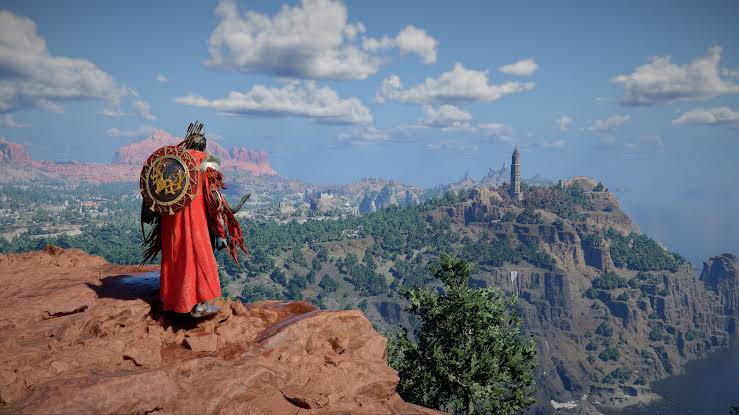
Visually, the team is drawing inspiration from the Dunhuang grottoes, the historic Buddhist cave complexes along the Silk Road. That influence can be seen in the rounded sculptural forms and silhouettes used in the game's characters and environments.
A 2028 release is currently planned
Genigods: Nezha remains early in development.
The studio says around 60 people are currently working on the game, which has already been in production for roughly two years.
The current target is 2028, with planned releases on PC, PlayStation 5 and Xbox Series X and S.
The team is collaborating with Sony on PlayStation optimization and has also confirmed plans for path tracing support on PC.
The project is ambitious for a relatively small team, especially given its planned scale, fast combat and long term trilogy structure.
Its strongest identity comes from how deeply it is tying Chinese creation mythology into both the story and gameplay. Rather than using mythology only as visual decoration, Genigods: Nezha is building its protagonist, weapons, powers, bosses and world progression around those traditions.

Discussion (0)
Be the first to comment.