



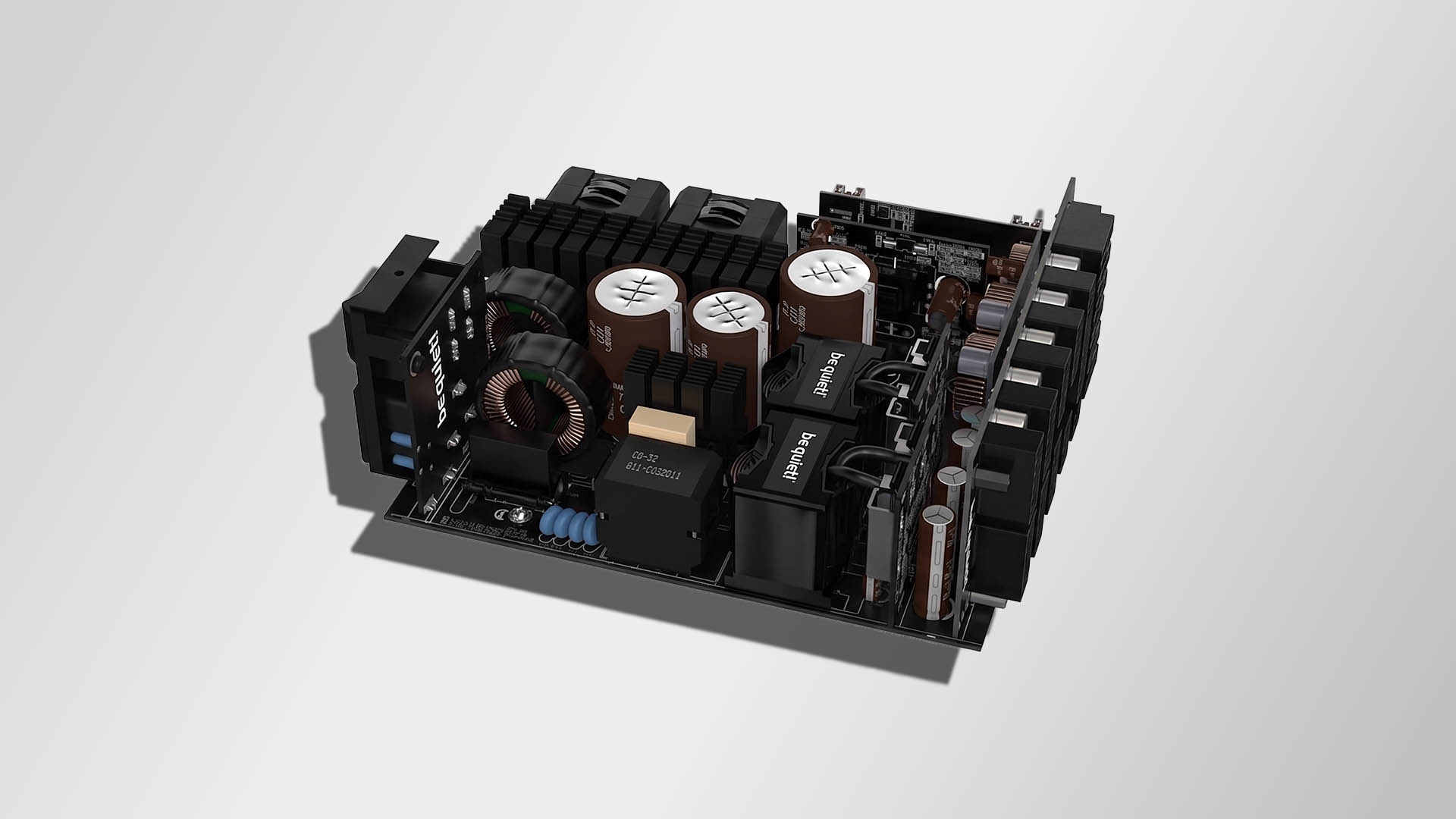
A 15 year old be quiet 850W power supply has failed after its owner connected modular PCIe cables that apparently belonged to a different PSU while upgrading to a Radeon RX 9070 XT.
The system had reportedly been running reliably for years with a GeForce GTX 1080 Ti. The problem appeared only when the graphics card was replaced and additional PCIe power connections were needed for the newer GPU.
Instead of replacing the existing cable setup, the owner used spare modular cables that were available in the case. Those cables were likely designed for another power supply, creating a dangerous electrical mismatch.
When the system was switched on, the PSU reportedly produced a loud sound and flash before its protection circuitry shut the system down.
Modular PSU cables are not universally compatible
One of the most important lessons from the incident is that modular power supply cables cannot automatically be mixed between different PSU models.
Even when two cables use connectors that physically fit, the wiring on the PSU side can be different.
That means a cable may place 12V, ground or other electrical lines on different pins than the connected power supply expects.
| Detail | Information |
|---|---|
| Power supply | be quiet 850W modular PSU |
| Age | About 15 years |
| Previous GPU | GeForce GTX 1080 Ti |
| New GPU | Radeon RX 9070 XT |
| GPU power requirement | Three 8 pin PCIe connections |
| Cause of failure | Likely incompatible modular PCIe cables |
| Immediate result | Loud noise, flash and PSU protection shutdown |
| Condition of other parts | Not yet confirmed |
Using an incompatible cable can therefore cause a short circuit or send incorrect voltage to the graphics card or other components.
The connector shape alone is not enough to prove compatibility.
Cable management contributed to the mistake
The owner reportedly wanted to preserve the existing cable management inside the PC rather than rerouting cables from the power supply.
After installing the RX 9070 XT, the system required three 8 pin PCIe power connections.
The user found unused modular cables and connected them without verifying whether they originally came with the be quiet unit.
That saved the effort of rebuilding the cable layout, but it created a much larger problem when the system was powered on.
The PSU's internal protection appears to have activated quickly, but it remains unclear whether the graphics card, motherboard or other components were also damaged.
The entire system will need to be tested before the full extent of the failure is known.
Always use the cables supplied with the PSU
The safest approach with a modular power supply is to use only the cables specifically supplied for that model.
Replacement cables should also be verified against the exact PSU model and pinout.
This rule applies even when cables come from the same manufacturer, because wiring standards can change between product families and generations.
For older systems, keeping unused PSU cables labelled and stored separately can help prevent this type of mistake years later.
It is also worth checking compatibility documentation before adding a new graphics card, especially when a GPU requires additional power connectors.
The failed be quiet unit had already delivered around 15 years of service, which is unusually long for a heavily used PC component.
Its age was not necessarily the direct cause of the failure. The immediate problem appears to have been the use of incompatible modular cables during the RX 9070 XT upgrade.
The incident is a strong reminder that modular PSU cables should never be treated as interchangeable simply because the connectors fit.



Discussion (0)
Be the first to comment.