



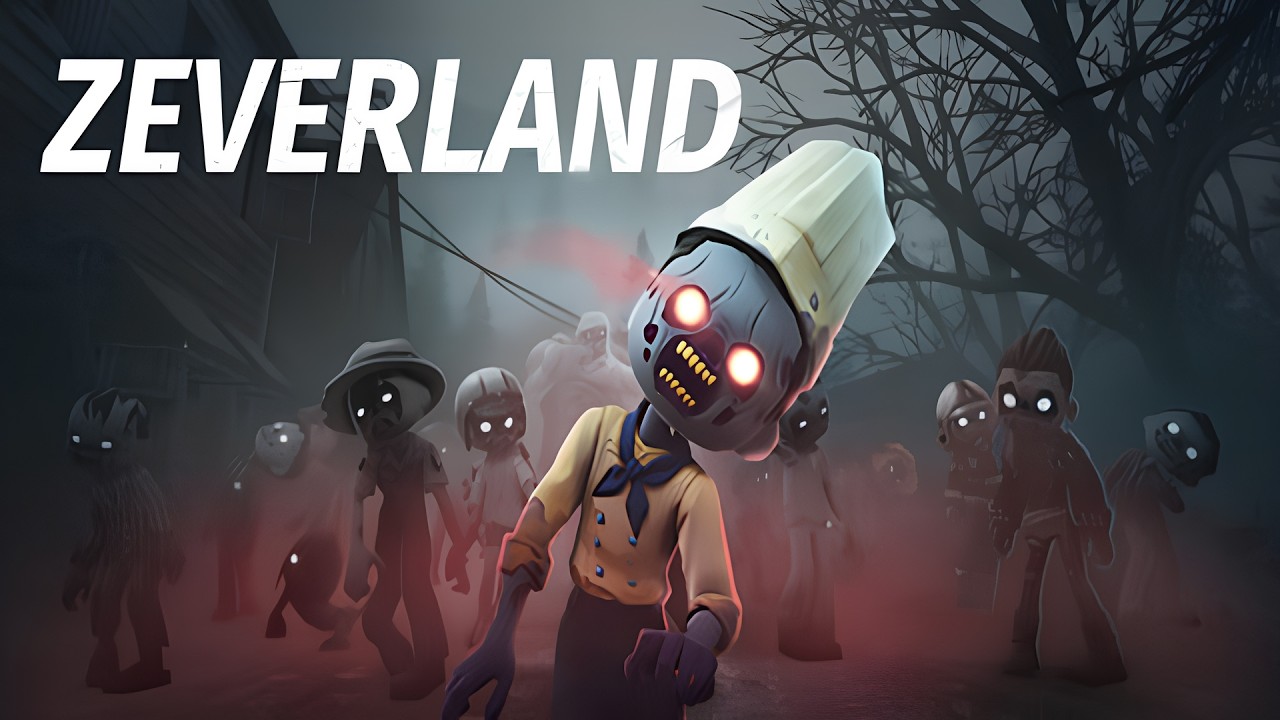
Zeverland is taking a different approach to the zombie survival genre by combining detailed survival mechanics with a colorful, approachable presentation and a strong focus on cooperation.
The project originally started as a free MMO, but its direction changed after an early playtest showed players were more interested in rebuilding the world than simply following quests. That feedback pushed the developers toward a buy to play survival crafting game built around freedom, community and emergent player behavior.
Rather than forcing players into constant combat, Zeverland is designed to let you survive, build, explore and interact with other people in ways that feel natural.
Survival is built around real world logic
The development team says its main design principle is simple: if an action would make sense in real life, the game should try to support it.
That applies to hunger, thirst, mood, crafting and object interaction.
For example, an unhappy character may craft more slowly, heal more slowly and recover less effectively.
Objects can also be combined according to their physical shape and purpose.
A long stick can be extended with another compatible object, while some combinations are deliberately rejected if they would not make physical sense.
| System | How Zeverland handles it |
|---|---|
| Survival | Hunger, thirst, mood and recovery |
| Crafting | Flexible object combinations |
| Combat | Improvised tools and weapons |
| Building | Homes, roads, bridges and landmarks |
| Servers | Private and large public worlds |
| Cooperation | Optional rather than forced |
| Story | Player choices influence server outcome |
| Travel | No fast travel on the large map |
Players can also turn ordinary items into useful equipment.
A camera attached to a stick can become an electrical weapon, while a fuel container attached to a stick can function as a torch. Environmental conditions matter as well, so rain can prevent that torch from working.
Cooperation is encouraged without being mandatory
Zeverland is not structured like a traditional MMO where group play is required for specific encounters.
Instead, cooperation emerges from situations in the world.
You might find another player stranded without fuel and decide whether to help them. You can build infrastructure that remains useful for others, such as ziplines, bridges or shared facilities.
Some actions can leave permanent marks on a server.
Players may plant special trees connected to curing the outbreak or create transportation routes that future players can use.
The developers want these choices to give each server its own identity.
Public servers are much larger than private worlds
Zeverland supports both private and public server experiences.
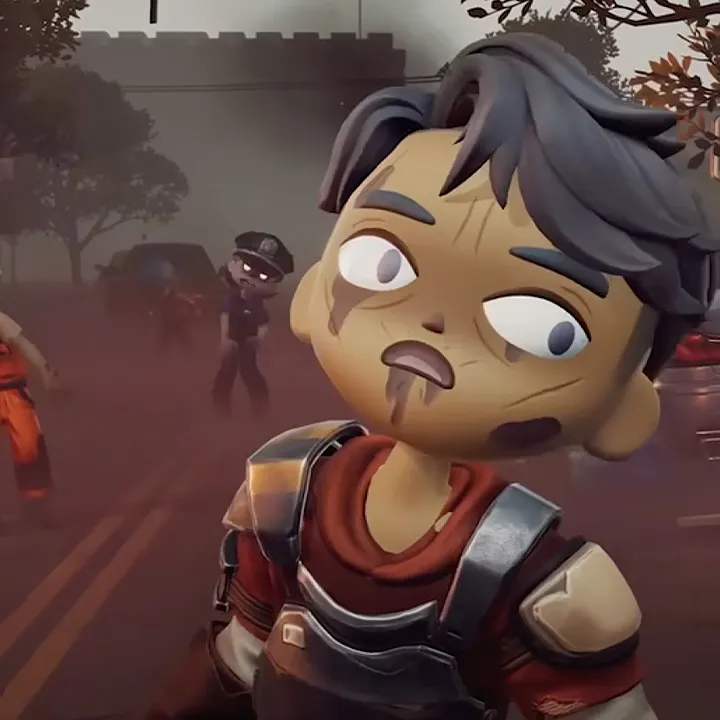
Private servers are designed for solo players or smaller groups and use a more compact map.
The public server map is more than 80 times larger and is inspired by northern Oregon and the Pacific Northwest.
It includes mountain views, large lakes, prisons, military bases and other large points of interest.
Public servers also introduce community scale challenges.
Players may need to work together to survive massive zombie hordes or gather enough timber to prepare for difficult winters.
Fast travel has been deliberately removed
One of the more unusual design choices is the decision not to include fast travel or server wide chat on the larger map.
The developers believe instant travel would remove many of the situations that make cooperative survival interesting.
Long journeys create opportunities for convoys, supply runs, roadside encounters, rescues and unexpected problems.
Without teleportation, distance becomes part of the experience rather than something that can be skipped.
That choice should make transportation, preparation and cooperation more important.
The story can change depending on the community
Zeverland begins shortly after the outbreak, when characters have little information about what happened.
Players discover the story through newspapers, readable objects and other environmental clues.
Seasonal servers planned after Early Access will introduce factions with competing goals.
One group may want to cure the outbreak, while another may decide that escaping the island is the better option.
The final state of the world will depend on the choices made by the wider server population.
If most players support the cure, the world can move toward recovery. If the majority chooses escape, the server's story may end with survivors leaving the island.
Building is meant to reshape the world
Construction is one of the central systems.
Players can build homes, turn vehicles such as RVs into mobile bases and create larger structures that affect how others move through the environment.
The developers expect seasonal servers to look very different by the time they reach their final state.
One server might contain extensive bridges and transport routes, while another could develop around large settlements and community facilities.
That makes player construction part of the world's history rather than just personal decoration.
Zeverland also includes quieter activities
The game is not entirely focused on survival pressure.
Clothing customization, instruments and other relaxed activities are part of the experience, while the developers are also planning diving, boating, kayaking and hiking.
The visual style supports that wider direction.
Instead of presenting the zombie apocalypse entirely as bleak and hostile, Zeverland uses a cute aesthetic alongside more demanding survival mechanics.
The goal is to make the genre easier to approach without removing its depth.
By combining realistic systems, flexible crafting, large scale cooperation and a world that can permanently change through player actions, Zeverland is aiming for a survival game where rebuilding matters as much as surviving.



Discussion (0)
Be the first to comment.