



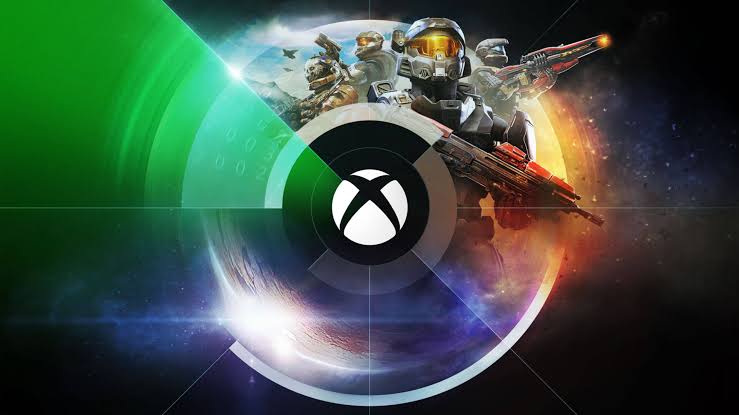
Microsoft says it still plans to release selected Xbox games as console exclusives, although the rules behind those decisions may not always be clear to players.
Xbox chief content officer Matt Booty explained that Microsoft manages more than 20 franchises that have each generated at least $1 billion over their lifetimes. Because those series serve different business goals, the company does not apply one simple rule to every release.
Booty said single-player games may be more likely to remain exclusive in some cases, but he stressed that this is not a fixed policy. Microsoft instead uses an internal framework to decide whether a title should remain on Xbox consoles or launch elsewhere.
That strategy appears to include exclusives such as Gears of War: E-Day and Clockwork Revolution, while other major franchises may continue expanding to PlayStation.
The uncertainty around Xbox’s wider platform policy is now being matched by new questions about Halo. A separate report claims Halo Studios no longer has an active roadmap for multiple upcoming games after two projects were cancelled.
| Area | Reported or confirmed position |
|---|---|
| Xbox exclusives | Selected games will remain console exclusive |
| Decision process | Based on an internal evaluation framework |
| Single-player games | More likely in some cases, but not guaranteed |
| Gears of War: E-Day | Planned as an Xbox console exclusive |
| Clockwork Revolution | Planned as an Xbox console exclusive |
| Halo: Campaign Evolved | First Halo release using Unreal Engine 5 |
| Project Ekur | Reportedly cancelled |
| New Halo campaign | Reportedly cancelled |
| Future Halo projects | Current status remains uncertain |
Microsoft says different franchises serve different purposes
Booty’s comments suggest Xbox no longer views exclusivity as a universal requirement.
Some games may be used to sell consoles, strengthen Game Pass or support the Xbox ecosystem. Others may be released on competing platforms to increase sales and reach larger audiences.
This approach reflects Microsoft’s position as both a console platform holder and one of the world’s largest game publishers.
After acquiring Bethesda and Activision Blizzard, the company controls franchises including Call of Duty, Fallout, The Elder Scrolls, Doom, Diablo, Warcraft, Halo, Forza and Gears of War.
Keeping every major release exclusive could limit software revenue, particularly when development budgets continue to rise.
At the same time, bringing too many games to PlayStation reduces the reason to purchase Xbox hardware.
Microsoft’s internal framework is likely intended to balance those competing priorities. However, the company has not publicly explained the factors it uses or how long games may remain exclusive.
Booty acknowledged that the process may not be obvious to players and suggested the strategy will become clearer over time.
Single-player games are not automatically staying on Xbox
Recent reports suggested Microsoft might use a simple division between single-player and multiplayer games.
Under that theory, story-driven releases would remain on Xbox, while online games and established communities would expand to other platforms.
Booty rejected the idea that this is a permanent rule.

A single-player game may still launch on PlayStation if Microsoft believes broader sales are more valuable than console exclusivity.
That leaves the future of titles such as The Elder Scrolls VI and Fallout 5 uncertain.
Both franchises have large audiences on PlayStation from earlier releases. Excluding those players could reduce sales, but launching the games everywhere would weaken Xbox’s first-party console lineup.
Microsoft may also use timed exclusivity, allowing a game to launch first on Xbox and PC before reaching PlayStation later.
No such plan has been confirmed for either franchise.
Halo is already moving beyond Xbox hardware
Halo: Campaign Evolved will bring the franchise to a PlayStation console for the first time.
That decision shows Microsoft is willing to treat even its most recognisable Xbox property as a multiplatform release under the right conditions.
Campaign Evolved is also the first Halo game being developed with Unreal Engine 5, replacing the Slipspace Engine used for Halo Infinite.
The project was expected to begin a larger release plan for Halo Studios.
According to insider Rebs Gaming, the original roadmap called for three games across three years, beginning with Campaign Evolved.
That plan is reportedly no longer active.
The information has not been confirmed by Microsoft or Halo Studios, so it should be treated as a report rather than an official production update.
Project Ekur and a new campaign were reportedly cancelled
Two Halo projects have reportedly been removed from development.
One was known internally as Project Ekur. Public details about the game remain limited, but it was understood to be part of the studio’s wider move towards Unreal Engine 5.
The other project was reportedly a new single-player campaign.
Their cancellation would leave Halo Studios without another full game in active production after Campaign Evolved, according to the report.
Development teams are said to be creating new concepts in an attempt to establish the franchise’s next direction.
Concept development is an early stage. Ideas can change significantly or be rejected before production begins.
This means a new Halo project could still be years away unless another team or unreported game is further along.
Halo 2 and Halo 3 remake plans are uncertain
Remakes of Halo 2 and Halo 3 have also been discussed in earlier reports, but their current status is unclear.
Halo Studios is reportedly considering downloadable content for Campaign Evolved instead of moving immediately into another full remake.
That approach could extend the life of the first release while giving developers more time to decide what comes next.
Additional campaigns, multiplayer content or restored missions could be added, although none of those ideas has been confirmed.
A successful Campaign Evolved launch may influence whether Microsoft approves further remakes.
The company could continue rebuilding the original trilogy, return to an entirely new campaign or combine both approaches through smaller releases.
The absence of a stable roadmap would be concerning because Halo has already experienced long gaps and major development difficulties.
Xbox’s broader restructuring adds more uncertainty
The reported changes arrive as Microsoft prepares for extensive job cuts across its gaming division.
The supplied report says 3,200 positions are expected to be eliminated by July 2027, with contractors and external partners also affected.
Layoffs can disrupt production by removing experienced developers, reducing support teams and forcing studios to reconsider project scope.
Xbox is also facing internal criticism of Game Pass.
Some studio leaders reportedly believe the subscription service has reduced the perceived value of their games and weakened full-price sales.
Microsoft is therefore reviewing several parts of its strategy at the same time, including exclusivity, subscriptions, staffing and franchise management.
Returning selected games to console exclusivity may help Xbox hardware, but it will not resolve wider concerns about development stability or studio morale.
Campaign Evolved may become an important test for Halo
Halo: Campaign Evolved now carries more responsibility if the reported cancellations are accurate.
The game must introduce Halo to PlayStation players, prove that Unreal Engine 5 suits the franchise and show that the series can still support major releases.
Its commercial performance may also determine whether Microsoft approves further remakes or invests in another original campaign.
A strong result could establish a clearer direction.
A weaker launch may lead to more restructuring and another extended gap between Halo games.
Microsoft has not publicly confirmed that Halo Studios lacks an active project beyond Campaign Evolved. It has also not announced the cancellation of Project Ekur or a new single-player campaign.
Until official information arrives, the reported roadmap collapse remains unverified.
The wider picture is still clear: Xbox is trying to manage its franchises individually rather than through one universal exclusivity policy. That flexibility may improve revenue, but without clearer communication, players may continue struggling to understand which games will stay on Xbox and what Microsoft has planned for major series such as Halo.



Discussion (0)
Be the first to comment.