



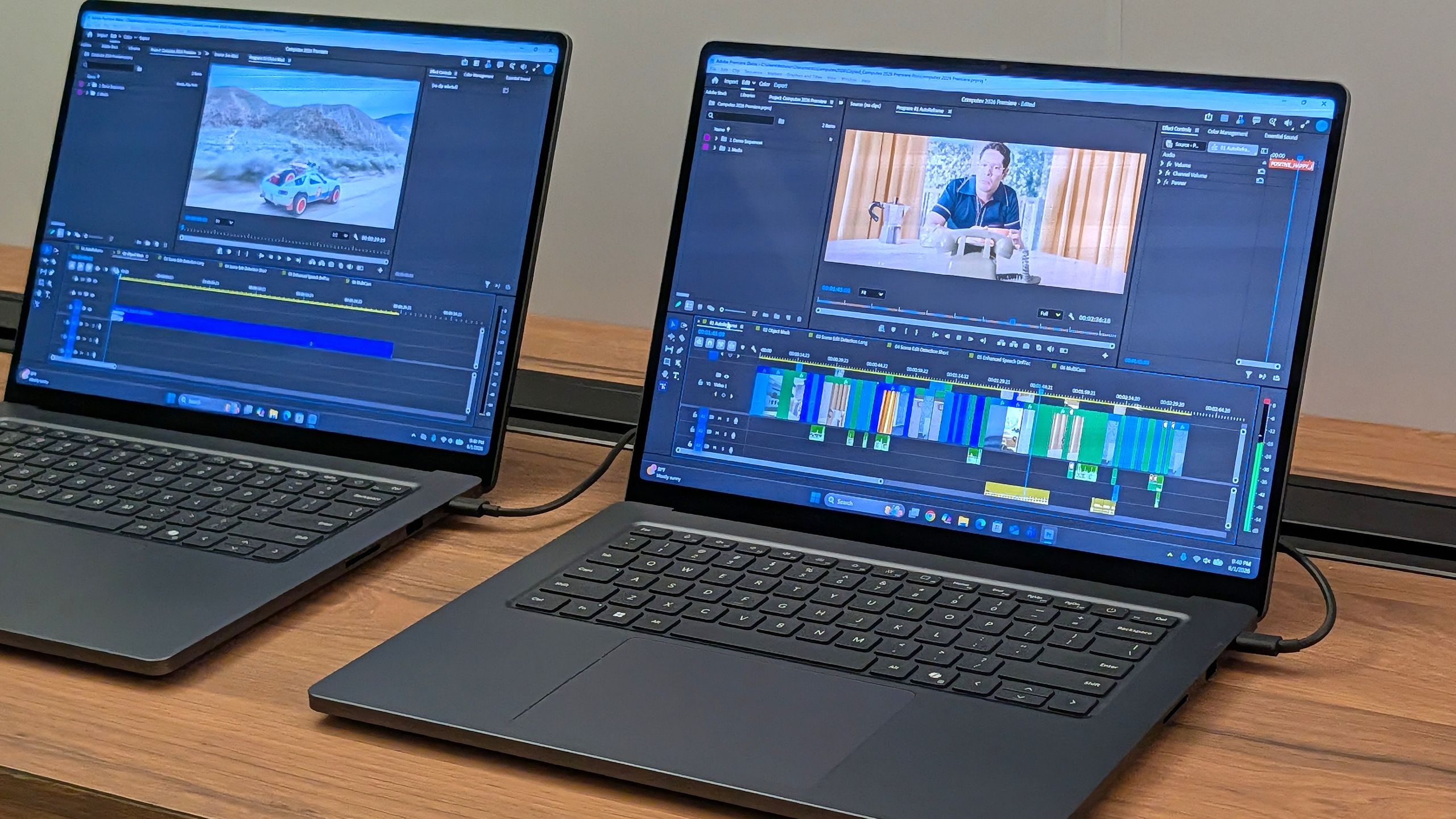
Microsoft is reportedly testing a new Windows 11 feature that would let you reserve part of a system’s unified memory specifically for graphics and AI workloads.
The unreleased feature, called IntelligentCarveout, was spotted in an experimental Windows 11 build dated August 17, 2026. It appears to add a setting that allows Windows to reserve additional unified memory for the GPU, with that reserved portion no longer available to ordinary applications.
The feature has not been officially announced, so its final behavior, supported hardware and release timing remain uncertain.
IntelligentCarveout is aimed at unified memory systems
The experimental build reportedly includes a component named SettingsHandlers_UnifiedMemory.dll and wording that explains the purpose of the feature.
Windows would be able to reserve extra unified memory for graphics and AI intensive games and applications. Any memory reserved this way would be unavailable to the rest of the operating system.
This could be especially useful on systems where the CPU and GPU share a large pool of LPDDR5X memory instead of using separate system RAM and dedicated VRAM.
| Area | Reported detail |
|---|---|
| Feature name | IntelligentCarveout |
| Status | Experimental, unreleased |
| Main function | Reserve unified memory for GPU and AI workloads |
| Effect | Reserved memory becomes unavailable to other applications |
| Possible target hardware | RTX Spark systems and other unified memory PCs |
| Example memory capacity | Up to 128GB LPDDR5X on RTX Spark |
| Allocation limit | Not yet known |
RTX Spark may be one reason Microsoft is adding the feature
The timing of IntelligentCarveout has raised speculation that Microsoft is preparing Windows 11 for upcoming RTX Spark systems.
RTX Spark supports up to 128GB of LPDDR5X unified memory, meaning the CPU and GPU can draw from the same physical memory pool.
For AI workloads, that can be useful because large models may need far more memory than a conventional laptop GPU would normally provide as dedicated VRAM.
NVIDIA has said RTX Spark systems can run AI models with up to 120 billion parameters, which suggests a large portion of the unified memory may sometimes need to be made available to the GPU.
Microsoft’s reported Windows 11 control could give you a more direct way to decide how much of that shared pool should be reserved.
AMD already offers a similar approach
The idea is not completely new on Windows PCs.
AMD’s Ryzen AI Max+ 395 platform can also support up to 128GB of unified memory, and AMD already provides a way through its graphics software to reserve a large portion of that memory for GPU workloads.
The supplied article notes that up to 96GB can be assigned to the GPU on that platform.
Microsoft’s approach could move this type of control into Windows itself rather than leaving it entirely to individual GPU vendors.
That could make memory allocation behavior more consistent across future unified memory PCs.
Large AI models are changing how PC memory is used
Traditional Windows systems usually separate system RAM from dedicated GPU memory.
Unified memory designs change that model because both CPU and GPU can access the same physical memory pool.
That flexibility can be useful, but it also creates a management problem.
If too much memory remains available to the CPU, the GPU may not have enough capacity for large AI models or graphics workloads. If too much is reserved for the GPU, normal applications may run short of memory.
A Windows level allocation control could make that tradeoff easier to manage.
The feature is still experimental
There is no confirmed public release date for IntelligentCarveout.
Microsoft has not announced how much memory you will be allowed to reserve, which devices will support it, or whether the control will appear only on systems with specific unified memory architectures.
The connection to RTX Spark is also not officially confirmed.
For now, the feature appears to be an early Windows 11 experiment aimed at giving you more control over shared memory on future AI focused PCs.
If Microsoft brings it to a public build, it could become an important part of Windows 11 on systems where CPU and GPU memory are no longer treated as completely separate resources.


Discussion (0)
Be the first to comment.