




PayPal ranks among the most recognized digital payment brands in the US, so it is normal that users want to know who owns the company. PayPal’s current ownership structure spreads across major institutions, retail investors, and a small group of insiders.
When you understand this structure, you see how leaders make decisions at the corporate level. You also see why no founder or company "owns" PayPal or holds controlling power today.
1) How PayPal is owned today
PayPal’s ownership model looks similar to other large US tech companies. Institutions hold the largest percentage, individual investors support daily trading volume, and insiders maintain a low share count.
Institutional ownership share
Large US investment firms hold a dominant share of PayPal’s stock. These funds influence corporate direction through board votes and long-term strategy oversight.
Top institutional shareholders
The biggest holders include major US asset managers. Their passive index funds typically hold stable long-term positions.
Insider & executive ownership
PayPal executives and board members hold a small portion of the company. Their ownership comes mostly from performance-based stock awards rather than large private holdings.
Retail (individual) shareholders
Millions of US investors own small shares of PayPal through brokerage apps and retirement accounts. Their participation increases liquidity but gives little consolidated voting power.
2) Who founded PayPal and what happened to their ownership?
PayPal’s early ownership looked very different from today. The founders held meaningful stakes during the Confinity and X.com era, but those positions reduced over time.
The Confinity & X.com merger
PayPal began when Confinity merged with Elon Musk’s X.com in 2000. Early founders and employees held most of the equity before the company shifted toward outside investors.
Peter Thiel, Elon Musk, Max Levchin & other founders
These founders owned significant percentages during the startup phase. Most sold their shares before or shortly after eBay’s acquisition.
3) eBay’s ownership and the 2015 spin-off
eBay owned PayPal for more than a decade and used it as a key payments engine. That period consolidated PayPal into a major US payments provider while shaping its early corporate structure.
Why eBay acquired PayPal
eBay purchased PayPal in 2002 to power marketplace payments. The deal helped PayPal scale quickly inside the US e-commerce ecosystem.

How the 2015 spin-off restructured ownership
In 2015, eBay separated PayPal into its own publicly traded company. Ownership shifted from a single corporate parent to the broader stock market.
4) Major ownership changes over the last 5–10 years
PayPal’s shift into a standalone company created an open investment landscape. Over time, index funds and institutions increased their share while insiders reduced theirs.
Rise of index funds
Passive index investing grew sharply in the US. Large funds accumulated substantial PayPal stakes as the company joined major market indexes.
Decline of insider shareholding
Compensation packages changed, stock awards vested, and early insiders moved on. As a result, insider ownership declined steadily.
5) How ownership structure impacts PayPal’s business
Ownership affects corporate oversight, leadership decisions, and long-term planning. Institutions usually prefer predictable returns and steady governance.
Voting power & corporate governance
Large shareholders help appoint board members and shape executive compensation. Their voting power influences mergers, acquisitions, and corporate strategy.
Long-term stability vs short-term pressure
Index funds support stable long-term growth, while smaller institutional investors often push for near-term performance. This balance affects product direction and cost-cutting cycles.
6) Who controls PayPal?
Control spreads across the board of directors, executive leadership, and shareholders. No single holder commands enough shares to dictate strategy alone.
Board & executive influence
PayPal’s leadership team guides day-to-day operations and product decisions. Their influence comes from authority and expertise rather than large ownership stakes.
Investor influence on key decisions
Large investors can influence major decisions through collective voting power. Their preferences often shape the company’s long-term strategy.
7) Global ownership overview
PayPal attracts investors from around the world. Many hold shares through retirement funds and global index products.
Notable non-US shareholder categories
International funds, pension groups, and sovereign wealth pools often appear in filings. Their combined ownership adds global diversity to PayPal’s investor base.
8) How to check current PayPal ownership yourself
You can verify updated shareholder data through public market filings and financial dashboards. These sources help you confirm institutional transactions and ownership changes.
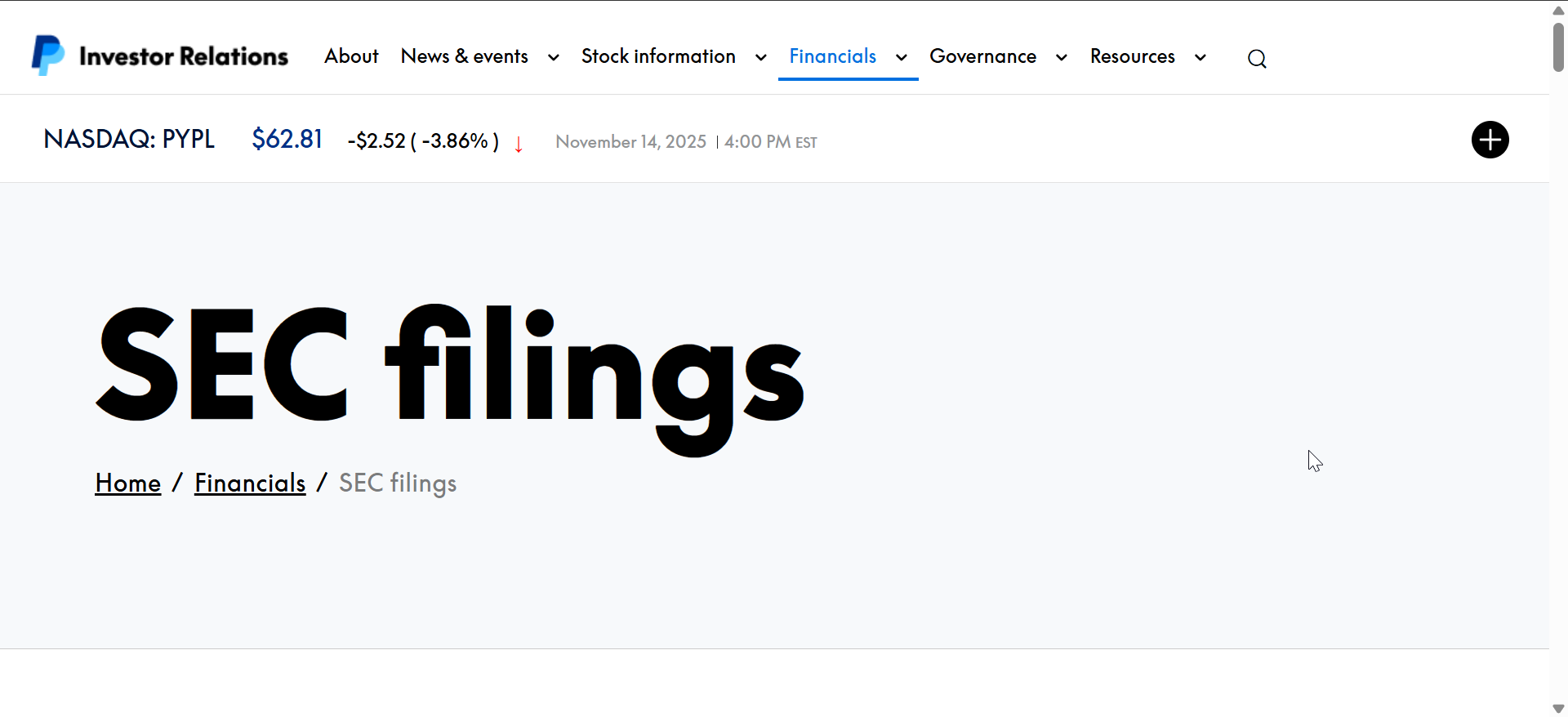
Using SEC filings (10-K, 13F)
Quarterly and annual filings list the largest shareholders and new institutional positions. These documents provide the most accurate ownership data.
Using market data platforms
Most market dashboards show institutional holdings, insider transactions, and yearly changes. These tools make it easy to track ownership shifts.
FAQ: PayPal ownership & control
Does Elon Musk still own PayPal? No. Elon Musk sold his shares long ago and has no ownership role today.
Does eBay still own PayPal? No. eBay fully separated from PayPal during the 2015 spin-off.
Who owns the most PayPal stock today? Large US institutional investors hold the biggest stakes. Their index funds account for most of the ownership.
Is PayPal privately or publicly owned? PayPal operates as a public company under the PYPL ticker and trades on major US exchanges.
Summary
- PayPal operates as a public company under the PYPL ticker with no single controlling owner.
- Large US institutional investors hold most of the stock and drive key governance decisions.
- Founders and early insiders sold their stakes long ago, especially around the eBay acquisition phase.
- eBay once owned PayPal outright but spun it off in 2015 into an independent public company.
- Index funds steadily increased their positions while insider ownership declined over time.
Conclusion
When you look past the brand and the app, PayPal’s true owners are a mix of large institutions, smaller funds, and individual investors. No founder, parent company, or single shareholder controls the business today.
Institutional investors hold the most influence through their voting power and long-term stakes, while the board and executive team run daily operations. If you want the latest view of who owns PayPal, always check the most recent filings and market data before you invest.


Discussion (0)
Be the first to comment.