



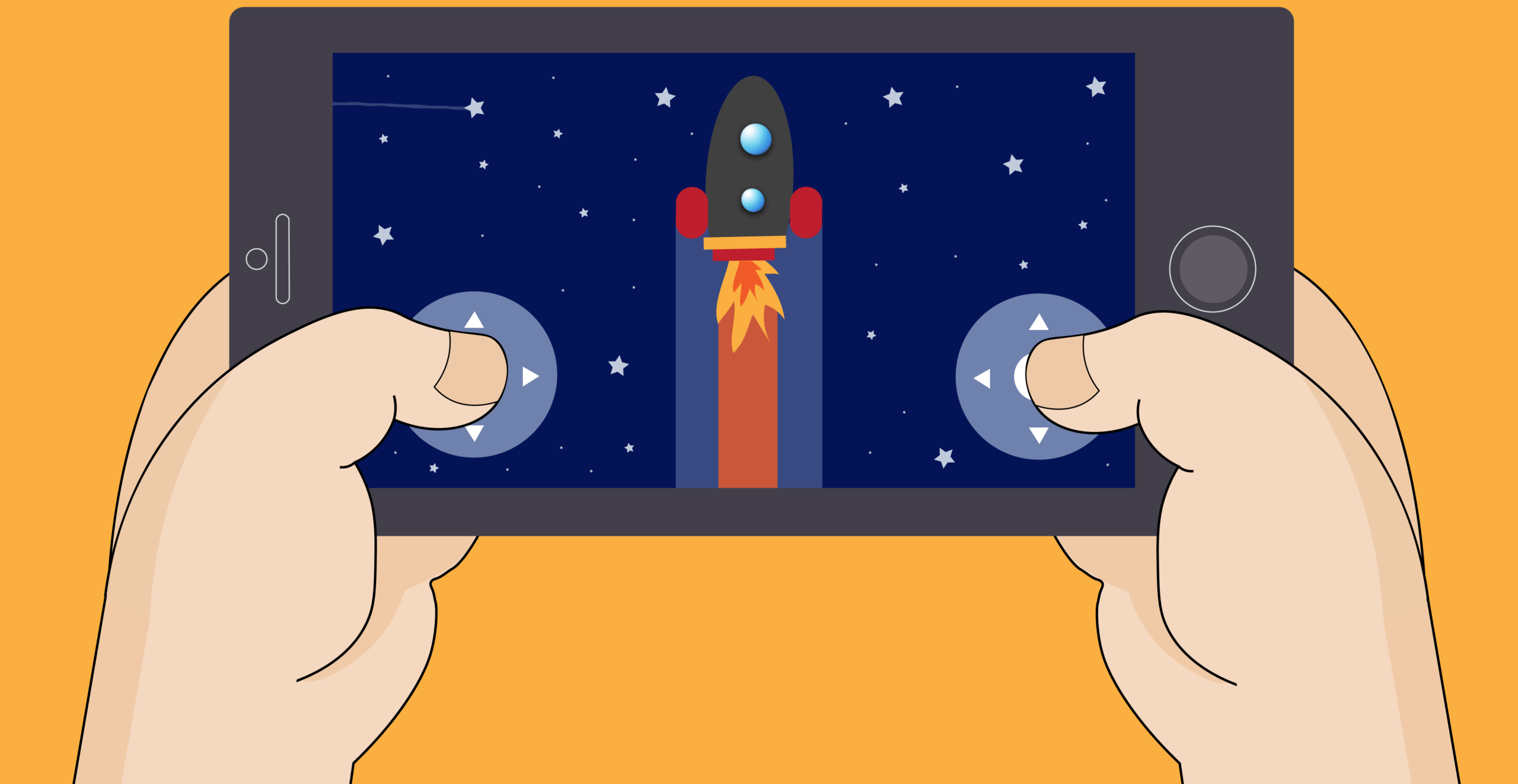
The argument over touch controls versus a gamepad usually gets settled by personal preference, which is why it never actually gets settled. A narrower question is more useful: which genres lose something measurable when the buttons are drawn on glass instead of moulded into plastic? The answer varies considerably from one type of game to the next, and it comes down to three properties of the input a game demands. How precise does it have to be, how many things must happen at once, and can you afford to look at your hands while doing them.
What a Physical Button Gives You That Glass Cannot
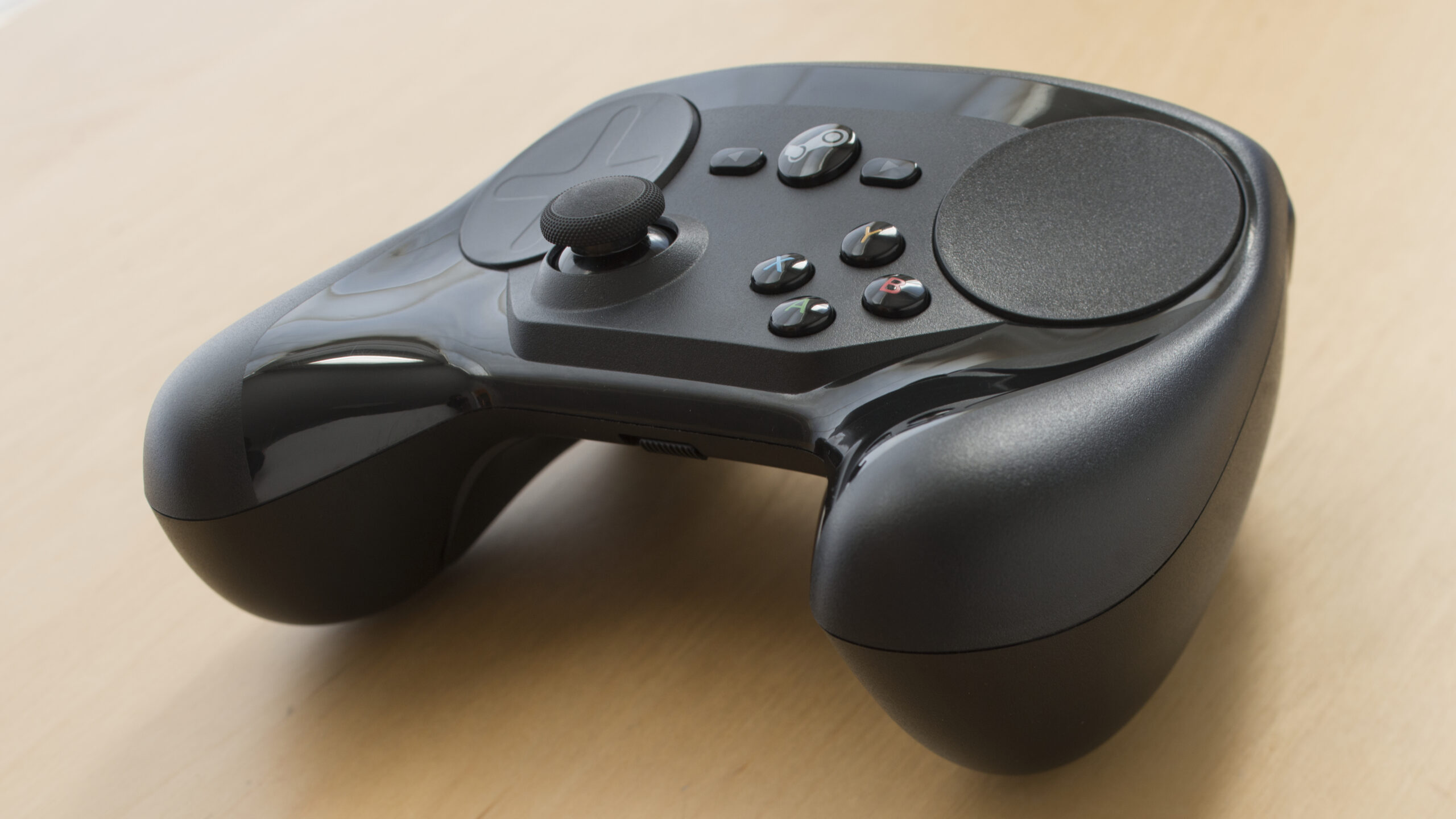
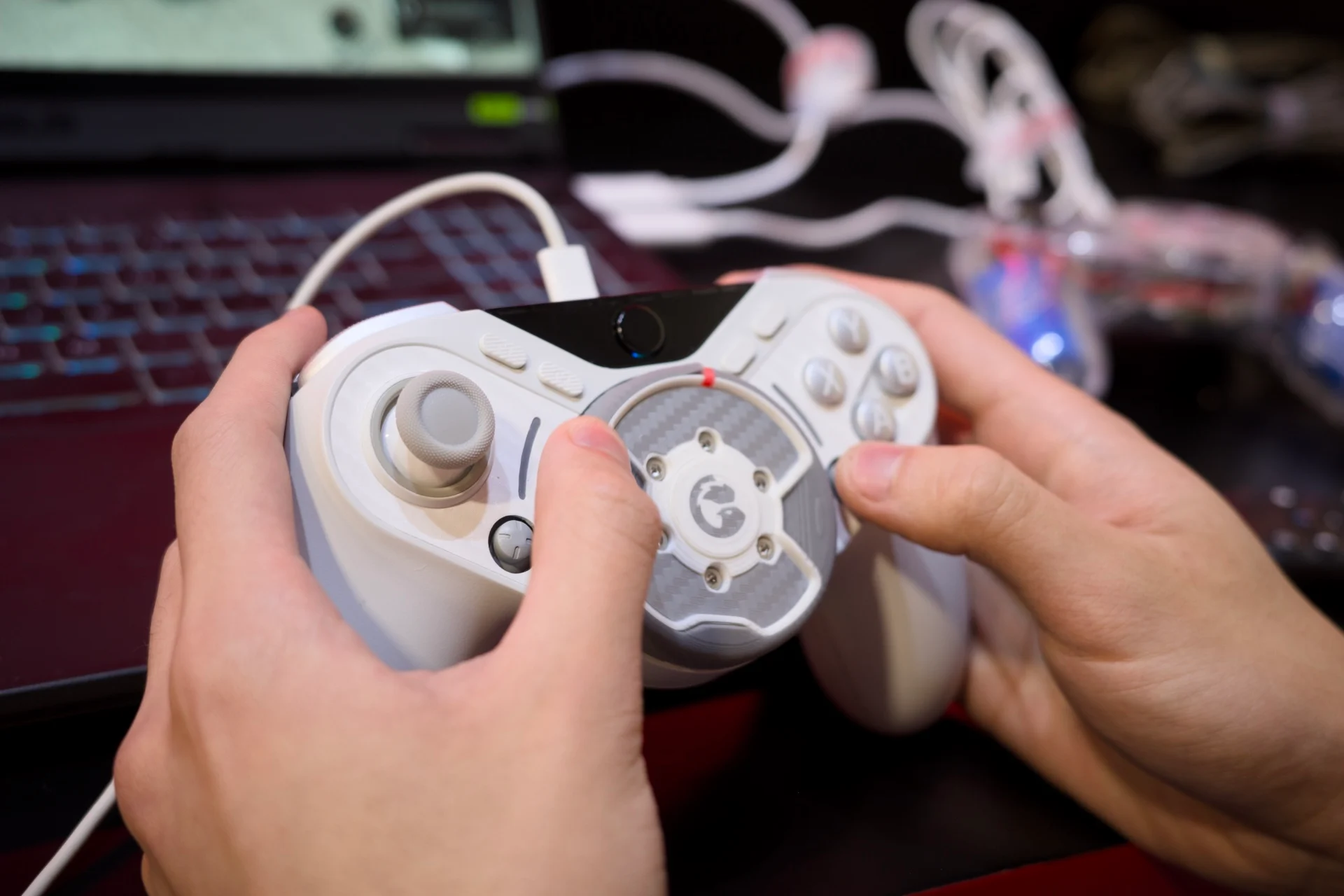
Proprioception does most of the quiet work. Your fingers know where a shoulder trigger sits without checking, because the plastic has edges and your hand remembers edges. A flat panel offers no such landmark, so your thumb drifts out of position, and you correct that drift by looking down. The glance costs attention the game wanted for something else. Physical controls also register partial input in a way a tap cannot. An analogue stick reports how far it has been pushed and a trigger reports how hard it is being pulled, while a touch is mostly a yes or no event with a screen coordinate attached to it.
Haptic motors narrow that gap a little by buzzing on contact, but a buzz confirms that something happened rather than telling your finger where the edge of the control actually sits.
Genre is where those properties start to matter unevenly. A browse through games for iPhone makes the split visible fairly quickly, because the titles that feel native to touch tend to be built around discrete, unhurried decisions rather than continuous precision, while the ones that feel awkward are usually descendants of designs that assumed a stick under each thumb from the start.
Genres That Barely Notice
Turn-based strategy and tactics sit at the comfortable end of the range. The game waits for you, so reaction time stops being a factor at all. Precision reduces to selecting the correct tile or unit, which a fingertip manages as well as a cursor and frequently better, since pointing straight at a thing beats steering a pointer toward it. Puzzle games benefit for the same reason, with the added advantage that dragging, rotating and swiping map directly onto gestures a gamepad has to approximate through awkward directional presses.
Card games, management sims and point-and-click adventures land in the same bracket. Anyone assembling a list of the best iPhone strategy games will notice how many entries share that underlying shape: deliberate pacing, generous tap targets, and almost no demand for two simultaneous inputs. Idle and incremental games go further still, because the interface is essentially a column of buttons and the only real requirement is that each one is large enough to hit without aiming carefully. Text-heavy genres behave the same way, since reading and tapping a dialogue option asks nothing of your reflexes.
Genres Where the Loss Is Real
Anything that needs simultaneous analogue movement and aiming suffers straight away. A first-person shooter asks one thumb to steer a body and the other to adjust a viewpoint, continuously, at independent speeds, while spare fingers handle firing, crouching and reloading. On a phone, the virtual sticks occupy screen area and your thumbs then cover the exact region you are trying to watch. It is a smaller version of the problem desktop users solve by reclaiming screen space whenever they want fewer interface elements sitting between them and the thing they came to look at.
Researchers have spent years trying to put physical feel back onto a phone. A Carnegie Mellon team went looking for alternatives and presented Acoustruments at CHI 2015, a kit of inexpensive plastic tubes, knobs and sliders that link a phone's speaker to its microphone so that twisting or blocking them alters an ultrasonic signal the device can read. The prototypes reached 99 percent accuracy at controlling a handset, and the team pointed to the obvious application: moments when your eyes need to be somewhere other than the screen.
The Evidence Came From Cars, Not Consoles
The strongest measurements of what touch costs came from a field where somebody had a reason to quantify it. The European Transport Safety Council raised the alarm about touchscreen-only car interiors, noting that from January 2026 Euro NCAP withholds its highest safety ratings from vehicles without physical switches for indicators, hazard lights, the horn, the windscreen wipers and the emergency call function. The same piece cited UK research from 2020 which found that phone-mirroring dashboard interfaces slowed driver reaction times about as much as alcohol or drugs did.
Driving is not gaming, but the mechanism carries across intact. The real cost of a touch interface is eyes-off-task time, and it scales with how often you have to re-locate a control and how much you needed to be watching something else while you found it. Fighting games, rhythm games and twitch platformers pay that tax at close to the full rate. Racing sits oddly in the middle, because tilt steering removes the need for a stick entirely and a good number of players prefer it to one. Sports games split down the middle depending on whether the design leans on set-piece menus or on free movement in open space.
Picking the Input Before You Pick the Game
A practical rule serves better here than an allegiance to either camp. When a game gives you time to think, offers large targets, and never asks for two precise inputs in the same instant, glass is fine and occasionally the better tool. When it demands continuous aiming, layered simultaneous presses, or timing measured in fractions of a second, a clip-on gamepad will change how the game feels more than any settings menu ever could. Most people already own libraries containing plenty of both kinds, which is the actual argument for keeping a controller in a bag instead of picking a side and defending it. The genre you are about to open, rather than the hardware you happen to like, is what should decide which one comes out.

Discussion (0)
Be the first to comment.