




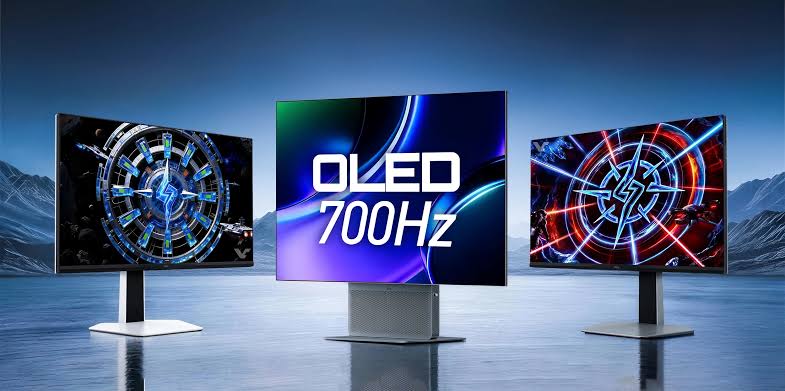
TCL is reportedly preparing a new generation of OLED gaming monitor panels that could reach refresh rates as high as 700Hz, although mass production is not expected to begin until 2028.
The company is said to be working on 32 inch and 34 inch OLED panels at its upcoming Gen 8.6 manufacturing facility in Guangzhou, China. The factory is expected to use inkjet printed OLED technology and could become one of TCL's main production sites for larger monitor panels.
There are still several unanswered questions. The reported information does not specify which panel size will reach 700Hz or what resolution will be paired with that refresh rate. TCL has also not announced a retail monitor using these panels.
700Hz OLED Panels Could Target Competitive Gaming
A 700Hz display refreshes the image roughly once every 1.43 milliseconds.
Combined with the fast pixel response characteristics of OLED, that could make such panels especially relevant to competitive gaming, where motion clarity and input responsiveness are major priorities.
However, refresh rate alone does not determine the overall gaming experience. Resolution, display processing, response consistency and the ability of a system to produce extremely high frame rates would all affect the practical benefit.
| Reported detail | Information |
|---|---|
| Maximum refresh rate | Up to 700Hz |
| Planned panel sizes | 32 inch and 34 inch |
| Production target | 2028 |
| Factory generation | Gen 8.6 |
| Manufacturing method | IJP OLED |
| Location | Guangzhou, China |
| Confirmed retail monitors | None yet |
The current information should therefore be viewed as an indication of TCL's panel development plans rather than a confirmed product roadmap for consumers.
TCL Is Using Inkjet Printed OLED Manufacturing
The more significant technical difference may be how TCL plans to manufacture the displays.
Its panels are expected to use IJP OLED technology, which applies organic materials through inkjet printing.
This differs from the vacuum evaporation methods commonly associated with OLED production from major panel suppliers such as Samsung Display and LG Display.
Inkjet printing is intended to reduce material waste and potentially lower production costs.
The challenge will be maintaining panel quality and production consistency once manufacturing expands to larger volumes.
TCL still needs to demonstrate that its approach can scale effectively for high performance gaming displays.
27 Inch 4K OLED Production Comes First
TCL has already been preparing smaller OLED monitor panels using the same manufacturing approach.
The company was expected to begin shipping 27 inch 4K OLED panels with a 120Hz refresh rate during the third quarter of 2026.
Those panels are intended for an MSI professional display rather than a high refresh gaming model.
The planned Gen 8.6 facility represents a much larger step, with bigger panel sizes and substantially higher refresh rate options expected when production starts in 2028.
OLED Monitor Shipments Continue to Grow
The expansion comes as OLED monitor demand continues to increase.
Industry estimates cited in the report project OLED monitor panel shipments of around 6.1 million units in 2026, representing approximately 79% growth compared with the previous year.
Shipments are expected to rise again to about 7.5 million units in 2027.
ASUS is projected to account for roughly 23% of OLED monitor panel purchases during 2026, while MSI is expected to represent around 14%.
Samsung Display and LG Display currently supply a large portion of the OLED monitor market, but TCL appears to be preparing to compete more directly with both companies.
If its Gen 8.6 inkjet printed OLED production reaches the planned scale, TCL could become another important supplier for monitor manufacturers.
For now, the reported 700Hz figure remains a future target rather than a confirmed retail specification. The first panels from the new factory are still expected to be several years away, with production currently planned for 2028.


Discussion (0)
Be the first to comment.