



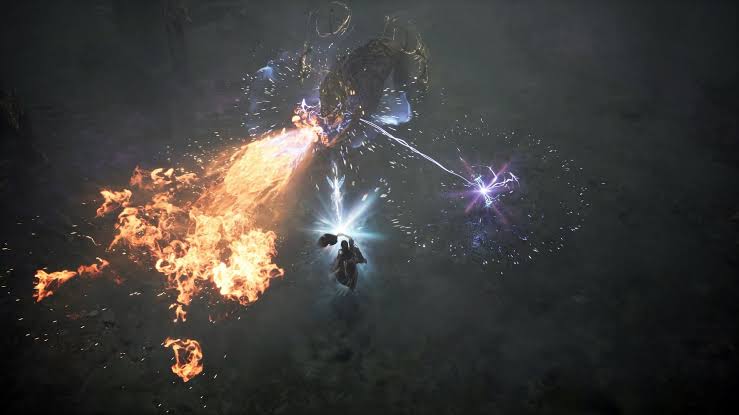
Tarae: The Unbound is an upcoming action RPG that uses the familiar structure of games like Diablo but builds its world, classes and story around Eastern mythology and Buddhist cosmology.
Developed by Boundary and published by Krafton, the game uses an isometric camera, large enemy groups, loot driven progression and fast combat. Those elements immediately make it look familiar, but the setting and mythology give the project a different identity from the Western medieval fantasy commonly used across the genre.
Tarae: The Unbound is currently planned for release in 2027 on Xbox Series X and S, PlayStation 5 and PC through Steam.
Buddhist cosmology shapes the world
The game's setting draws from Asian traditions rather than castles, gothic churches and European folklore.
Its world takes inspiration from the 15th to 17th centuries, with environments, characters and mythology built around Eastern cultural influences.
The story follows a group of seekers attempting to stop a being called Agasa from completely breaking the cycle of rebirth.
That conflict is tied to Buddhist cosmology and the Six Realms of Rebirth.
Players will encounter concepts and locations connected to realms such as the Asuras, Hungry Ghosts and Hell, while systems involving karma, fate and Yin and Yang also play a role in the broader design.
| Feature | Tarae: The Unbound |
|---|---|
| Genre | Isometric action RPG |
| Developer | Boundary |
| Release window | 2027 |
| Platforms | PC, PS5, Xbox Series X and S |
| Playable classes | Six |
| Bosses | More than 80 |
| Setting influence | Eastern history and mythology |
| Story inspiration | Buddhist cosmology and Six Realms of Rebirth |
| Progression | Loot focused with endgame class access |
The approach gives Tarae a setting that differs significantly from the demon filled European fantasy worlds commonly associated with this style of action RPG.
Six classes are based on Eastern roles
Players will be able to choose from six classes.
Rather than using familiar fantasy archetypes such as paladins or Western style sorcerers, the classes are inspired by historical Eastern roles and traditions.
The Samurai can change combat stances during fights, allowing the class to adapt its moves depending on the situation.
The Tiger Hunter uses traps and firearms, creating a more ranged and tactical style.
Another class, the Manshin, is based on Korean shamanic traditions.
The full range of classes has not been detailed, but the examples already shown suggest the developers are using cultural influences as part of gameplay rather than limiting them to visual design.
More than 80 bosses are planned
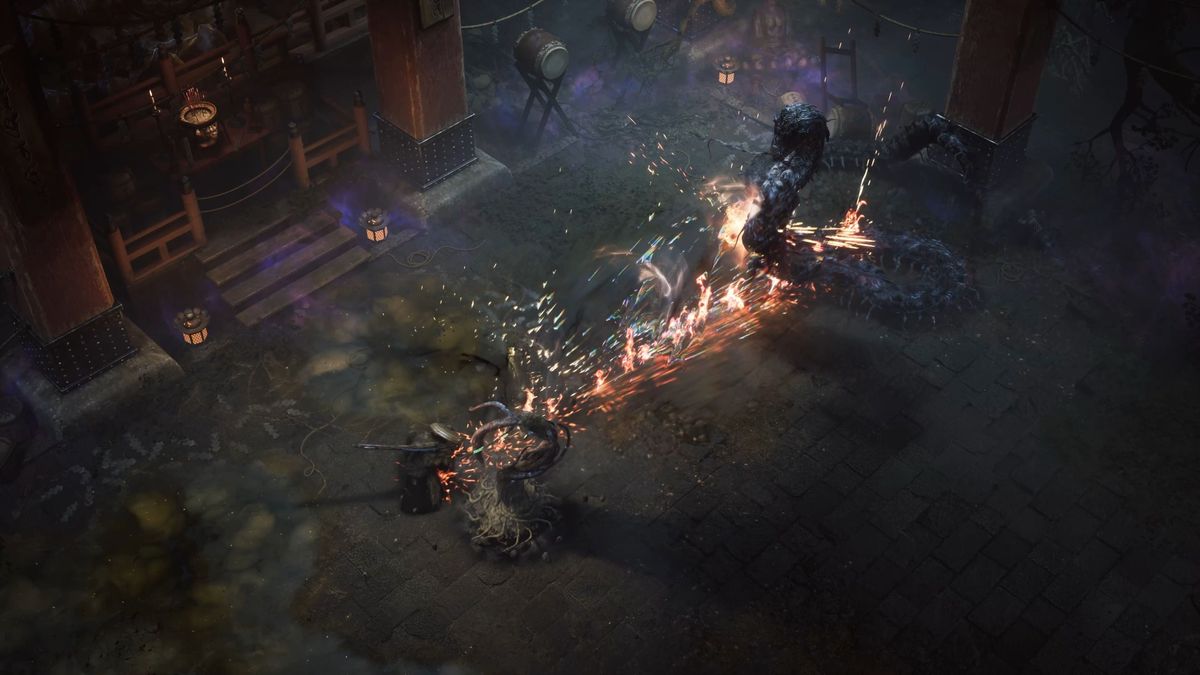
Boss encounters appear to be an important part of Tarae's progression.
The game includes more than 80 unique bosses, many of which are connected to folklore and mythology.
The developers are also aiming for encounters that require players to learn attack patterns rather than simply overpowering enemies through higher statistics.
Bosses can move through multiple phases, changing their behavior as fights progress.
Early hands on impressions suggest the game can be demanding even during its opening sections.
The Samurai in particular requires players to understand timing, positioning and stance changes rather than relying only on rapid attacks.
That higher difficulty could help distinguish Tarae from ARPGs built primarily around clearing large groups of enemies as quickly as possible.
Endgame progression reduces repeat campaign grinding
Tarae also takes a different approach to alternate characters.
After completing the campaign with one class, players will unlock the remaining classes for endgame use.
That means you will not need to replay the full story separately for every character just to access higher level content.
It is a practical change for a genre where players often experiment with several classes and builds.
The system should make it easier to explore different combat styles while avoiding repeated campaign progression each time.
Familiar combat is paired with a different identity
Mechanically, Tarae: The Unbound clearly shares DNA with established isometric action RPGs.
Large groups of enemies, loot progression, ability focused combat and an overhead perspective all place it within a familiar framework.
Its main difference is how strongly it commits to Eastern mythology.
The Buddhist cosmology, Six Realms, folklore inspired bosses and culturally specific classes give the game a foundation that is less common in the genre.
Whether those ideas will translate into deep progression systems remains to be seen, but the current design shows that Tarae is attempting to build its own identity without abandoning the mechanics that make traditional loot based ARPGs accessible.
With a 2027 launch currently planned, the game still has time for its progression, balance and endgame systems to develop further before release.

Discussion (0)
Be the first to comment.