



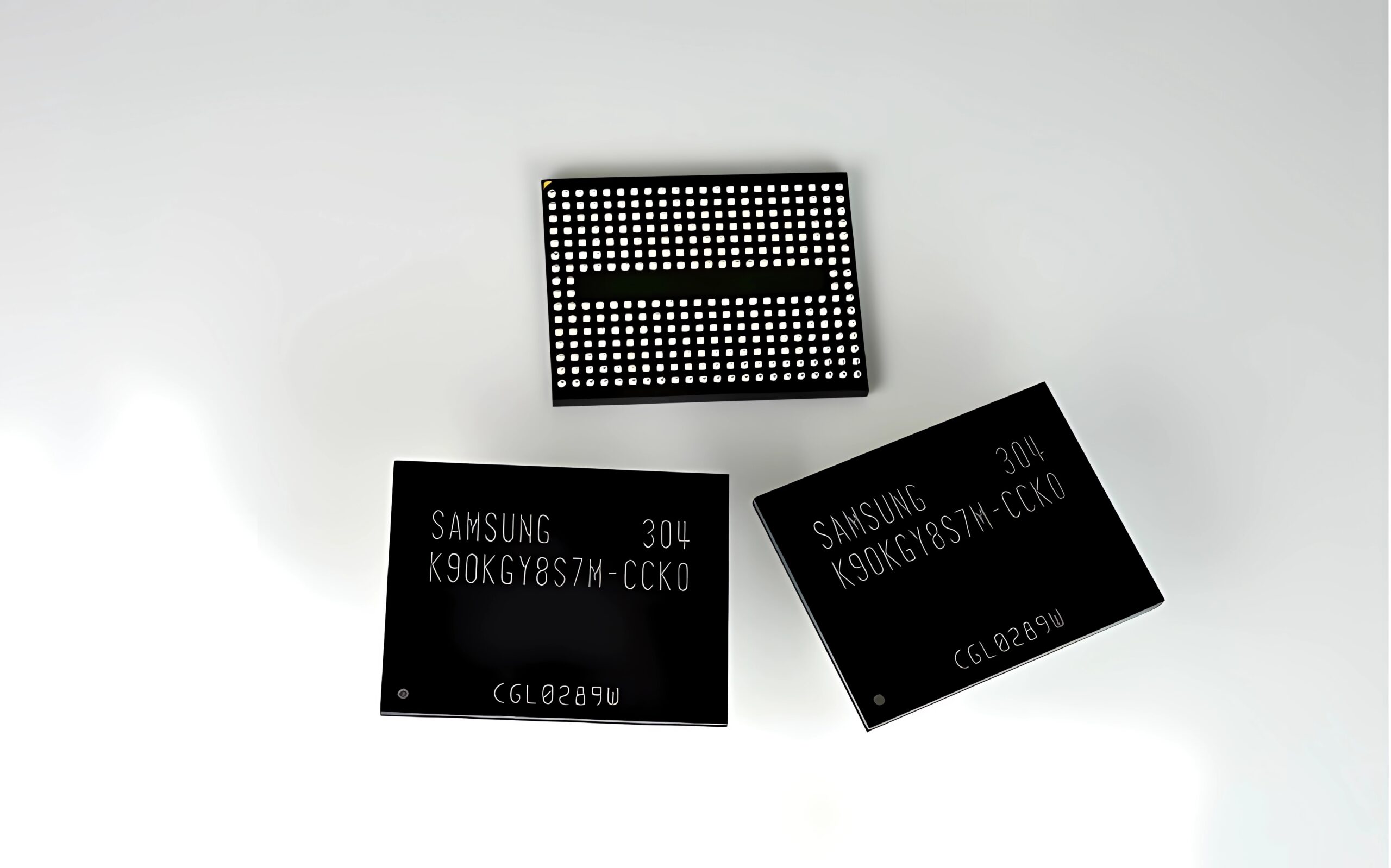
Samsung’s decision to move away from lower-end memory products is starting to reshape parts of the NAND market. The company has reportedly exited the MLC NAND business and has also reduced focus on older LPDDR4 and LPDDR4X memory, choosing instead to put more attention on higher-end products tied to AI demand.
That shift has created space for smaller suppliers, especially in Taiwan and China. One of the biggest winners so far appears to be Macronix, a Taiwan-based memory maker that is now seeing much stronger demand for its NAND products.
Macronix is benefiting as Samsung leaves older memory segments for higher-margin AI products
According to Economic Daily News, Macronix’s NAND Flash revenue share rose from 21% to 30% in the first quarter of 2026. The report says this marked a 90% increase compared with the previous quarter and a huge 382% jump compared with the same period last year.
The reason is simple: Samsung is focusing on more profitable memory areas, while customers still need older and lower-capacity NAND for many products. These chips may not be as exciting as the newest AI memory, but they are still used in entry-level devices, embedded systems, industrial products, and storage modules.
Macronix is reportedly strong in the 4Gb to 32Gb segment, which makes it well placed to fill some of the supply gap. The company’s eMMC business has also grown sharply, with revenue said to be up 94% from the previous quarter and almost 40 times higher than the same period last year.
| Market change | Main impact |
|---|---|
| Samsung exits MLC NAND | Smaller suppliers get more customer demand |
| AI demand pulls focus to high-end memory | Older NAND and DRAM supply becomes tighter |
| Macronix expands in NAND | Revenue share rises sharply in Q1 2026 |
| NAND scarcity continues | Prices for SLC NAND and NOR Flash are expected to rise |
This is part of a wider memory market pattern. AI servers need advanced DRAM, HBM, fast NAND, and high-end storage. Because of that, large memory companies are shifting production toward newer and more profitable products. But when big suppliers leave older markets, customers still need those parts, and prices can rise.
Macronix is not only benefiting from demand. It is also preparing newer production technology. The company currently makes 96-layer 3D NAND, while 192-layer NAND is said to be close to readiness. It is also working on NAND with more than 300 layers, which could help it compete in higher-capacity areas later.
Still, the current opportunity is mainly about supply and timing. Samsung’s exit has made room in a segment that many larger vendors no longer want to prioritize. Macronix and other regional suppliers can now serve customers who still need legacy NAND products.
For buyers, the news is not all positive. Supply remains tight, and contract prices for NOR and SLC NAND are expected to jump sharply by the second quarter of 2026. That could affect companies making cheaper devices, embedded hardware, and storage products.
Samsung’s move makes business sense because AI-related memory brings better margins. But it also shows how quickly the AI boom is changing the rest of the chip market. As giants chase high-end demand, smaller companies like Macronix are finding new growth in the memory products left behind.


Discussion (0)
Be the first to comment.