



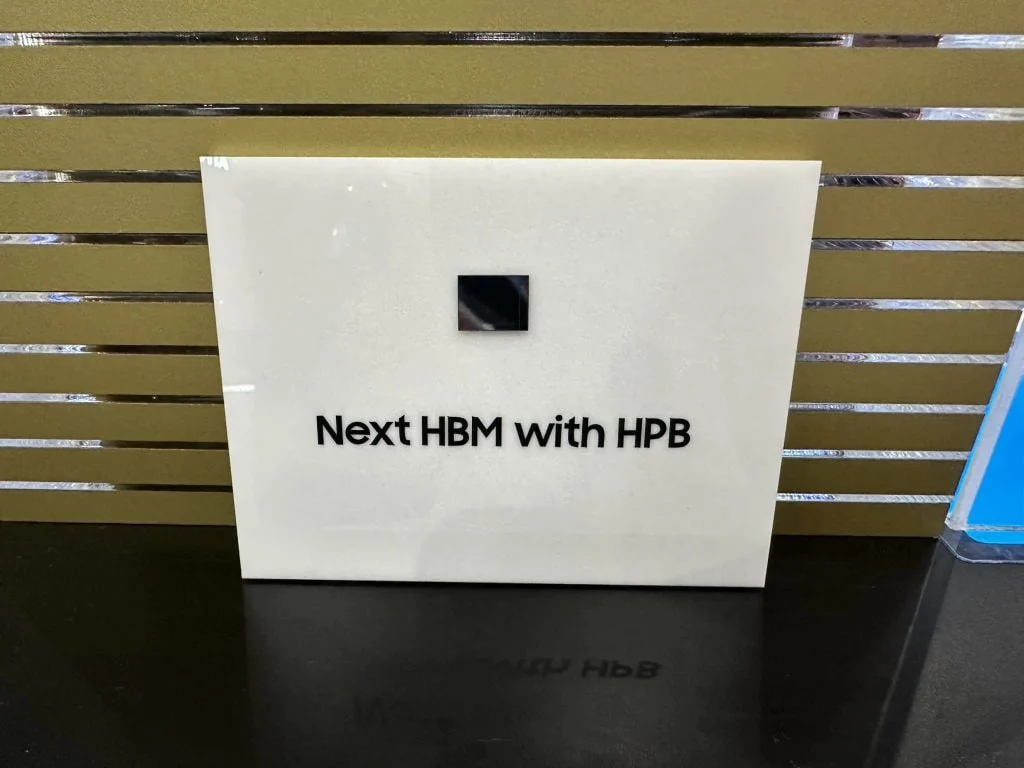
Samsung is working on a new thermal design for HBM5 memory, and the early concept shows how important cooling has become in the AI chip race. The company has previewed a technology called Heat Path Block, or HPB, which is designed to help future HBM stacks move heat more efficiently as memory becomes faster, denser, and more power hungry.
HBM, short for high bandwidth memory, is now one of the most important parts of AI accelerators. It is stacked close to the main compute chip and helps move huge amounts of data quickly. As AI GPUs become more powerful, memory bandwidth is no longer just a supporting feature. It is one of the main factors that decides how fast the whole system can work.
That also creates a heat problem. HBM stacks are getting taller and more complex, and future generations will need to deliver much more bandwidth without becoming too difficult to cool. Samsung’s HPB design is meant to address that challenge before HBM5 arrives in commercial AI hardware.
HBM5 will need better cooling as memory stacks become more powerful
Samsung’s concept places the Heat Path Block beside the core DRAM stack on the same base die. The HPB is designed to match the height of the main memory stack and create a better route for heat to move away from the HBM package. The heat can then be transferred more effectively toward the cold plate used in advanced AI systems.
This approach is similar in direction to what SK Hynix is doing with its iHBM cooling work, although the exact technologies may not be the same. Each memory maker is expected to use its own design and manufacturing methods. The shared goal is clear: future HBM will need dedicated thermal structures, not just faster memory dies.
| HBM5 focus area | Why it matters |
|---|---|
| Higher bandwidth | AI chips need faster memory movement |
| Denser memory stacks | More layers increase thermal pressure |
| Heat Path Block | Helps move heat away from the core die stack |
| Cold plate transfer | Improves cooling in AI accelerator packages |
| 2028 to 2029 timeline | First HBM5 GPUs are still years away |
Samsung, SK Hynix, and Micron are all racing to improve future HBM standards because AI data centers depend heavily on memory supply and memory performance. The current market is already under pressure from huge AI demand, and the next few years will likely make HBM even more valuable.
Samsung’s HPB preview shows that the battle is no longer only about raw speed or capacity. Thermal design is becoming just as important. A faster HBM stack is only useful if it can sustain performance inside a tightly packed AI accelerator. If heat cannot be moved away efficiently, the chip may have to reduce clocks or limit performance.
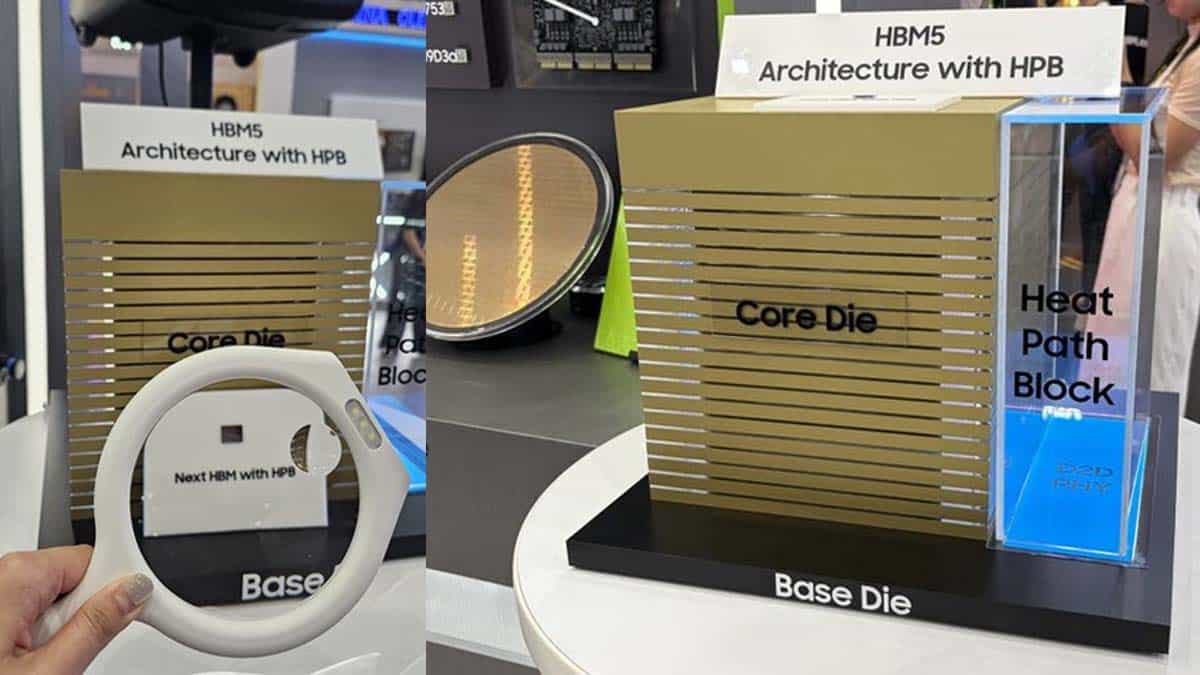
This is why HBM5 cooling work matters even before the standard reaches real products. Memory makers need years to test new structures, validate them with chip partners, and prepare them for advanced packaging. AI GPUs are not simple components. The memory, compute die, interposer, substrate, cooling system, and packaging technology all need to work together.
HBM5 is not expected to appear in GPUs until around 2028 or 2029. That gives Samsung and its rivals time to refine these thermal designs. But it also shows how far ahead the industry is already planning. AI hardware roadmaps now stretch across multiple memory generations because supply, bandwidth, and thermals are all strategic issues.
For Samsung, HPB could become an important part of its effort to compete more aggressively in the HBM market. SK Hynix has gained strong momentum in AI memory, and Micron is also pushing hard. Samsung needs future HBM products that can compete not only on capacity and bandwidth, but also on power efficiency and cooling.
The bigger picture is simple. AI chips are becoming harder to feed and harder to cool. HBM5 will need to solve both problems at once. Samsung’s Heat Path Block is an early sign of how memory makers plan to do that.
This is not a product you will see in a gaming PC anytime soon. It is meant for the next wave of AI accelerators and data center platforms. But the technology matters because it shows where high end computing is going. The future of AI performance will depend not only on faster GPUs, but also on smarter memory cooling around them.



Discussion (0)
Be the first to comment.