



China’s memory industry appears to be moving faster than expected in high bandwidth memory, with a new report claiming that CXMT has reached technology parity with Korean manufacturers on HBM3. The development does not mean China has caught Samsung or SK Hynix overall, but it suggests the gap in advanced AI memory is narrowing at a time when demand for HBM is exploding.
HBM, or high bandwidth memory, is one of the most important components in AI accelerators. It sits close to powerful GPUs and helps move huge amounts of data quickly. Without enough HBM, even the fastest AI chips cannot perform at their full potential. That is why memory makers have become central to the AI hardware race.
The report says Chinese firms are now roughly three years behind Korean memory leaders in HBM development. That is still a meaningful gap, especially because Samsung and SK Hynix are already moving toward HBM3E and HBM4. But the progress is notable because China has been under heavy U.S. technology restrictions, including limits around advanced chipmaking tools.
CXMT’s HBM3 progress could give China more room in AI hardware
CXMT is reportedly at the center of China’s push. The company is said to have achieved the ability to produce HBM3, although yield remains a challenge. That distinction is important. Being able to manufacture a chip is not the same as producing it at high volume with strong yields and competitive cost. In memory manufacturing, yield determines whether a product can become commercially viable at scale.
| Area | Reported status |
|---|---|
| Chinese HBM progress | Gap with Korean leaders narrowed to around three years |
| Main company | CXMT |
| Key technology | HBM3 |
| Main challenge | Production yield |
| Production target | Up to 300,000 12 inch wafers per month by end of 2026 |
| Capital plan | IPO expected to raise more than $4 billion |
| Global leaders | Samsung and SK Hynix remain ahead with HBM3E and HBM4 plans |
The timing gives CXMT an opportunity. AI demand has created a severe memory shortage, with companies racing to secure enough HBM for accelerators. Samsung, SK Hynix, and Micron are focused on supplying the biggest AI customers, leaving room for other players to enter parts of the market if they can produce reliable memory.
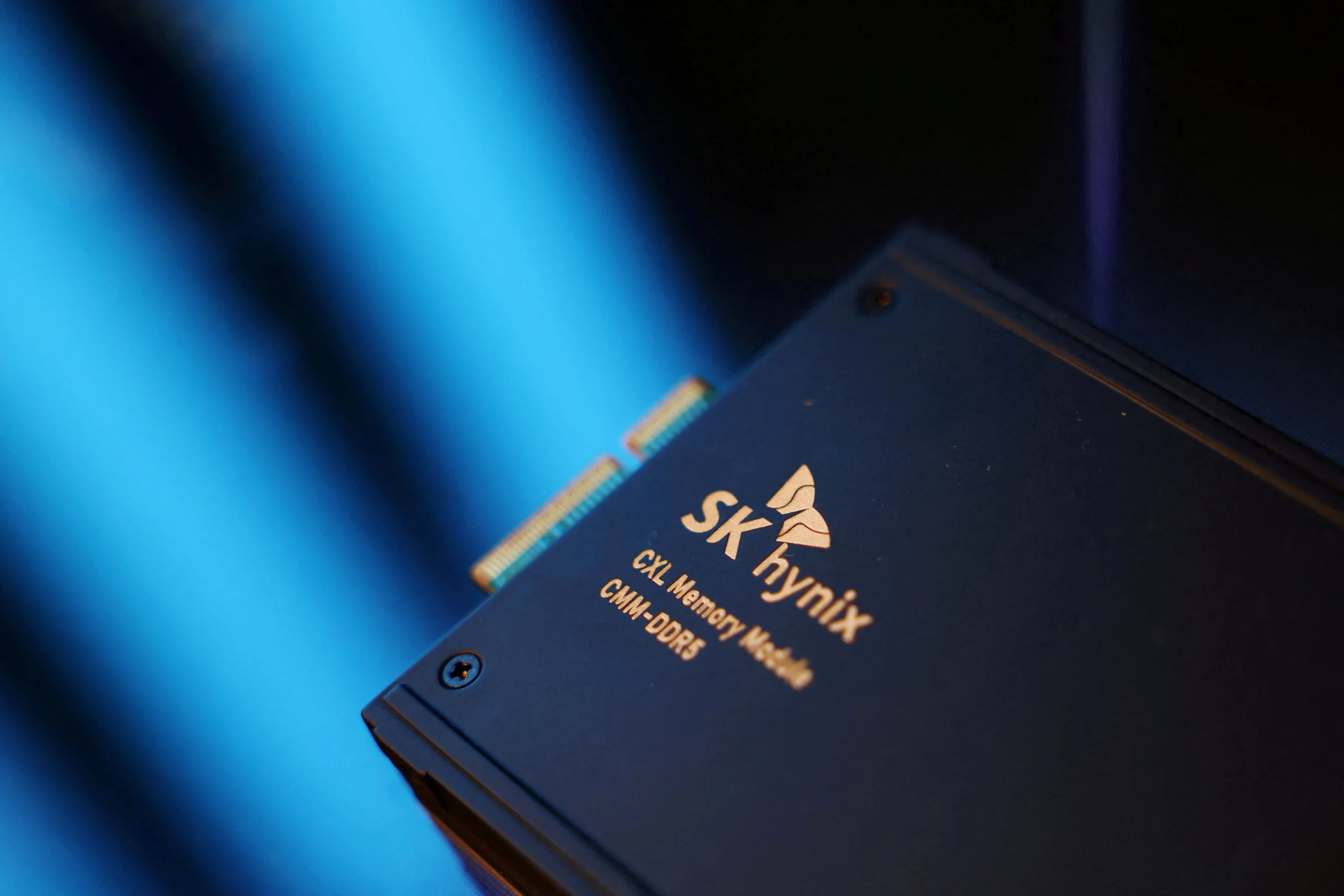
China also has a strong reason to build domestic HBM capacity. U.S. export restrictions have limited access to some high end AI chips, and Chinese companies need more local alternatives across the AI supply chain. If CXMT can improve HBM yields and scale production, it could help support China’s domestic AI accelerator ecosystem.
Still, the gap with Korea should not be understated. HBM3 is no longer the leading edge for the most advanced AI chips. HBM3E is already used in newer accelerators, and HBM4 is expected to become the next major battleground. HBM4 will offer much higher bandwidth and more advanced packaging demands, which makes it harder to manufacture and integrate.
That is where China still faces a difficult road. HBM does not exist in isolation. It must be paired with advanced logic chips through sophisticated packaging. The most advanced AI accelerators rely on packaging technologies that remain dominated by companies such as TSMC. Even if CXMT can make HBM3, building a full competitive AI chip platform requires progress across packaging, logic manufacturing, interconnects, software, and system design.
CXMT’s reported IPO plan also matters. Raising more than $4 billion would give the company more capital to expand capacity, improve yields, and invest in next generation memory. Memory manufacturing is extremely expensive, and catching global leaders requires years of equipment spending, research, and process refinement.
The broader story is that AI has changed the memory market. For years, memory was often viewed as a cyclical industry driven by PCs, phones, and servers. Now, HBM has become one of the most strategic parts of AI infrastructure. That shift gives countries and companies a stronger incentive to build their own supply chains.
For China, CXMT’s progress is a sign of resilience. For Korea, it is a reminder that leadership in HBM cannot be taken for granted. Samsung and SK Hynix still hold the advantage, but competition is increasing, and government backed investment can move quickly when a technology becomes strategically important.
The real test will be whether CXMT can move beyond HBM3 parity and compete in HBM3E and HBM4. Until then, China’s progress is significant, but not yet enough to challenge the leaders at the top end of AI memory. Still, the gap is closing, and the AI boom is giving China a rare opening to accelerate its memory ambitions.



Discussion (0)
Be the first to comment.