



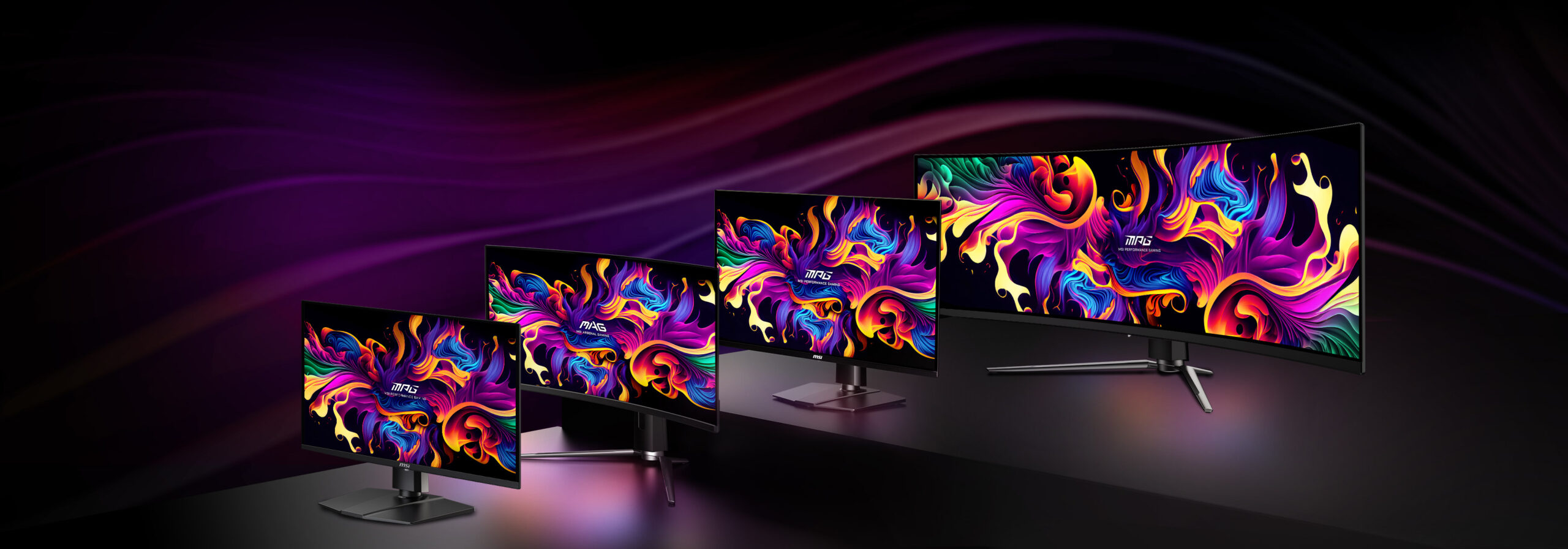
MSI has shown a wide range of new monitors at Computex 2026, led by the MEG X, a flagship gaming display that combines a 5th generation Penta Tandem QD OLED panel with built in AI features. The company is also expanding its mainstream OLED lineup, adding new 5K dual mode monitors, and preparing a productivity focused QD OLED model for Mac users.
The MEG X is the most ambitious product in the lineup. It uses a 34 inch ultrawide QD OLED panel with a 3440 x 1440 resolution and a 360Hz refresh rate. MSI says the panel uses RGB Stripe subpixels, which should improve text clarity compared with older OLED layouts. That matters because OLED monitors are no longer used only for gaming. Many buyers also use them for work, browsing, editing, and daily desktop tasks.
The big addition is LuckyClaw, MSI’s built in AI agent for the monitor. Instead of forcing you to dig through normal on screen menus, LuckyClaw is designed to detect what you are doing and adjust monitor settings automatically. It can appear through a sidebar and is meant to learn from feedback over time.
LuckyClaw is MSI’s attempt to make monitor settings feel automatic
LuckyClaw powers features such as AI Scene and AI Audio Scene. AI Scene can detect the type of content on screen and switch to a matching display profile. For example, a racing game and an RPG could use different color, brightness, and contrast behavior without you manually changing settings. AI Audio Scene works with it by changing the audio equalizer based on the detected profile.
MSI is also improving its AI Vision feature. The newer AI Vision Plus uses pixel level detection to adjust brightness and visibility. This is meant to improve darker scenes without simply raising brightness across the whole screen. If it works well, it could help in games where visibility matters without ruining contrast.
| Monitor | Main feature |
|---|---|
| MSI MEG X | 34 inch ultrawide 360Hz 5th gen QD OLED with LuckyClaw AI |
| MAG OLED 271QPX32 | 27 inch 1440p 320Hz Tandem QD OLED |
| MAG OLED 321UPX18 | 32 inch 4K 180Hz Tandem QD OLED |
| MAG 271KRAW18 | 27 inch 5K 180Hz or 2K 330Hz Mini LED glossy monitor |
| MAG 271KPD7 | 27 inch 5K 75Hz or 2K 300Hz rapid IPS monitor |
| PRO MAX 341QPXW14G | 34 inch QD OLED productivity monitor with Mac app support |
Another new feature is AI Super Resolution. This runs on the monitor itself rather than using the GPU. It is meant to sharpen or upscale parts of the image, and MSI says users can select specific areas of the screen for the effect. When combined with Optix Scope Plus, AI Super Resolution can be applied only inside the on screen scope area. That could create a sharper focus zone for certain games.
The MEG X also includes AI Gauge, which uses the SpectrumBar Plus light bar at the bottom of the monitor. Instead of acting only as ambient lighting, the bar can mirror on screen elements such as health or stamina. That gives the light bar a real gameplay purpose, although how well it works will depend on game detection and responsiveness.
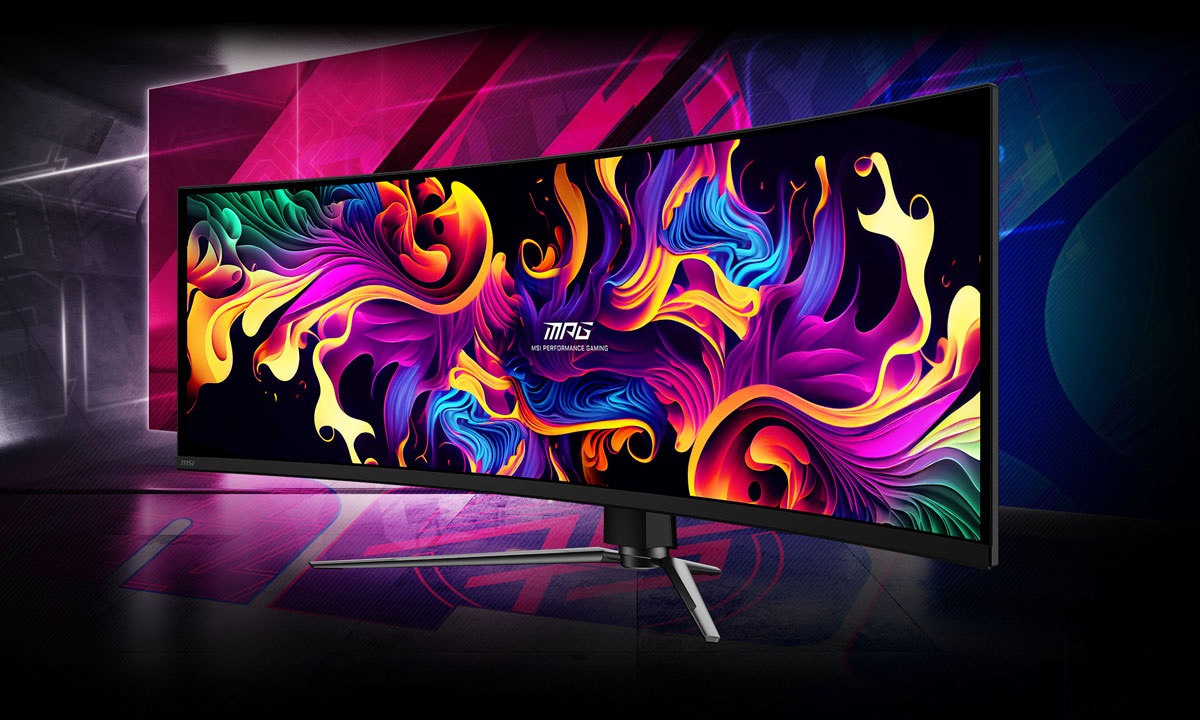
MSI is not only focusing on the flagship model. The MAG OLED 271QPX32 is aimed at the mainstream OLED gaming market. It uses a 27 inch 1440p Tandem QD OLED panel with a 320Hz refresh rate, Nvidia G Sync support, and MSI’s DarkArmor coating. The coating is designed to improve contrast and hardness, which could help with reflections and durability.
The MAG OLED 321UPX18 is a larger 32 inch 4K model with a 180Hz refresh rate. It also uses Tandem QD OLED technology, but it does not appear to use the same DarkArmor coating as the 27 inch model. This display seems better suited for players who want a sharper 4K image rather than maximum refresh rate.
MSI also showed two 27 inch 5K dual mode monitors. The MAG 271KRAW18 can run at 5K 180Hz or 2K 330Hz. It uses a glossy coating and includes 2304 Mini LED dimming zones, giving it stronger HDR potential than normal IPS monitors. The MAG 271KPD7 offers 5K at 75Hz or 2K at 300Hz, but it does not use Mini LED, so its HDR performance will be more limited.
For productivity, MSI introduced the PRO MAX 341QPXW14G. It uses a 34 inch 3440 x 1440 QD OLED panel with a 144Hz refresh rate, RGB Stripe subpixels, DarkArmor and VisiClarity reflection handling, USB C with 98W power delivery, and a three device KVM. MSI is also adding the M Mate app for MacBook users, including color calibration controls.
The lineup shows MSI moving in two directions at once. For gamers, the company is pushing faster OLED panels, built in AI tools, and more responsive display profiles. For creators and office users, it is trying to make OLED more practical with better text clarity, Mac support, USB C power delivery, and reflection handling.
The real test will be pricing and whether the AI features feel useful in daily use. Smart profile switching, AI based visibility controls, and monitor side upscaling sound promising, but they need to work reliably without becoming distractions. Still, MSI’s Computex lineup makes one thing clear: gaming monitors are no longer just about resolution and refresh rate. The next wave is about panels, software, AI processing, and setup convenience working together.



Discussion (0)
Be the first to comment.