



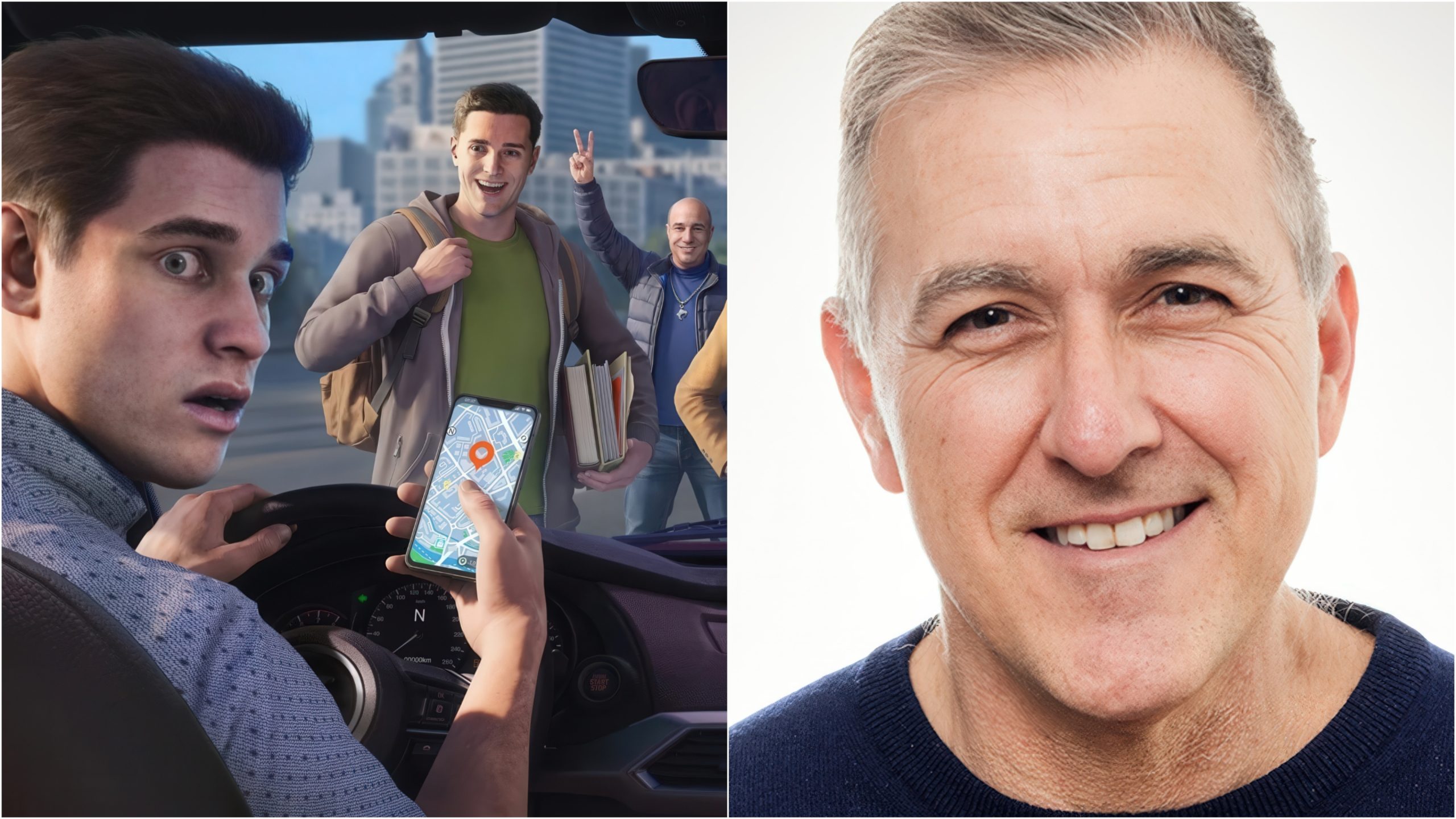
Saber Interactive has updated the Steam page for Rideshare Stimulator with a detailed explanation of how generative AI is used in the game, following a public dispute involving CEO Matt Karch, former lead writer Stella Sacco, and Portal writer Chet Faliszek.
The controversy began after Sacco said she had worked on the project before being removed during development and claimed she was replaced by ChatGPT without that use of AI being disclosed on the game’s Steam page.
Saber initially disputed the situation, while Karch later acknowledged that generative AI is used in parts of the game. He also publicly criticized Sacco before later sending her a private apology.
Rideshare Stimulator now explains its AI use
The updated Steam disclosure says the main campaign story, characters, and dialogue were written by a human writing team.
Generative AI is used elsewhere, including voice generation, some localization work, certain radio stations, and the optional Free Ride mode.
| Area | AI use |
|---|---|
| Main campaign story | Human written |
| Main characters | Human written |
| Main campaign dialogue | Human written |
| Voice generation | AI used |
| Localization | AI used in some areas |
| Free Ride mode | AI generated passenger missions and dialogue |
| Selected radio stations | AI generated music |
| Core campaign | Separate from AI driven Free Ride content |
The disclosure also says AI generated material in radio stations is labeled.
Karch has defended the use of AI in Free Ride, arguing that the feature required additional writers and programmers rather than simply replacing staff.
According to him, the cost of creating and managing the AI driven mode was higher than leaving the feature out entirely.
Karch apologized to Stella Sacco
The dispute became more personal after Karch publicly dismissed Sacco and said he did not know her.
He also said that, in retrospect, he would have been comfortable replacing her with AI.
Karch later sent Sacco a private apology over the way he spoke about her publicly.
Sacco said she accepted the apology, although she has not indicated that every issue between them has been resolved.

Karch later described his behavior as reacting first and thinking afterward.
The apology appears to have lowered tensions between Karch and Sacco, but the broader dispute continued after comments involving Faliszek.
Separate argument with Chet Faliszek became more heated
Faliszek criticized Karch’s handling of the Sacco situation in a lengthy video and additional social media posts.
Karch responded by accusing Faliszek of making the dispute unnecessarily personal.
He also claimed that he received death threats and hateful messages after Faliszek’s video was published.
That is Karch’s allegation, and the material provided does not independently verify the origin or scale of those threats.
Karch further objected to personal insults made in posts associated with the criticism, arguing that they crossed a line beyond criticism of his conduct as a company executive.
Faliszek responded that his criticism was focused on Karch publicly speaking negatively about a former employee and potentially damaging her career.
He described Karch’s earlier behavior as punching down.
The disagreement is now about more than AI
What started as a dispute about whether AI had replaced a writer has expanded into several separate issues.
One concerns disclosure and transparency around generative AI.
Another concerns how company executives publicly discuss former employees.
A third involves the tone of criticism directed at executives once a controversy becomes highly visible online.
Saber’s updated Steam page now provides more clarity about where AI is and is not used in Rideshare Stimulator.
The main campaign remains described as human written, while AI is limited to specific systems such as Free Ride missions, selected voice work, localization, and music.
That disclosure resolves part of the original uncertainty, but it does not erase the public argument that followed.
The dispute also shows how quickly disagreements about generative AI can move beyond questions of production tools and become arguments about employment, disclosure, leadership, and online harassment.



Discussion (0)
Be the first to comment.