




NVIDIA's RTX Spark platform has received its first wave of independent testing, and the early response is largely positive. Reviewers are highlighting strong GPU performance, impressive local AI capabilities and a surprisingly polished experience for a first generation Windows on Arm platform.
RTX Spark laptops officially launch on October 16, 2026. Ahead of that date, reviewers were allowed to discuss the chip itself, while detailed reviews of individual laptop models remained under a separate embargo.
That distinction matters because RTX Spark is not simply another mobile processor. It represents NVIDIA's first major push into the Windows on Arm laptop market, combining its CPU, GPU, unified memory and AI software technologies inside one platform.
RTX Spark's GPU and AI Performance Stand Out
The strongest theme across early reviews is that RTX Spark performs particularly well in GPU accelerated and AI workloads.
One review found that the GPU could handle demanding mobile workstation workloads while showing its biggest advantage when running local AI models directly on the device. Other testing described the platform as mature for a first generation product and competitive with leading mobile processors in multithreaded workloads.
| RTX Spark area | Early reviewer impression |
|---|---|
| GPU performance | Major strength |
| Local AI | One of its strongest use cases |
| CPU performance | Competitive, but not the main attraction |
| Unified memory | Important for large AI models |
| Windows on Arm compatibility | More mature than expected |
| Gaming | Capable, but not the primary target |
| Platform maturity | Strong for a first generation release |
The unified memory architecture is especially important.
RTX Spark systems can be configured with large memory pools that are accessible by both the CPU and GPU, allowing some large AI models to remain in memory without relying on a separate discrete GPU with a much smaller VRAM limit.
That makes the platform particularly attractive to developers working with local language models, AI agents and other memory intensive workloads.
Gaming Works, but It Is Not the Main Purpose
RTX Spark can run modern PC games, and early testing suggests the Blackwell GPU is powerful enough to make Windows on Arm gaming much more practical.
However, reviewers consistently caution against judging the platform only through traditional gaming benchmarks.
NVIDIA designed RTX Spark primarily for developers, professional creators and AI workloads rather than conventional gaming laptops.
Gaming remains an important secondary capability because the GPU includes NVIDIA's modern RTX technologies, but buyers interested only in gaming may find better value in traditional laptops with discrete GeForce graphics.
The more interesting question is whether RTX Spark can establish a stronger gaming ecosystem for Windows on Arm over time.
RTX Spark Laptop Prices Start Around $2,600
Several manufacturers are launching systems based on the new platform.
Microsoft's Surface Laptop Ultra starts at $2,599.99 and combines RTX Spark with up to 128GB of unified memory and a Mini LED display.
ASUS is offering ProArt P14 and P16 models starting at $2,599.99 and $2,799.99 respectively. The P14 focuses on portability, while the P16 adds a larger OLED display.
Dell's XPS 16 Creator Edition is considerably more expensive at $3,799.99 and includes a 3.2K OLED display.
HP, Lenovo and MSI are also preparing RTX Spark systems.
| Laptop | Starting price | Expected availability |
|---|---|---|
| Surface Laptop Ultra | $2,599.99 | October 16 |
| ASUS ProArt P14 | $2,599.99 | October 16 |
| ASUS ProArt P16 | $2,799.99 | October 16 |
| Dell XPS 16 | $3,799.99 | October 16 |
| HP OmniBook X 14 | $2,999.99 | November 4 |
| HP OmniBook Ultra 16 | $3,199.99 | November 4 |
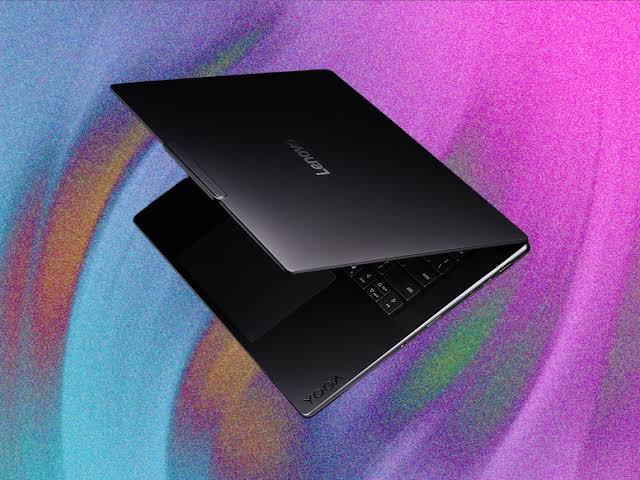
| Lenovo Yoga 9n | $3,099.99 | October 16 |
| MSI Prestige N16 Flip AI+ | $3,299.99 | Preorders expected |
HP's two systems are scheduled later, with the OmniBook X 14 and OmniBook Ultra 16 expected to begin shipping on November 4. Lenovo's Yoga 9n starts at $3,099.99, while MSI's Prestige N16 Flip AI+ starts at $3,299.99.
RTX Spark Is a Specialized Platform
The early reviews make RTX Spark look promising, but its appeal depends heavily on what you need from a laptop.
For software developers, AI researchers and creators who regularly run large local models, NVIDIA's combination of Blackwell GPU performance, unified memory and a mature AI software stack could be a significant advantage.
For ordinary productivity or gaming, the high starting prices are harder to justify.
RTX Spark's bigger significance may therefore be what it represents for Windows on Arm. NVIDIA is bringing its graphics, AI and software ecosystem into a market previously dominated by Qualcomm based systems, while offering enough GPU power to make demanding creative work and modern gaming more realistic.
The first reviews suggest the platform has avoided many of the rough edges normally associated with a new processor architecture. The next test will be whether individual laptops can combine that performance with strong battery life, cooling, displays and pricing once full system reviews arrive.
Discussion (0)
Be the first to comment.